
REVIEW · CHIANG MAI WALKING TOURS
Old Town History and Culture Walking Tour at Chiang Mai
Old town Chiang Mai starts with a story. This walk is built around the roots of Lanna Chiang Mai, starting at the Three Kings Monument and moving temple to temple with clear context for what you are seeing and why it matters. I like that it pairs landmark temples with the bigger timeline, from King Mangrai’s founding role to later Lanna-era craftsmanship.
I also like the practical side: it is a small group (max 8), and the visit rhythm stays relaxed. Plus, the ticket covers key costs like entrance fees and includes bottled water, English guidance, and travel insurance.
One drawback to keep in mind: if you are sensitive to accents or speed, the tour’s experience depends a lot on the guide’s English delivery. In one case, a past guest flagged English clarity and opening communication as an issue, so it is worth booking only if you feel good with guided group interpretation.
Key highlights you will actually notice
- Three big landmarks in about 2.5 hours, with time to look instead of sprinting
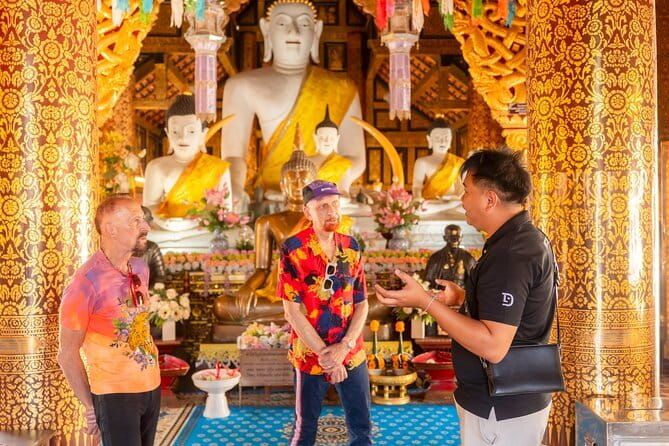
- Wat Phra Singh (Lanna architecture, 1346) and the Lai Kam assembly hall murals and pagoda symbolism
- Wat Chedi Luang with 14th-century ruins and UNESCO restoration in the 1990s
- Monk talks during the tour, plus an optional monk blessing for luck
- Small group size (8 max) for easier questions and smoother pacing
- Value-focused inclusions like entrance fees, bottled water, and travel insurance
Why this old town walk feels worth the $15
At $15 per person, the best part is not the low price. It is what the price covers. You get an English-speaking guide, entrance access, bottled water, and travel insurance, all while the tour focuses on the meaning behind Chiang Mai’s top temples.
This is the kind of tour that helps you connect dots fast. Chiang Mai can feel like a wall of gold and stone at first, then suddenly it clicks when someone ties the buildings to the people and the era that shaped them. Here, you are not just walking through pretty courtyards. You are getting a guided “why” for the big sights in the old town zone.
The 2.5-hour length is another smart feature. It is long enough for real context at multiple sites, but short enough that you can still handle the rest of the day on your own after. That matters in Chiang Mai, where mornings can run hot and evenings can turn busy.
If you want a history and culture intro without committing to a full day, this fits well.
You can also read our reviews of more walking tours in Chiang Mai

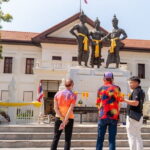
Starting at the Three Kings Monument, then learning King Mangrai’s backstory
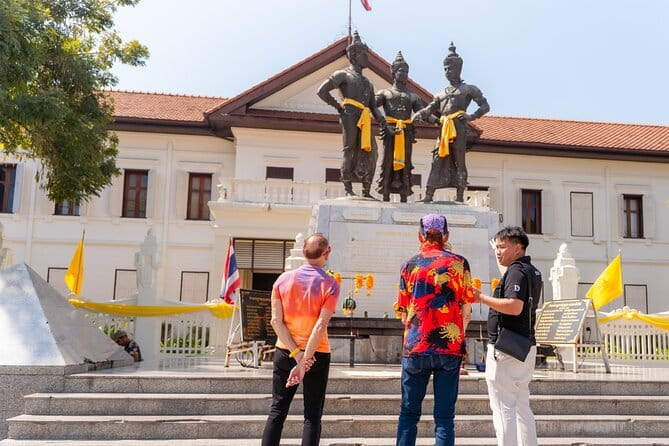
You meet at the Three Kings Monument, and the guide starts with a safety briefing. That sounds basic, but it sets the tone for what you are about to do: respectful temple behavior, simple group logistics, and a heads-up on how the walk will flow.
Then the real value begins. Your guide explains why the monument matters and who King Mangrai is, since he is the first king of the Lanna Kingdom and the founder of Chiang Mai. This is not just trivia. It becomes your mental map. When you later stand in courtyards and see Lanna-era details, you are not wondering who built what. You understand the timeline and the political shift that made Chiang Mai what it became.
Also, this is a good way to start because the monument acts like a “high point” before you drop into temple lanes. Your eyes adjust, your bearings get set, and the history is easier to hold in your head once it has a clear starting point.
Wat Phra Singh (1346): murals and symbolism you can actually spot
Your first temple stop is Wat Phra Singh, dating back to 1346. It is one of the most revered temples in Chiang Mai, and your guide uses it to introduce Lanna architecture in a way that feels practical, not academic.
What you should look for here is the Lai Kam assembly hall and the pagoda. The tour includes interpretation around the murals, including symbolism linked to people born in the Year of the Dragon. Even if you are not checking the zodiac angle, having someone explain how murals and spaces tie to beliefs makes the visit feel more personal and less like sightseeing.
The assembly hall angle is especially useful. Many visitors walk through temples like they are museums, then leave with a photo and a vague impression. A guided stop that points out where to pay attention changes the whole experience. You spend your time looking at what matters: the hall setting, the mural details, and the way the temple design supports the religious purpose.
This stop also tends to be a strong anchor for the tour because you are learning in one place while the architecture is fresh and readable. If you are tired or jet-lagged, Wat Phra Singh is still a satisfying first “wow” even without deep study.
Wat Chedi Luang: 14th-century ruins with UNESCO restoration
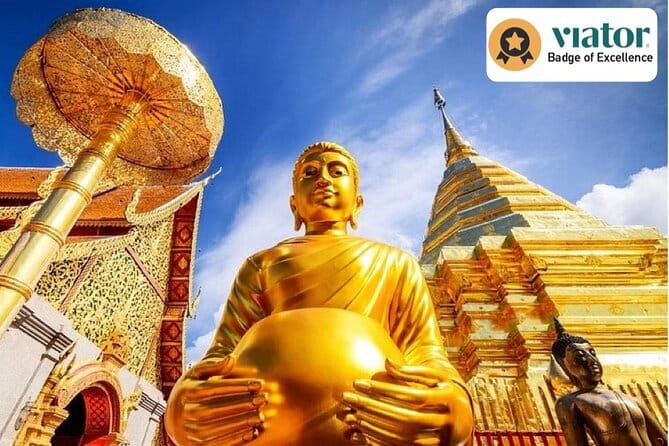
After a short stroll, you reach Wat Chedi Luang Varavihara, a site that locals and tourists both gravitate toward. The reason is simple. It is dramatic. The tour frames it as a 14th-century temple known for its ruins, and it also notes that restoration was carried out by UNESCO in the 1990s.
This is where the tour shifts from “architecture appreciation” to “how history survives.” Ruins can feel like chaos if you are not taught how to read them. With a guide, you can understand what was restored, why the site still matters, and how the remaining structures fit the larger religious story.
A key detail is that Wat Chedi Luang is famous for housing the remains of an important religious figure. The tour does not just say it is impressive. It gives the context so that you understand why people treat this place as a major stop.
Then there is the cultural part that often makes or breaks a temple tour: you get the chance to listen to talks by monks. That changes the atmosphere. Even if you do not understand every word, you feel the intention behind the prayers and explanations. It is also a reminder that these are living religious sites, not only photo backdrops.
Optional monk blessing for luck, and why it is handled thoughtfully
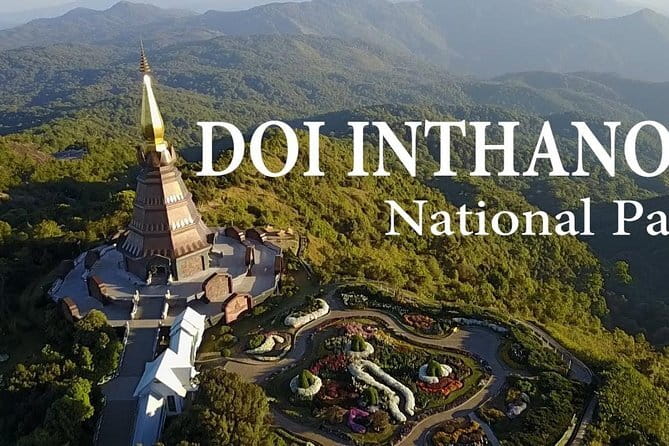
One detail from real feedback stands out: the guide asks if you want to receive a blessing from a monk for luck. That matters, because some people prefer to observe and not participate.
This is the right kind of cultural sensitivity from a tour perspective. You are not pressured into something spiritual. You get a choice, and the guide can adjust how the group experiences the moment.
If you like the idea of a symbolic blessing, go into it with a calm, respectful attitude. If you do not, staying quietly present is completely fine. Either way, the key is that the tour builds in a moment for the actual spiritual rhythm of the temple visit.
You can also read our reviews of more historical tours in Chiang Mai


How the guide and group size shape your experience
The tour runs with a maximum of 8 travelers, which is an understated quality feature. Smaller groups tend to mean you get better eye contact, more chances to ask short questions, and less time waiting for the slowest moment to catch up.
You also get an English-speaking guide, plus bottled water. That small inclusion helps because temple days often turn into dry-mouth days fast. If you are walking in Chiang Mai heat, having water ready is not luxury. It is basic comfort.
Timing and pacing are another thing to pay attention to. Based on feedback, the better guides keep the flow steady and avoid the rush that makes temple visits feel like checklists. Even so, there is one caution from a less positive experience: sometimes the guide’s opening communication can run long, and group members may struggle if the English is harder to catch.
So here is your practical approach: arrive ready to listen. If you know your English comprehension is solid, you will likely enjoy the interpretive style. If you often miss details with fast speech, consider it a reason to go into the first 10 to 20 minutes with patience.
Price and value: what $15 covers, and where it pays off
Let us break down the math in plain terms. You pay $15 and the tour includes:
- All tickets entrance fee
- English speaking guide
- Bottled water
- Travel insurance
Even without adding up local ticket prices, the value is clear because you avoid three common hassles: figuring out entrances on your own, finding the right people to explain what you are seeing, and worrying about basic coverage while you walk around old town.
The guide also does something that is hard to price: it turns a set of famous temples into an understandable narrative. That narrative is what makes the time feel efficient. You do not just spend 2.5 hours walking. You spend 2.5 hours learning a usable story about Chiang Mai’s rise.
The tour also runs without hotel pickup. That can be a plus for budget travelers, because you are not paying for a shared van route you might not need. You just show up at the meeting point and start.
Practical tips for enjoying Wat Phra Singh and Wat Chedi Luang
Since this is a walking tour through temple grounds, your comfort choices matter.
- Wear shoes you can stand in. Old town temple areas involve uneven stone and lots of slow walking.
- Keep your pace steady in the group. You are visiting multiple locations back to back, so spacing your steps helps you keep up without rushing.
- Respect temple etiquette. You are in active religious spaces, so keep behavior quiet and follow any instructions from the guide.
- Bring a light layer if you run cold from air conditioning later in the day. That is not required, but it can help you enjoy the full day.
One more practical note: the tour uses a mobile ticket, so make sure your phone battery is not on the edge.
Where the walk ends, and what to do after
The tour finishes at Wat Chedi Luang. This is convenient because it drops you near one of the most central temple zones, so you can continue exploring on foot afterward.
You also get a nice “close the loop” effect. Since the final stop is one of the main sites, you do not end with a less important location. You finish where the story and the ruins are still fresh in your head.
If you want to keep the day simple, plan a meal nearby and review your photos while the guide’s context is still in your memory.
Should you book this Old Town History and Culture Walking Tour?
Book it if you want:
- a short, focused temple walk with real explanations
- a way to understand King Mangrai and the Lanna roots without doing homework
- a manageable group size and guided pacing across Wat Phra Singh and Wat Chedi Luang
- built-in value like entrance fees, water, and travel insurance
Skip it or be cautious if:
- you are very picky about guide English delivery and hate long explanations
- you prefer fully self-guided temple wandering with no monk talks or structured stops
If you are the type who likes your travel to make sense, this tour is a strong, low-risk way to get oriented in Chiang Mai’s old town temples.
FAQ
Where does the tour start?
The tour starts at Three Kings Monument (Prapokklao Road, Si Phum area, Chiang Mai).
Where does the tour end?
The tour ends at Wat Chedi Luang Varaviharn (Watchediluang Varaviharn on the map listing).
How long is the walking tour?
It runs for about 2 hours 30 minutes.
How many people are in the group?
The group size is capped at a maximum of 8 travelers.
What is included in the $15 price?
Included are entrance fees, an English-speaking guide, bottled water, and travel insurance.
Is hotel pickup and drop-off included?
No. Hotel pickup and drop-off is not included.
Do I need an entrance ticket for the temples?
Entrance fees are included as part of the tour. The first stop at the Three Kings Monument is listed as free.
What is the cancellation policy?
You can cancel for a full refund if you cancel up to 24 hours in advance of the experience start time.
More Walking Tours in Chiang Mai


More Tours in Chiang Mai



More Tour Reviews in Chiang Mai



Not for you? Here's more nearby things to do in Chiang Mai we have reviewed


Chiang Mai Walking Tours, compared.
 ★ 4.63 Hour Old City and Temples Guided Walking TourFrom $161,568 reviews
 ★ 4.7Historic Temples and City Guided Walking TourFrom $21650 reviews
 ★ 4.7Temple And City Walking Tour Part IFrom $15244 reviews
 ★ 4.3Local Food and Markets Guided Walking TourFrom $48175 reviews
 ★ 4.6Historical and Culture Exploration Walking TourFrom $1540 reviews
 ★ 4.5Chiang Mai Old City & Temples Guided Walking Tour – 3 HrsFrom $1634 reviews
 ★ 5.0Chiang Mai Temples Visit Walking Tour with Ex-Monk Guide Part 1From $2529 reviews
 ★ 4.5Chiang Mai Michelin Food Walking Tour with Professional Tour GuideFrom $4013 reviews
Browse the lists this tour appears in