
REVIEW · CHIANG MAI WALKING TOURS
Chiang Mai: Historic Temples and City Guided Walking Tour
Chiang Mai’s temples make more sense when someone narrates the city as you walk. This 3-hour guided stroll strings together the Old City highlights, from Wat Chiang Man through classic Lanna landmarks to the dramatic Wat Chedi Luang ruins.
I especially like that you get a compact route with an easy pace, plus a guide who explains what you’re actually looking at, not just the postcard view. Two standout stops for me are Wat Phan Tao’s teak wood ordination hall and the feeling you get when you finally stand under the huge chedi at Wat Chedi Luang. One drawback to plan for: entrance tickets are not included for two temples, so your total cost will be a bit higher once you reach them.
Key Reasons This Walk Works
- Small group, limited to 10, so questions do not get lost in the crowd
- A clear Old City route, starting at Wat Chiang Man and finishing at Wat Chedi Luang
- Lanna architecture focus, with Wat Phra Singh as a highlight
- Wat Phan Tao’s teak construction, including a former royal teak throne
- Wat Chedi Luang’s main prayer hall and Buddha inside, even though you are seeing ruins
- Practical guidance on temple behavior, including what to wear and what to bring
A 3-hour Chiang Mai Temple Walk That Doesn’t Waste Your Day
A lot of temple tours try to cover everything and end up giving you rushed photos and half-understood facts. This one is built around the idea that you learn faster when the route is tight and the walking is manageable. The tour lasts about 3 hours, and it is designed to help you see several of the most important religious sites in the Chiang Mai Old City without turning it into a forced march.
Because the group is kept small, the guide can slow down when people have questions about architecture, Buddhism in daily life, or the stories behind specific structures. Many guides you might be paired with, like Jen, Pun, Danny, or John, are known for being patient and friendly, and for keeping the explanations clear enough that you can actually remember them later while you walk around on your own.
If you want a smooth first day in Chiang Mai, this is the kind of activity that gives you “map knowledge.” You start to understand why temples are where they are, how the walled Old City layout shapes movement, and why Lanna-style details matter.
You can also read our reviews of more walking tours in Chiang Mai

Meeting at Wat Chiang Man, Then Getting Temple-Ready Fast
You meet your guide at Wat Chiang Man. Look for the Beyond Experience sign, and plan to arrive a few minutes early. The tour starts right from the temple grounds, which is convenient because you are already in the right place for the first photo stop and guided visit.
Temple rules are taken seriously here, and you will feel it in a good way. Dress code is casual, but you must cover shoulders and knees when entering temples. That means no shorts, no short skirts, and no sleeveless shirts. A scarf is listed as something to bring, and it can be a real lifesaver if your outfit runs a little too close to the line.
What I’d pack for this route:
- Comfortable shoes (you are walking between sites)
- Hat and sunscreen (Old City streets can stay bright and hot)
- Umbrella or raincoat (rainy season runs July to mid October)
- Cash (because entrance fees are not included)
- A scarf (easy shoulder or knee coverage when needed)
One more practical note: the tour does not allow luggage or large bags. If you are touring with a daypack, that should be fine, but keep it lean.
Wat Chiang Man: Starting With Chiang Mai’s Oldest Temple
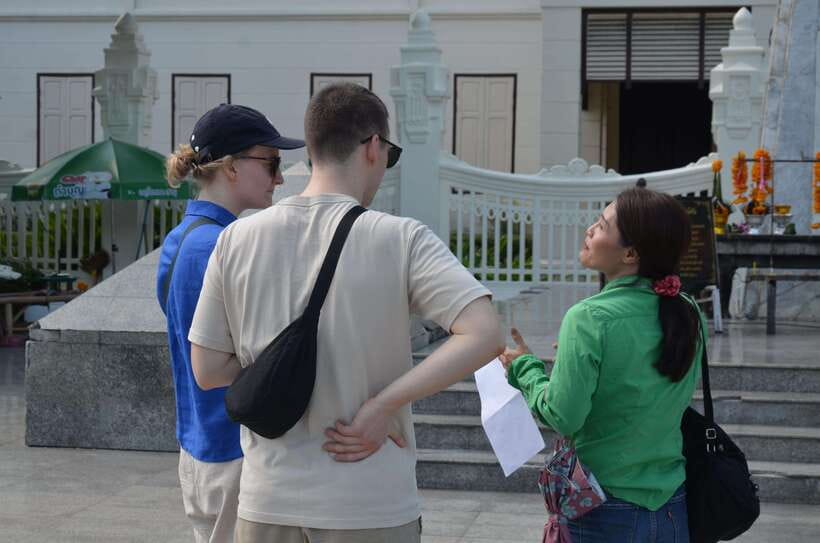
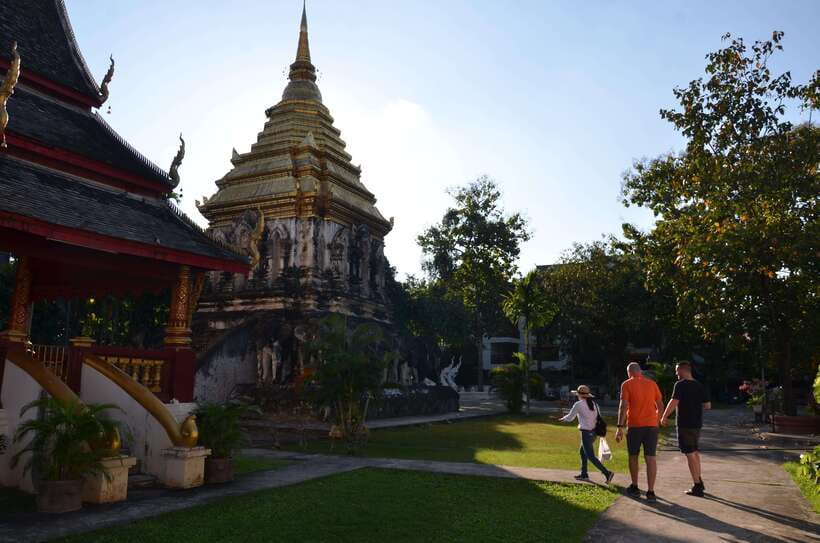
Your walk begins at Wat Chiang Man, and the fact that it was built in 1296 matters. Starting here gives you a timeline anchor right away. Instead of feeling like you are hopping between random temples, you get a sense of how Chiang Mai’s religious life developed over centuries.
At this first stop you get time for a photo moment and a guided look, about 30 minutes. The site is old enough that you can feel the focus and continuity. Even if you are not deep into historical details, this is the kind of place where your eyes naturally start picking out textures, carvings, and the way the buildings sit within the temple grounds.
Potential drawback at the beginning: the early part of the day can include a bit more direct exposure if the weather is bright. If you can choose your start time, earlier is better for heat, and it is often less slippery in the morning after any overnight drizzle.
Three Kings Monument: A Short Stop That Helps You Understand the Old City
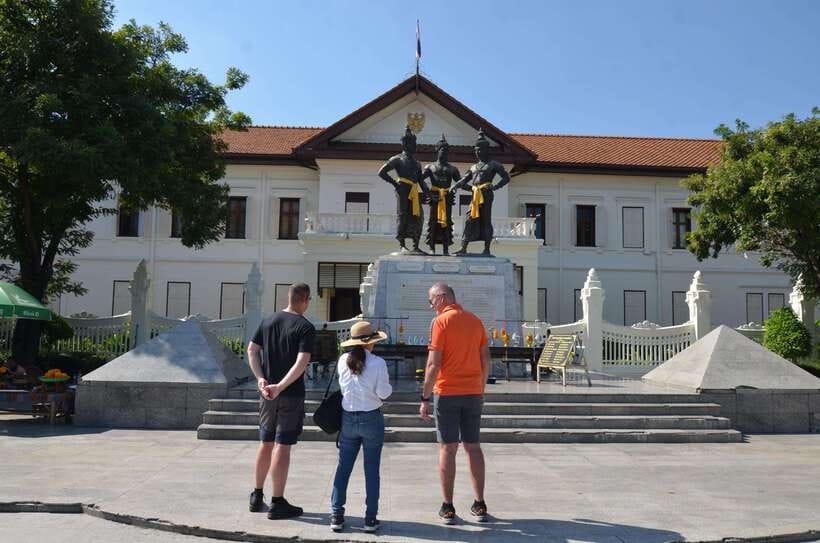
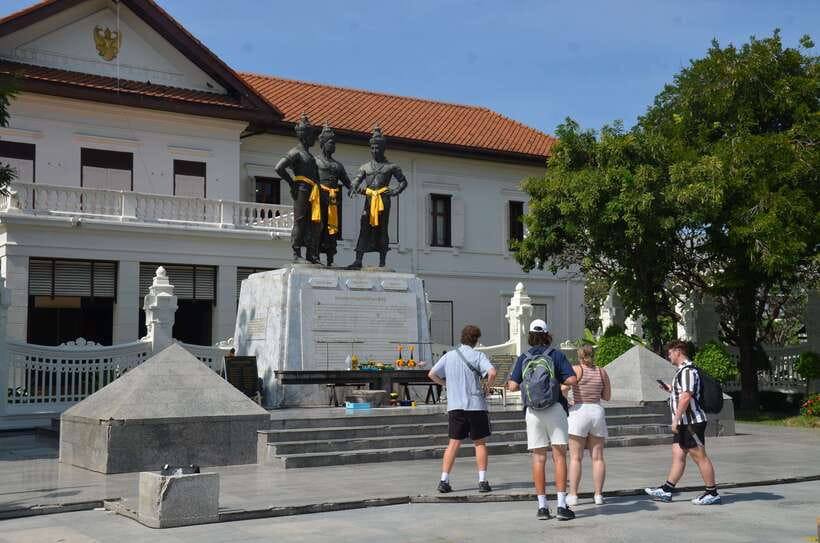
Next up is the Three Kings Monument, only about 10 minutes. This is not long, but it is useful. It sits in a large open square in the heart of the walled old town, so it acts like a visual reset between temple stops.
I like this kind of mini-break because it gives your brain a reference point. When you are later near the next temple, you can better picture how the neighborhoods and walls connect. It also gives you a calm place to pause, take a quick photo, and check in with your bearings before you head into smaller lanes again.
Wat Phra Singh: Classic Lanna Architecture You Can Actually See

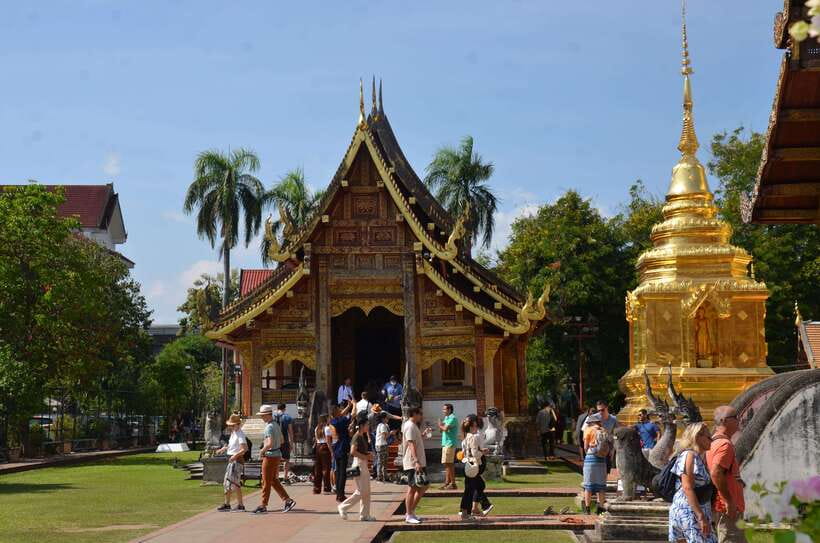
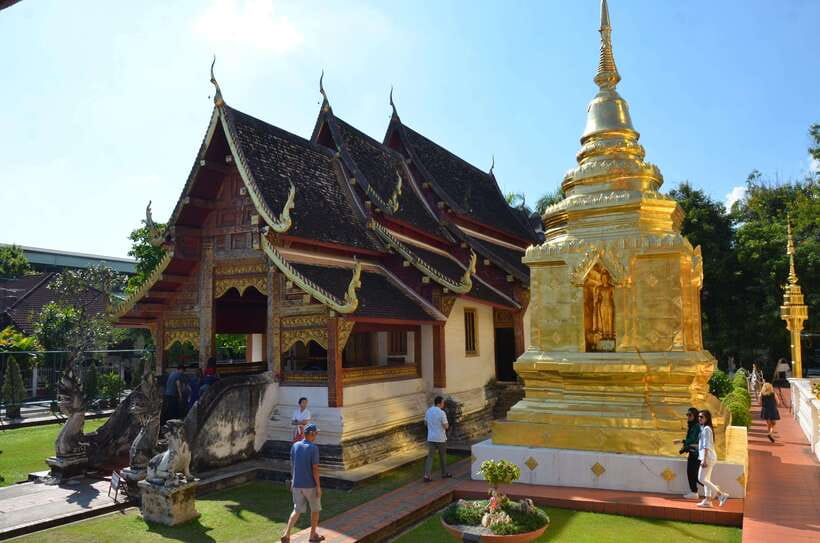
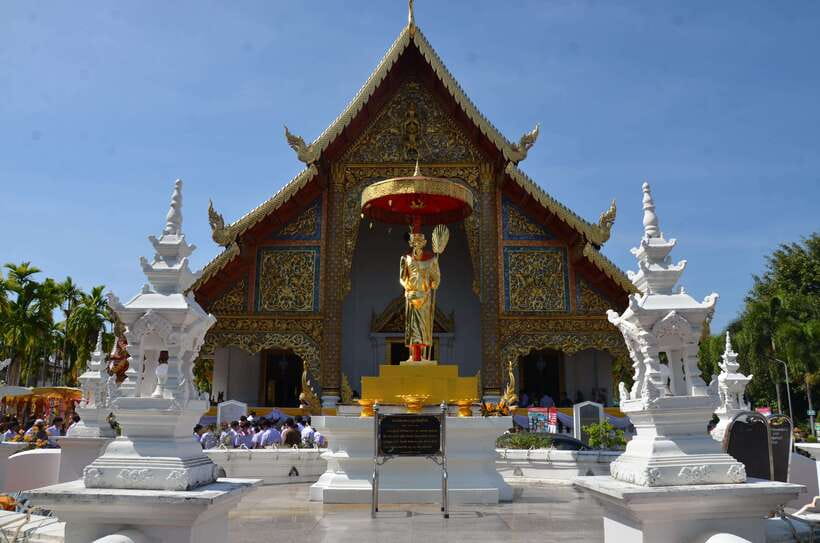
Then you move to Wat Phra Singh, and this is one of the temples you will be happy you did not rush. It is described as one of the finest examples of classic Lanna temple architecture in Thailand, and that label is not just marketing.
You get around 40 minutes here, which is long enough to notice the details that typically get missed. A guided explanation helps you understand why certain rooflines, temple proportions, and ornamental elements are considered Lanna style. Without that context, it can be easy to just see a pretty building and move on.
One practical thing to plan for: entrance tickets are not included for Wat Phra Singh. You should budget 50 THB and keep cash handy.
If you are visiting Chiang Mai as a first timer, this is also a strong “training stop.” It teaches you what to look for in the next temples, especially when you start comparing architectural styles and materials.
You can also read our reviews of more guided tours in Chiang Mai






Wat Phan Tao: The Teak Wood Viharn and the Former Royal Throne
Wat Phan Tao is a quick stop compared with Wat Phra Singh and Wat Chedi Luang, around 15 minutes, but it is memorable for a very specific reason: the ordination hall, or viharn, is constructed almost entirely of teak wood.
That teak detail changes how the place feels. Instead of thinking only about temple shapes, you start thinking about material. Teak is warm, durable, and visually distinct, so you have a good chance of noticing craftsmanship even if you are not trained in architecture.
There are two facts here that make the stop special:
- The main hall includes an enormous teak throne that was once used by Chiang Mai’s rulers.
- The building itself was originally part of a royal palace.
Even with limited time, those details give the site extra meaning. It is not just a religious stop. It is also a clue about how power, royalty, and temple life overlapped in the city’s past.
Entrance is not listed as an added ticket here, but the tour already includes the guided portion, so you are paying for the context as much as the sights. Still, keep your clothing rules in mind, because you will be moving in and out of temple areas.
Wat Chedi Luang Ruins: The Chedi and the Buddha Inside
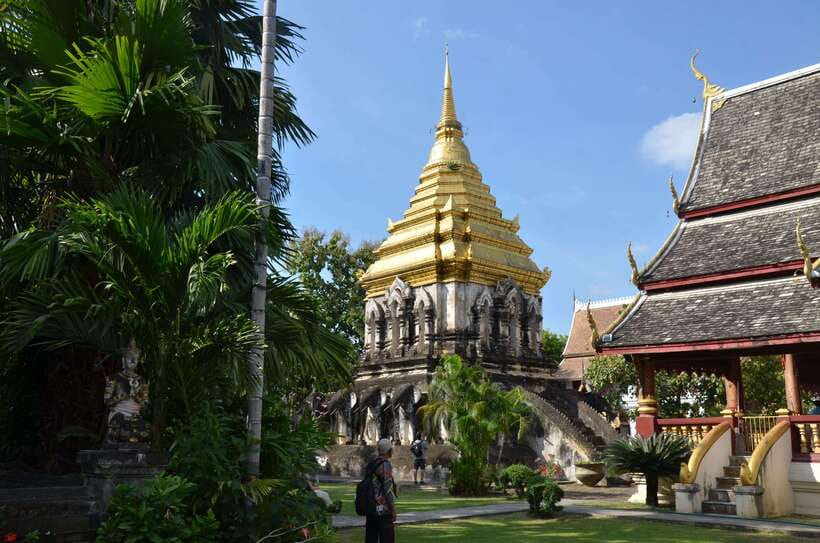
The final temple stop is Wat Chedi Luang, with about 40 minutes. This is where the tour feels like it “lands.” The chedi is impressive on its own, and the ruins add a dramatic layer. You are not seeing a perfectly intact building. You are seeing history in its older, weathered form.
What I really like is that the tour does not treat the site as only a background object. You get time to explore the chedi area and, importantly, view the Buddha inside the main prayer hall.
Entrance tickets are not included here either, so budget 50 THB for Wat Chedi Luang. If you forget to bring cash, you might still be able to observe parts of the site, but you will likely miss access to what you came for.
Because this stop is toward the end, it also acts like a wrap-up. Earlier temples taught you the architectural language and the materials. Here, you see how those ideas come together in a major religious centerpiece.
Pace, Group Size, and Why the Guide Makes It Better
This is a small group tour, limited to 10 participants. That is a big deal for temple walking tours. You can hear explanations, ask questions, and still move at a comfortable speed. Several guides linked to this tour style, including Jen and Pun, are praised for being friendly and patient, with explanations that stick.
The pacing is part of why people rate it so highly. One recurring theme is an easy tempo and a start time that helps avoid the worst heat. If you are someone who hates being rushed or trapped behind a faster group, this tour’s structure is a good match.
English is the working language, and there is a bottle of water included, which is a simple but welcome detail when you are walking between multiple temple grounds in humid weather.
A small caution: this walk is not built for everyone. It is listed as not suitable for pregnant women and for people with back problems. The walking and uneven temple grounds can be taxing, even if the tour pace is relaxed.
Cost and Value: How the $21 Price Really Plays Out
The tour price is $21 per person, which is strongly positioned for what you get. You are paying for a local English-speaking guide, a structured route through major Old City temples, and time at each stop designed for understanding, not just photo hopping.
Two temple entrances are separate:
- Wat Phra Singh: 50 THB
- Wat Chedi Luang: 50 THB
So you should expect an extra 100 THB total in ticket fees if you plan to enter both paid temples. Food is also not included, so you will want to eat either before you start or after you finish.
If you want the value angle in plain terms, here is how I’d think about it. At this price, a self-guided plan might get you to the right places, but it will not teach you why Lanna architecture looks the way it does, why teak matters at Wat Phan Tao, or how to interpret what you see inside and around the chedi at Wat Chedi Luang. The guide is the product.
Best For First Timers, History Lovers, and Photo Seekers
This tour fits a specific kind of traveler:
- First time in Chiang Mai and you want a fast, accurate introduction to the Old City’s temple world
- Anyone who likes architecture and religious symbolism but prefers a guided explanation over reading alone
- People who want a manageable, 3-hour outing instead of a full day
- Visitors who want to walk through small streets and experience the city’s layout up close
It is less ideal if you are expecting a purely scenic, low-effort stroll with zero rules. Temple dress code matters, and you do need to wear something that covers shoulders and knees.
If you are traveling with limited mobility or have a back issue, take the “not suitable” note seriously. This is not a pushcart tour, and temple areas can involve uneven ground.
Rainy Season Planning: July to Mid October
Thailand’s rainy season runs July to mid October, and it is smart to treat weather as part of the trip planning, not an afterthought. Bring an umbrella or raincoat. The walking between temples is short between stops, but you will still feel rain in the open portions of the route.
Also, pack accordingly for temple rules. A rain jacket that covers your shoulders and knees works better than trying to adjust your outfit mid-walk.
Should You Book This Chiang Mai Temple Walking Tour?
If you want a strong first experience in Chiang Mai Old City, I think this tour is an easy yes. The route is focused, the stops include both major architecture and memorable material details like teak wood at Wat Phan Tao, and the finishing point at Wat Chedi Luang gives you a satisfying ending.
Book it if you:
- Like guided context more than random wandering
- Want to see the big names: Wat Chiang Man, Wat Phra Singh, Wat Chedi Luang
- Appreciate a small group setting with time for questions
Consider skipping or choosing a different format if:
- You need something fully suited to back issues or pregnancy, because this one is listed as not suitable for those needs
- You do not want to deal with cash for separate entrance tickets
If you do book, do two simple things: bring cash for Wat Phra Singh and Wat Chedi Luang, and dress temple-ready from the start. That combo lets you relax and enjoy the real payoff, which is understanding what you see as you walk.
FAQ
Where is the meeting point for the tour?
Meet your guide at Wat Chiang Man. Look for the Beyond Experience sign.
How long is the Chiang Mai Historic Temples and City Guided Walking Tour?
The tour lasts about 3 hours.
Is the tour guided in English?
Yes, the tour includes a live guide in English.
How many people are in the group?
The tour is a small group with a maximum of 10 participants.
Are entrance tickets included for the temples?
No. Entrance tickets for Wat Phra Singh and Wat Chedi Luang are not included, at 50 THB each.
What should I bring with me?
Bring comfortable shoes, a hat, an umbrella, sunscreen, comfortable clothes, cash, and a scarf.
What is the dress code for entering temples?
Casual dress is fine, but you must cover shoulders and knees. Shorts, short skirts, and sleeveless shirts are not allowed.
Is this tour a good choice during the rainy season?
It can be a good choice, but Thailand has rainy weather from July to mid October. Bring an umbrella or raincoat.
Is there free cancellation?
Yes, you can cancel up to 24 hours in advance for a full refund.
More Walking Tours in Chiang Mai




More Tours in Chiang Mai




More Tour Reviews in Chiang Mai



Not for you? Here's more nearby things to do in Chiang Mai we have reviewed




Chiang Mai Walking Tours, compared.
 ★ 4.63 Hour Old City and Temples Guided Walking TourFrom $161,568 reviews
 ★ 4.7Temple And City Walking Tour Part IFrom $15244 reviews
 ★ 4.3Local Food and Markets Guided Walking TourFrom $48175 reviews
 ★ 4.6Historical and Culture Exploration Walking TourFrom $1540 reviews
 ★ 4.5Chiang Mai Old City & Temples Guided Walking Tour – 3 HrsFrom $1634 reviews
 ★ 5.0Chiang Mai Temples Visit Walking Tour with Ex-Monk Guide Part 1From $2529 reviews
 ★ 5.0Old Town History and Culture Walking Tour at Chiang MaiFrom $1513 reviews
 ★ 4.5Chiang Mai Michelin Food Walking Tour with Professional Tour GuideFrom $4013 reviews
Browse the lists this tour appears in