
REVIEW · CHIANG RAI DAY TRIPS FROM CHIANG MAI
Chiang Mai: Chiang Rai Temples, Karen Tribe and Hot Springs
White temples and warm feet first. This one-day run hits Mae Kachan Hot Springs for a relaxing break and then delivers Wat Rong Khun (White Temple) in full surreal glory, but it is a long day of driving and temple stairs. You get an English-speaking guide, entrance fees for the big temples, and a schedule that keeps moving without feeling like you are rushing every second.
What makes this tour especially interesting is the mix: hot springs, a hill-tribe village, two of Chiang Rai’s most famous temple art styles, and Huay Pla Kang’s big Guan Yin plus a nine-tier pagoda climb. One practical drawback to plan for, besides the time, is that the Karen long-neck stop includes shopping and an extra village fee, so your day budget can move a bit.
Key highlights you should care about
- Warm mineral soak, no swimming at Mae Kachan, great for resetting before temples
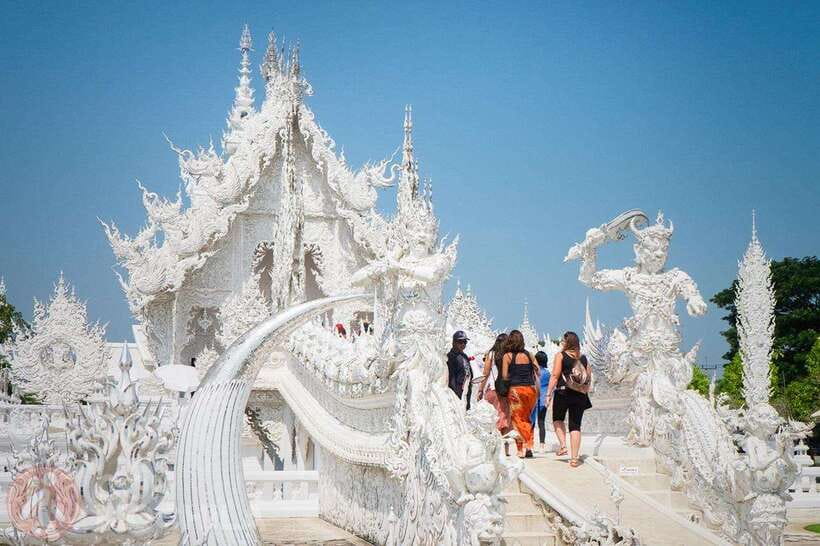
- White Temple’s glass-and-Buddhist detail at Wat Rong Khun, designed by Chalermchai Kositpipat
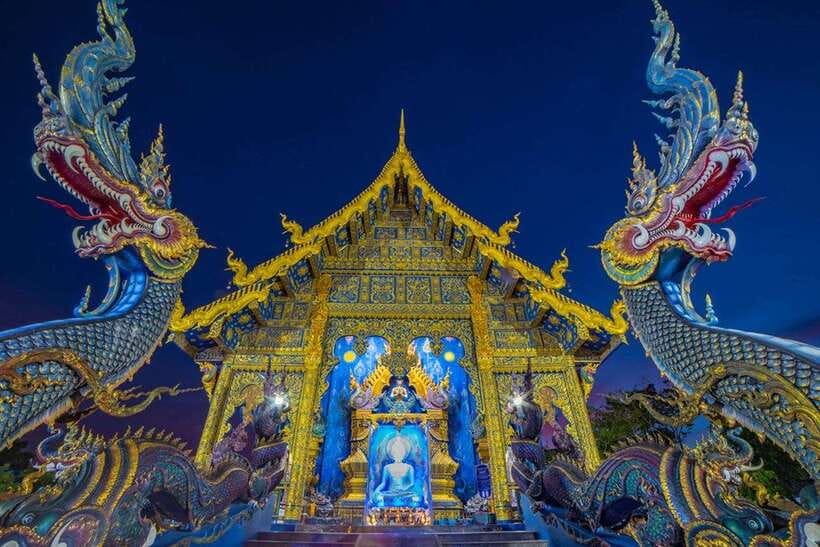
- Blue Temple interiors with deep blue color, gold accents, and dragon statues outside
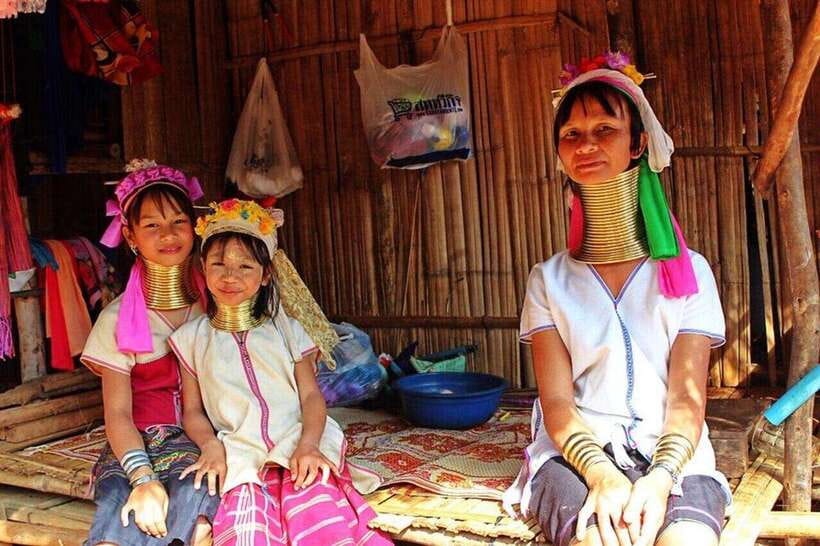
- Karen long-neck village culture with brass neck rings and handmade craft time
- Huay Pla Kang’s Guan Yin and nine tiers, plus viewpoints if you want the climb
- A tight, guided loop from Chiang Mai that makes sense if you want “highlights only”
Mae Kachan Hot Springs: the soft start before the temple art hits
You begin with Mae Kachan Hot Springs, and that matters more than you might think. After you leave Chiang Mai, you spend hours in a vehicle. A quiet stop with warm mineral water, even if you are only doing a brief foot-soak, turns the day from exhausting to manageable.
The key rule here is simple: swimming is not allowed. Think of it as a calm break, not an all-day beach moment. You can still take photos of the natural setting and enjoy the pause before heading toward more structured cultural stops.
There are also practical distractions in a good way. People often report that you can find coffee and Thai tea nearby, plus small shops along the way. That means you are not stuck doing nothing while you wait for the group to move on. Just bring sunscreen and a hat, because you will feel the sun as soon as you step outside again.
More Chiang Mai temple visits, food walks, elephant experiences, mountain trips, and northern Thailand day tours to compare
Karen long-neck village: culture, crafts, and what to watch for
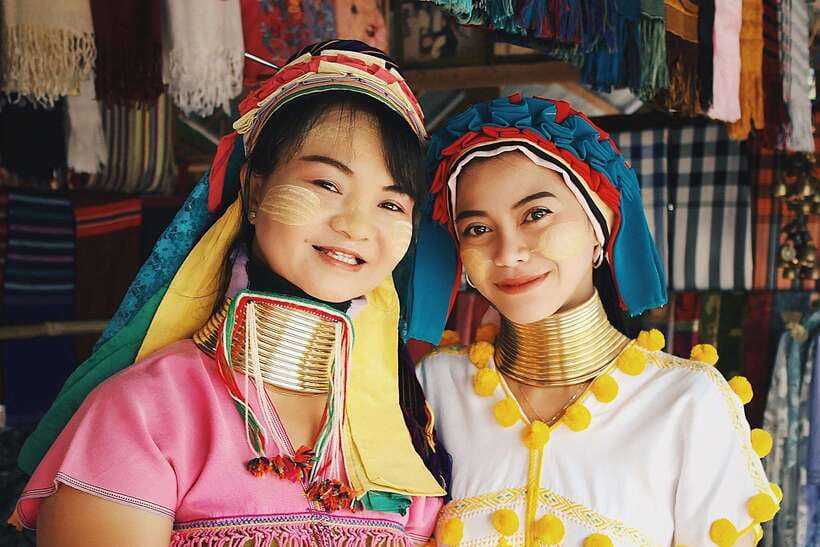
Next comes the Mae Kachan hill tribe village, known for the long-neck tradition associated with the Karen community. This stop is structured as a visit with a photo moment and guided time, so you are not just dropped at a viewpoint.
What you should pay attention to is the detail of the daily life angle. You learn why the brass neck rings are part of the tradition, how it was passed down through generations, and you get time with handmade crafts. That craft aspect is not window dressing. The village is set up for visitors to see the work and browse items made by the community.
One thing to plan for is the realism of how these cultural stops feel. The long-neck tradition is visually striking, and that can make the experience feel staged if you only chase photos. If you keep it slower, ask questions your guide can translate, and treat shopping as optional support instead of a requirement, it becomes more meaningful.
Also budget this stop correctly. The village entrance fee is 300 thb and is not included in the tour price. If you want to buy scarves or other handmade items, bring cash in smaller bills because vendors can be limited on change, based on what people report from the day.
Wat Rong Khun, the White Temple: purity meets modern surprises
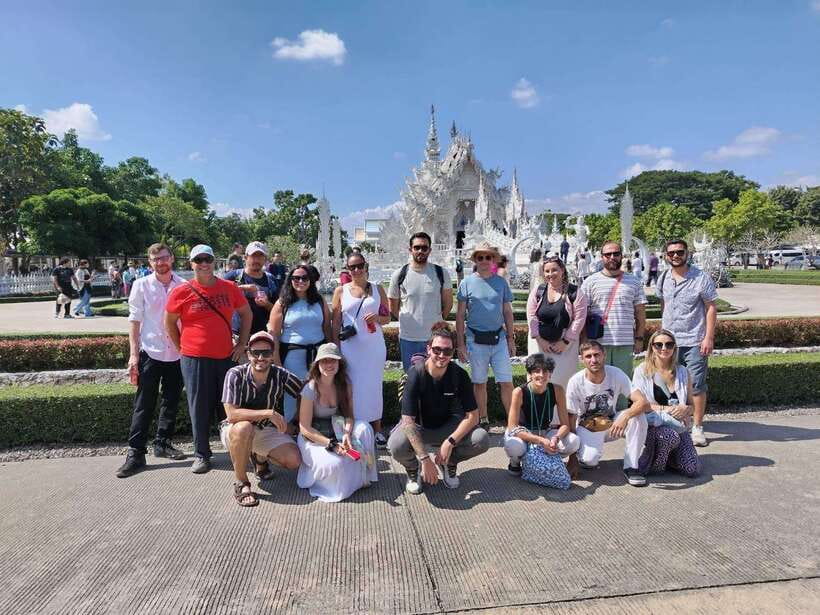
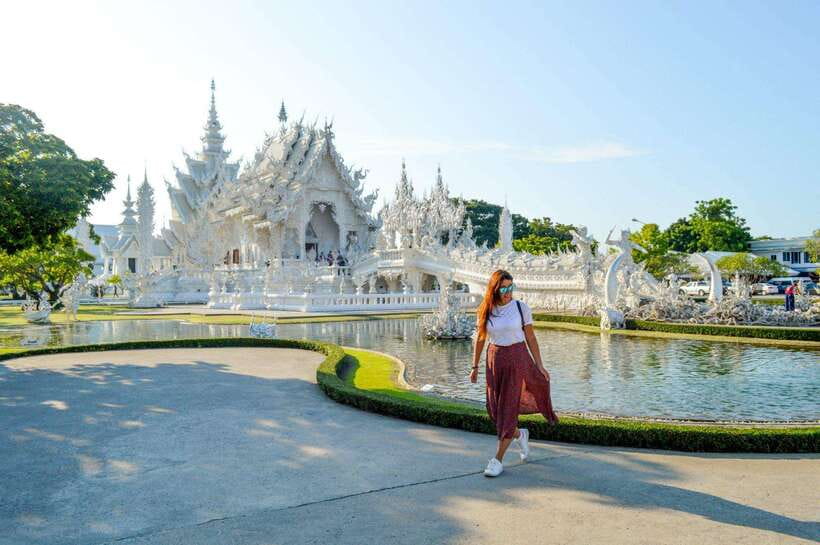
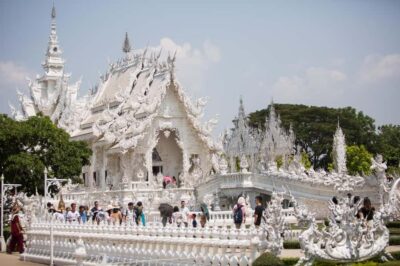
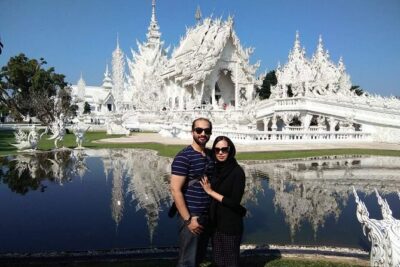
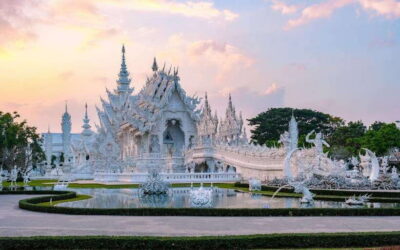
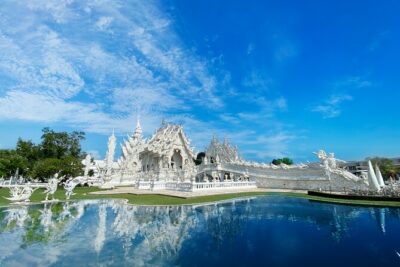
Then you reach Wat Rong Khun, the White Temple, and this is why many people do Chiang Rai in a single day. It is not a temple that stays quiet and traditional. It is a modern contemporary masterpiece, created by artist Chalermchai Kositpipat, built around the theme of purity with a very intentional all-white look.
Here is what makes it more than “pretty walls”:
- You will see intricate glass details across the temple grounds. They catch light in a way that makes photos look dramatic even in midday sun.
- The temple includes both classic Buddhist-style religious art and surprising modern images, so your brain does not get bored after the first minute.
Timing helps too. You get guided time, and your guide can point out what to notice, like where the symbolic details are hiding. If you have ever visited temples where everyone reads the sign and then moves on, this one tends to keep people looking longer because the visual payoff is immediate.
Practical note: the White Temple can be busy in places and you will likely walk paths with crowds. Comfortable shoes help. If you are wearing sandals, plan on it being warmer than you expect once you start moving between photo points.
Wat Rong Suea Ten, the Blue Temple: dragons outside, calm inside
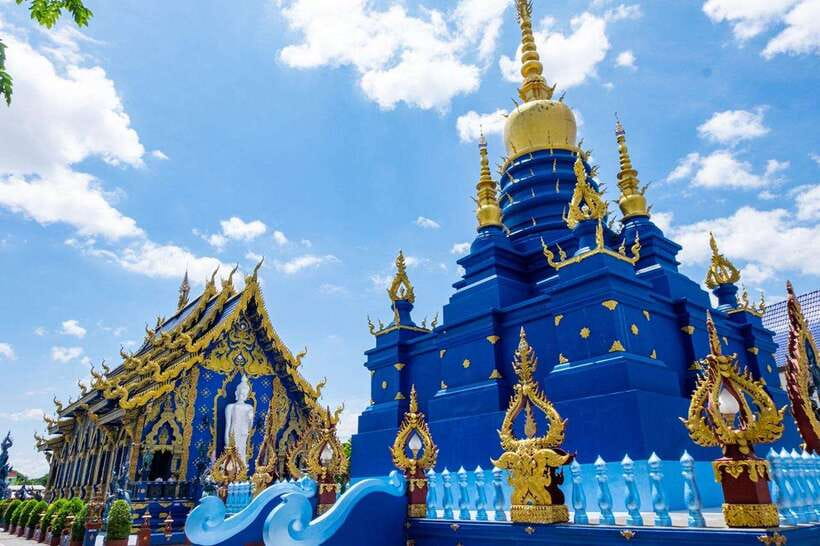
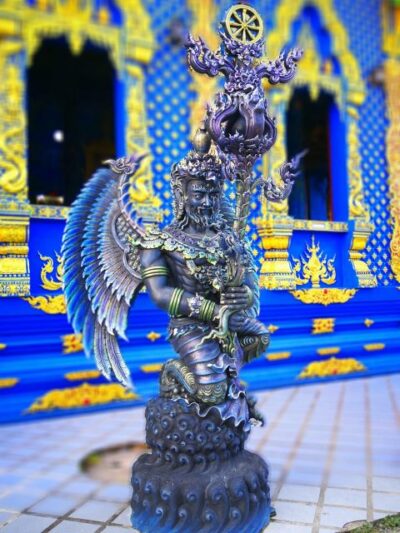
After lunch in Chiang Rai, the day shifts again to Wat Rong Suea Ten, the Blue Temple. This one is more atmospheric. Where the White Temple hits you with brightness and contrast, the Blue Temple is about deep blue interiors and gold details.
The entrance is guarded by dragon statues, and that is a big part of the first impression. Then you walk inside and the tone changes fast, with a calm, bright Buddha statue at the center. It is one of those places where you can feel your pace slow down just because the colors pull your attention inward.
What I like about including the Blue Temple right after the White one is that you get a side-by-side lesson in how Chiang Rai temple artists play with modern style. Even if you do not read every symbol, your eyes learn quickly. You start noticing patterns and decisions, like what the artists wanted you to feel, not just what they wanted you to look at.
You may also find the day comes with small treats around this area. People often point out things like ice cream stops here, including coconut-flavored options. Even if you skip food, the presence of snack culture helps you keep energy steady for the final temple climb.
Huay Pla Kang Temple: Guan Yin’s nine-tier pagoda climb
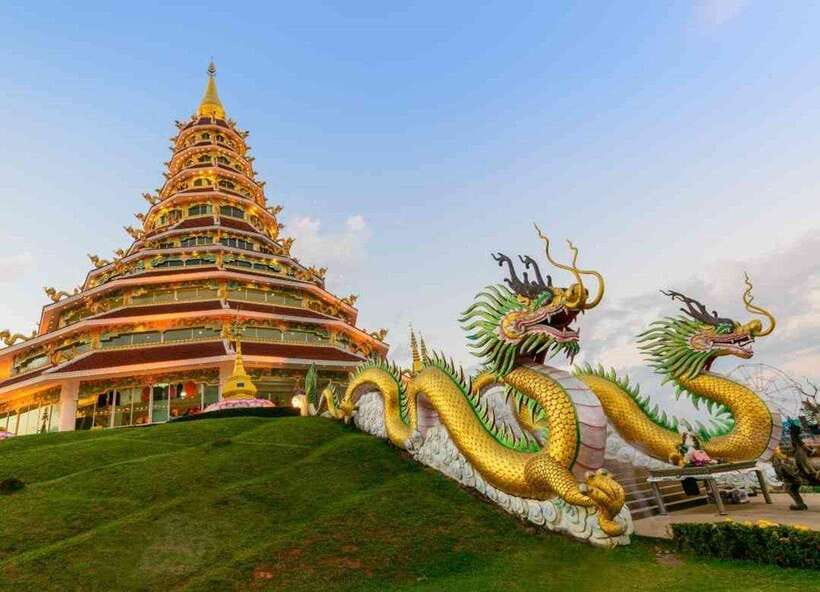
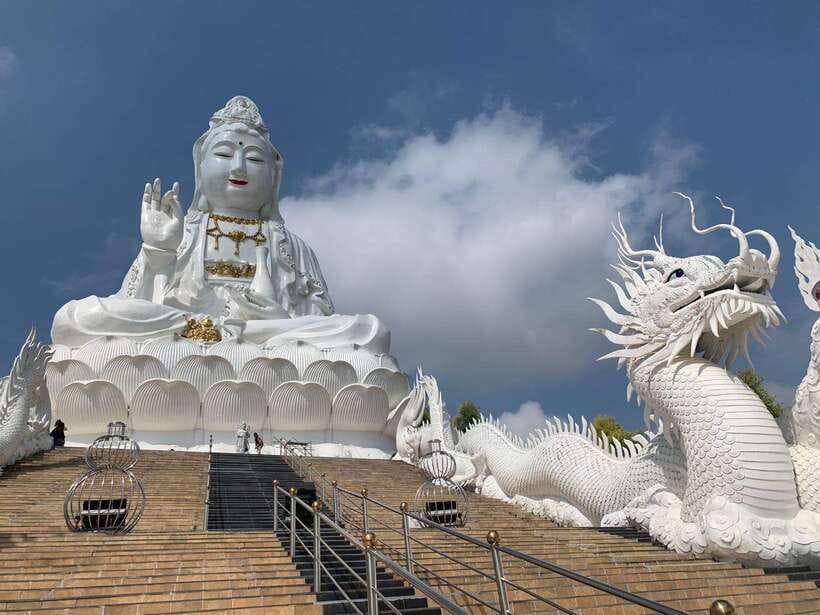
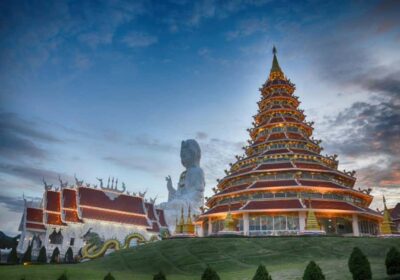
The last major stop is Huay Pla Kang Temple, known for its large statue of Guan Yin, the Goddess of Mercy, and its nine-level pagoda. This is the stop that turns into an effort, in a good way.
The temple is famous for the scale of the Guan Yin statue, but the nine-tier pagoda is what makes it more memorable. You can climb to the top for views, and along the way you will see carved statues and decorations around the grounds.
Why this stop is worth it even if you are tired:
- The visual changes as you go higher, so it does not feel like one long slog to one flat viewpoint.
- The final reward is not only photos. It is the moment of stepping away from the crowds and looking out from above.
One consideration: there are stairs and you are walking more than at the first temple. This tour is not recommended for people with mobility impairments, and that makes sense given how the day is built around walking and climbing.




The day’s flow: timing, traffic, and why it feels long
This tour is 11 hours, and the schedule is built to keep a rhythm. You travel from Chiang Mai by air-conditioned coach, then you rotate between stops with short bus rides and guided time.
A big part of the experience is the driving time itself. Your itinerary includes stretches like:
- about 1.5 hours on the coach to your first stop
- around 2.25 hours from the hill tribe village toward Wat Rong Khun
- and then about 3 hours back toward Chiang Mai
On top of that, Chiang Mai traffic can affect meeting and departure timing. That is why your exact meeting point matters and why the tour starts on time with people who are present. If you show up late, you should assume you will not catch up mid-route.
The upside of this pacing is value. You cover the most famous Chiang Rai temple stops without having to plan transport between each one. The tradeoff is that you do not have the luxury of staying until you feel done. You work on a guided tempo, with rest built in at Mae Kachan Hot Springs.
Guides help a lot with this. Many people name guides like Benz, Kwan, Ruby, Ann, Dee, and Alex, and the common theme is that they keep people engaged during the long vehicle time. That means you are not just sitting quietly for hours. You are getting cultural context and practical advice about each stop.
Price and what $35 really buys you
At around $35 per person, the value comes from what is included, not just the sticker price. You get round-trip transportation from Chiang Mai, an English-only official guide, mandatory insurance, and entrance fees for:
- Wat Rong Khun (White Temple)
- Wat Rong Suea Ten (Blue Temple)
- Huay Pla Kang Temple
For a day that includes multiple temple grounds and a long cross-province drive, those inclusions matter. If you tried to cobble this together on your own, you would still pay for transport and likely for entry fees, plus you would spend time figuring out schedules.
What is not included is where you should watch your budget:
- Lunch is not included
- The long-neck village entrance fee is 300 thb
- Earphones for the audio guide are not included
- You may also spend on snacks and souvenirs depending on your style
One small practical note about audio: the guide speaks English only, but you can use an optional audio guide in many languages via QR code. You must bring your own earphones. If you want the extra layers of explanation, you will want to have those ready before the van starts moving.
What to pack and how to handle temple expectations
This is a day of walking, sun, and religious sites, so pack for comfort first. The basics that really help:
- comfortable shoes (temples involve plenty of foot traffic)
- sunglasses, sun hat, and sunscreen
- insect repellent
- comfortable clothes that fit temple dress expectations
You also cannot bring luggage or large bags. Plan for a small day bag only.
Finally, treat temple etiquette as part of the experience. Dress modestly. Keep your pace respectful in the main areas. If you want photos, be ready to wait when people are moving through worship spaces.
Who this tour fits, and who should skip it
This tour is a great match if you want the Chiang Rai “headline” temples without turning the trip into logistics homework. It is also ideal if you like guided context and prefer a structured day over independent wandering.
You might want to skip it if:
- you need mobility support, because stairs and climbing are part of the Huay Pla Kang experience and the day is built around walking
- you hate long coach days, because the total time is long and traffic can extend how tired you feel by the end
- you do not enjoy cultural village stops that include craft shopping and a separate entrance fee
If you do like temples and you are okay with a packed schedule, this one-day format is efficient. It is almost designed for travelers who want to check off the famous art temples, then still go home with energy intact because the hot springs stop breaks the day up.
Should you book this Chiang Rai temples day trip from Chiang Mai?
If your top priority is seeing the White Temple, the Blue Temple, and Huay Pla Kang in one day, then yes, it is easy to recommend. You get transport, an English-speaking guide, and entrance fees handled for the big sites, which makes the $35 price feel fair.
I would book it especially if you like guided pacing and want the cultural contrast of a hill tribe village plus modern temple art styles. Just go in knowing it is long, it includes stairs, and you should budget for the Karen long-neck village entrance fee and lunch.
FAQ
What is the duration of this Chiang Rai day tour?
The tour runs 11 hours.
Where do I meet the guide?
Meet the guide 15 minutes before departure time at Burger King Thapae in Hotel M Chiangmai. Pickup is optional, and if it’s selected you should wait in the hotel lobby 10 minutes before the scheduled pickup time.
Is lunch included?
No, lunch is not included.
Do I have to pay an extra fee for the long-neck village?
Yes. The long-neck village entrance fee is 300 thb and is not included.
Can I swim at Mae Kachan Hot Springs?
No. Swimming is not allowed at Mae Kachan Hot Springs.
Are earphones included for the audio guide?
No. Earphones are not included, and you need to bring your own earphones for the audio guide via QR.
More Spa & Hot Springs in Chiang Mai
More Tour Reviews in Chiang Mai
Not for you? Here's more nearby things to do in Chiang Mai we have reviewed


Chiang Rai Day Trips from Chiang Mai, compared.
 ★ 4.6Chiang Rai White Temple and Blue Temple Day TourFrom $273,366 reviews
 ★ 5.0Chiang Rai Temples: Private Tour from Chiang MaiFrom $1441,267 reviews
 ★ 4.5Chiang Rai’s Temples Exploration Day TripFrom $51871 reviews
 ★ 4.5Chiangmai to Chiangrai: 3 Temples, Hot Springs& Lalitta CafeFrom $41659 reviews
 ★ 4.8Chiang Rai: White, Blue, Red Temples, Long Neck TourFrom $57652 reviews
 ★ 4.5Chiang Rai White Temple, Blue Temple and more from Chiang MaiFrom $39605 reviews
 ★ 4.5Lalita Cafe & White, Blue, Big Buddha TemplesFrom $54554 reviews
 ★ 4.5Chiang Rai Day Trip from Chiang Mai City with Golden TriangleFrom $81531 reviews
Browse the lists this tour appears in