
REVIEW · CHIANG MAI DAY TOURS
Chiang Mai: Elephant Sanctuary Feeding Program Half-Day Tour
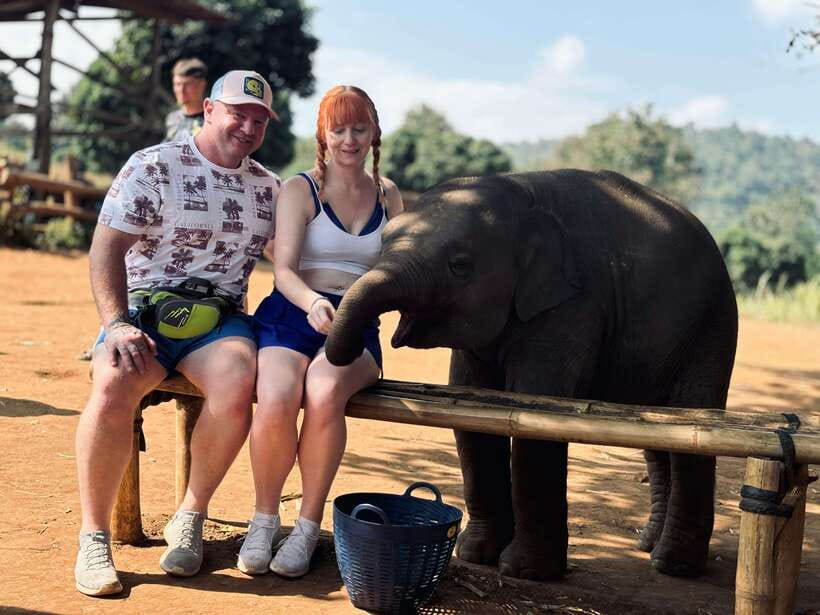
Elephants in Chiang Mai, but with real rules. This half-day elephant sanctuary feeding program focuses on respectful, non-rushed interaction, where you feed elephants in a forest setting and then spend time near the river when the herd chooses to bathe. Guides such as Tuto and Pat are often highlighted for clear explanations and a laid-back, well-run flow.
What I like most is how the experience is built around safe, supervised elephant behavior. You get up close to the elephants through several stations (with an MC-style handoff) and you learn what they eat and how staff prepare herbal treats. The other big win is the river segment, where bathing and splash time happen on the elephants terms, not yours.
One drawback to plan around: there can be some walking and water time, and the schedule can flex at short notice if elephants decide to head to the river when they want. Also, this is not the right pick if you have mobility limits, insect allergies, or recent surgery.
Key things that make this tour worth your time
- Pon Elephant Thailand setting outside town, reached by a scenic drive south of Mae Wang
- Multiple feeding stations, including Napier grass, sugarcane, and bananas
- Herbal treat preparation, often described as vitamin-ball style food-making
- River bathing that is elephant-led, so timing and activities can change
- Clear conduct rules, including no riding and no forced interactions
- Strong on-the-ground organization, with guides like Tuto, Pat, Toto, Pan, and Jackie frequently mentioned
The half-day drive south of Mae Wang sets the tone
This tour starts with travel out of central Chiang Mai, going south of Mae Wang for about 1.5 hours through hills, forests, and local farms. That drive matters more than it sounds. It’s the first hint that you’re going somewhere that cares about keeping elephants in a natural-feeling space, not just staging photo moments.
Transport is optional for hotel pickup, and it can be a big part of the convenience. If you choose pickup, plan to be in the hotel lobby 5 to 10 minutes early, because drivers wait only 5 minutes after the scheduled time. I like this approach. It keeps things moving and reduces the chaos that often happens when groups miss the handoff.
Once you arrive at Pon Elephant Thailand, you are not just dropped into a crowd. You meet the team and get a briefing on the habitat, history, habits, and how to behave around the elephants. That briefing becomes your cheat sheet for the rest of the half-day, especially when you see how calmly the elephants move.
More Chiang Mai temple visits, food walks, elephant experiences, mountain trips, and northern Thailand day tours to compare


Meeting the team: behavior rules that keep things safe
Before you go anywhere near the feeding areas, the sanctuary briefing sets expectations. You learn what the elephants need, what their typical behaviors look like, and the do and don’t list for being around them.
Here’s what stands out from how guides are described in real-world experience. People often mention guides like Tuto and Pat for being funny, engaged, and focused on explaining the elephants as individuals. Others mention guides like Toto or Pan bringing the day alive with clear, practical commentary. Names vary by group, but the theme stays the same: you’re not left guessing what to do next.
This is where you should pay attention. Even if you think you know animal encounters, the rules here matter because elephants are big, strong, and unpredictable by nature, even when they are gentle. The sanctuary also emphasizes that activities are based on elephants who are not forced to do anything, which means your role is to follow the staff lead.
Also note the format. Some experiences run like a series of stations. Several people describe it as having four stations, each with its own MC style guide at that stop, instead of one single talker all day. That can be a plus. You get repetition without boredom.
Forest walk and herbal treats: learning you can actually use
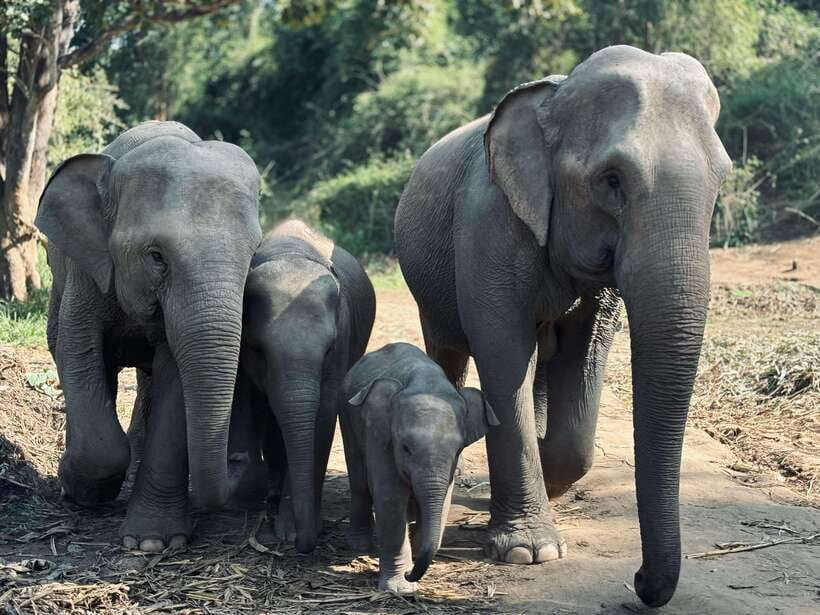
After the briefing, you head out for a nature walk with rangers. This is not a long hike, but it is real walking. In practice, expect some movement between stops, and one review notes a wobbly bridge segment. It sounded safe, but it’s still the kind of detail that matters if you have balance issues or you’re traveling with older family members.
During this portion, the focus shifts from rules to real context. You learn about Asian elephants and how staff prepare herbal treats. In the real descriptions you provided, people talk about making special food and vitamin-ball style treats. Even if the exact recipe steps vary by day, the concept is consistent: the elephants get food designed for their needs, and you learn what goes into it and why it matters.
This is one place where an ethical sanctuary differs from a typical “petting zoo” vibe. You’re not just feeding something and moving on. You’re being taught how to think about diet, routine, and why staff preparation is part of animal care.
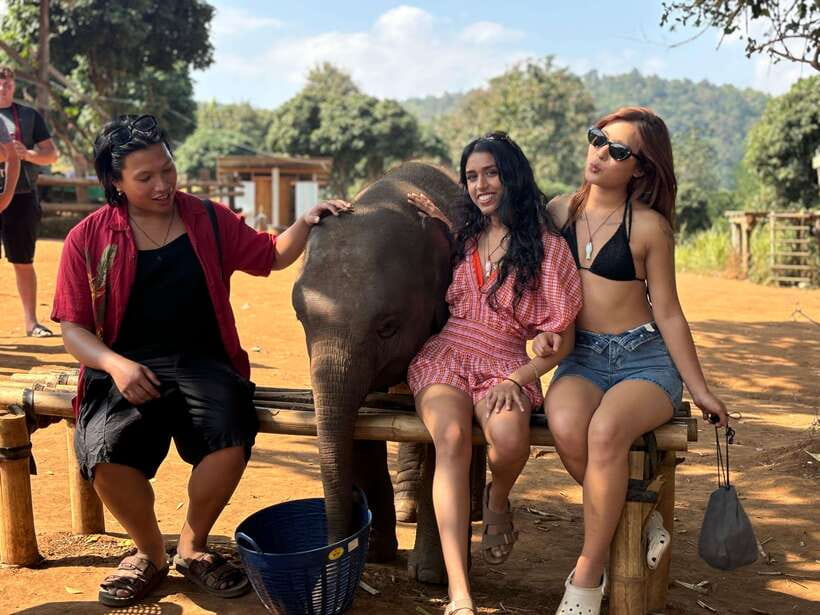
Feeding Napier grass, sugarcane, and bananas close-up
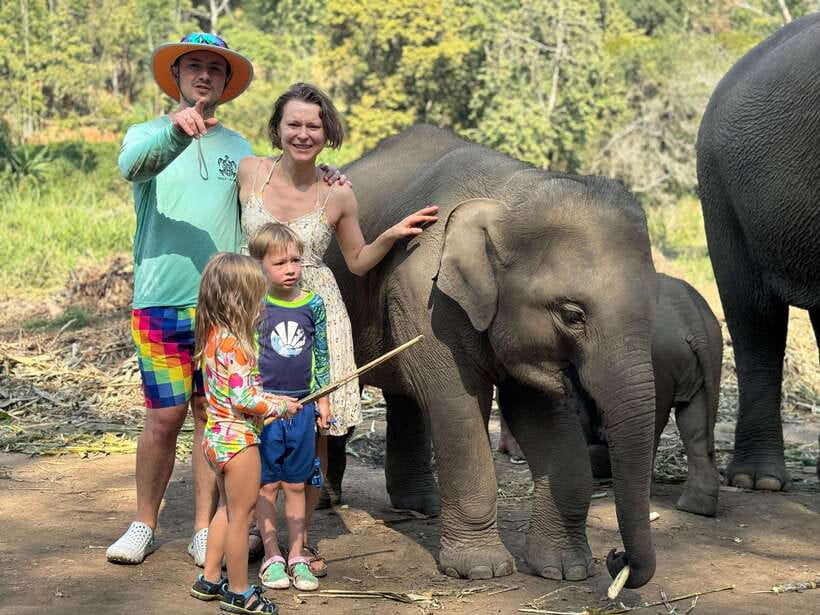
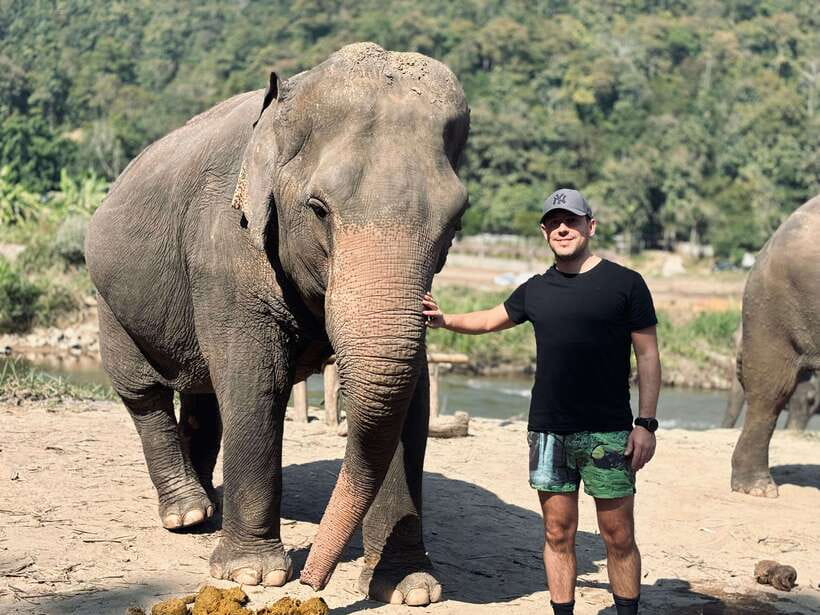
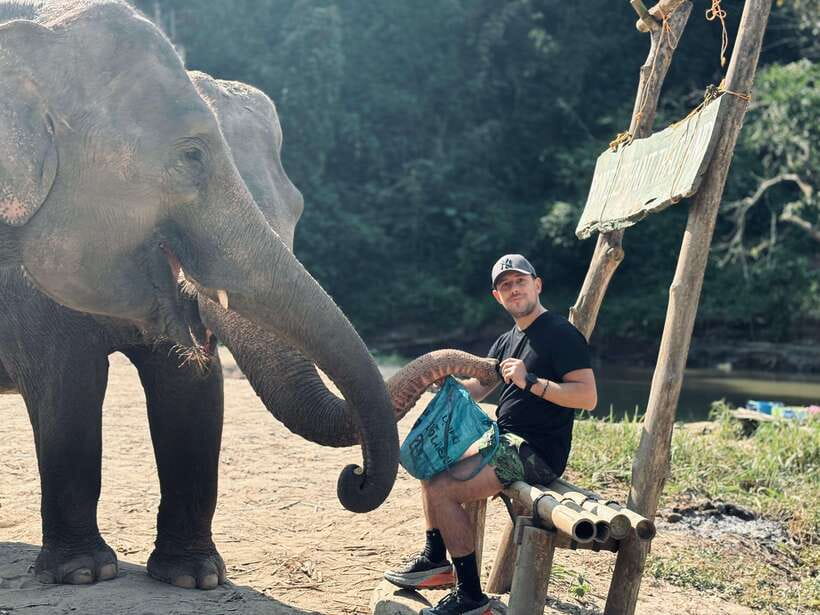
Now comes the main event: feeding the elephants in a safe space. The food list is straightforward and specific. You get to feed Napier grass, sugarcane, and bananas. That matters because it anchors the experience in what elephants actually eat, not random snacks that create bad habits.
From the way people describe the day, the interaction is close-up but controlled. You’re positioned to feed while rangers and staff manage space and timing. The elephants are in a pristine natural environment, with room to move and the ability to behave like elephants, not like props.
Timing can be a little back-and-forth. Some days you might spend more time at one station if the elephants hang around. Other days the herd may drift toward the river, and the staff will adapt. That’s not a gimmick. It’s the sanctuary operating on animal choice first.
One practical note: bring clothes that can get dirty. You’re in a forest and near water later, so plan for splashes and the kind of mud that looks small until you see your shoes.
River time: bathing and splashing when the elephants choose
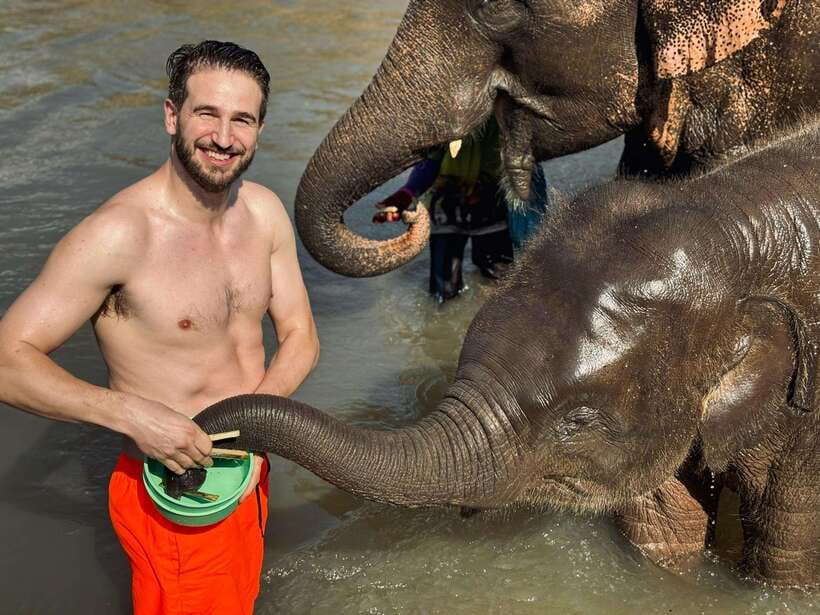
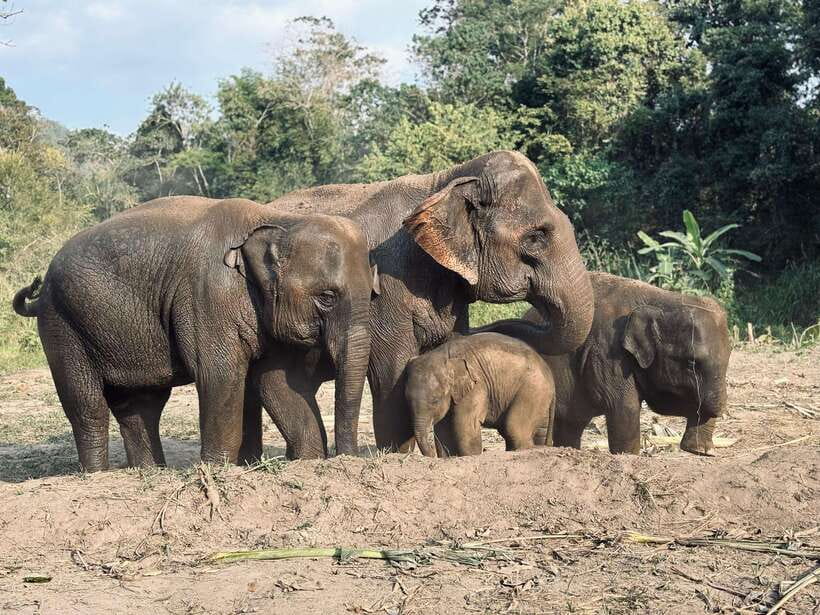
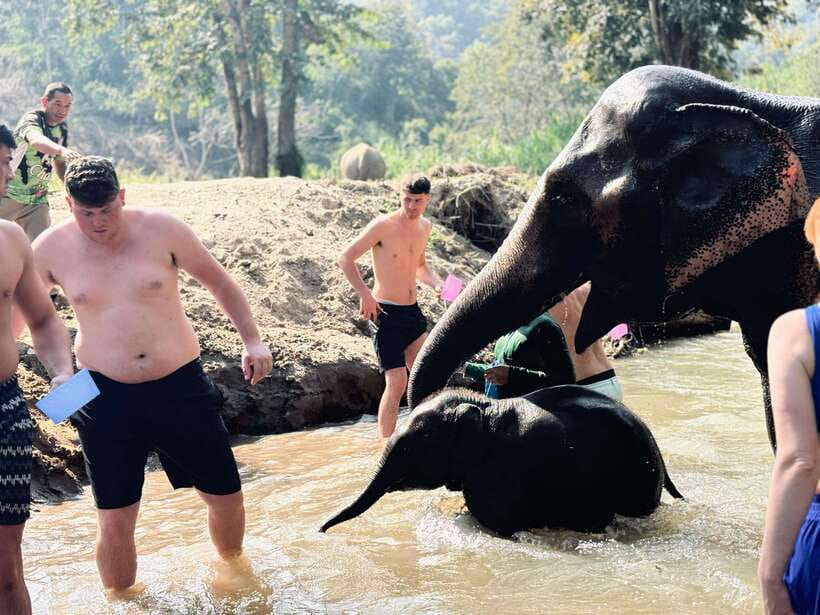
The tour’s most memorable section for many people is the river visit. Staff take elephants to the river, and you may get the chance to swim and bathe with large elephants and their family group.
But here’s the key line to remember: the elephants choose to bathe. You do not force them. That means some activities may change at short notice. If you’re the type who hates schedule uncertainty, this part can feel frustrating. If you’re okay with flexibility, it’s also what makes the whole day feel honest.
You might also get what some people describe as a water fight. That’s not something you should expect in the sense of a guarantee, but the vibe can be playful because elephants often seem to enjoy the water. Just keep it calm and follow staff cues. Safety and animal comfort come first.
Also plan for getting soaked. The tour includes drinking water, but it does not include a towel or a change of clothes. Bring beachwear and a spare set you can change into after. This is one of those “small details” that can turn into a comfort problem if you skip it.


Price and value: why $27 can still feel like a full experience
At about $27 per person, the value here is not just the elephant access. It’s what that money buys in structure.
You’re paying for:
- hotel pickup and drop-off if you select it
- an English-speaking tour guide (English and Thai are used on the day)
- insurance
- fruit for the elephants
- drinking water
You’re also paying for a day that is designed around animal welfare, not show tricks. The elephants are described as well cared for, and people often highlight that interactions do not feel forced. You may even notice a rescued elephant story in the mix, since some descriptions mention a rescued bull among the herd.
If you’re comparing to elephant attractions that involve riding or performance-style routines, this kind of sanctuary feeding model usually feels more aligned with what you came for: learning, watching, and interacting in a controlled way. That difference is the real value.
The other value lever is time. This is a half-day. The duration is about 5 hours, so you can still have a life after elephants, like a Chiang Mai market afternoon or a flight schedule you need to respect.
Logistics that actually matter on the day
The listed duration is 5 hours (around 330 minutes). That timeframe is long enough to do briefing, walking, multiple feeding stations, and river time, but short enough to keep the day from dragging.
Meeting point can vary by option booked, so double-check your exact pickup details before you leave your hotel. The tour also notes that the itinerary can change due to bad weather or other force majeure events. If it rains, you’ll want to be ready for schedule flex, not a fixed script.
Transport quality is another practical point. The data you shared rates transport very high, with 87% of reviewers giving it a perfect score. That’s a strong signal for comfort on the ride in and out, especially when you’re traveling with kids or older family members.
Group size can vary. Some descriptions mention a small group feel (around 7). Even when groups are larger, the sanctuary format tends to keep you in your own space at each station instead of turning everything into one big line.
Who should book this half-day feeding tour
This is a good fit if you want:
- close elephant contact without riding
- hands-on feeding and water time
- learning about elephant diet and staff herbal treat prep
- a calmer pace than a full-day “grab and go” tour
It’s also a solid family option in the sense that people report traveling with babies and being supported so parents could still enjoy the day. That said, this is not stroller- or wheelchair-friendly based on the provided restrictions.
Not suitable for:
- people with back problems
- mobility impairments
- wheelchair users
- people with epilepsy
- people with animal allergies
- visually impaired people
- people with recent surgeries
- people with low fitness
- people with insect allergies
If any of those apply, you should think twice, because there is walking between stations and water time where insect exposure can happen.
What to bring: the short list that prevents the annoying problems
You’ll want to pack for both forest and water. From the provided guidance and practical experience from the day’s flow, here’s the smart list:
Bring:
- change of clothes
- camera or charged smartphone
- comfortable clothes that can get dirty
- beachwear (since river time may happen)
- biodegradable sunscreen and biodegradable insect repellent
- cash (handy to have, even if most things are organized)
Skip:
- weapons or sharp objects
- anything involving alcohol or drugs
- littering, obviously
- and no riding the animals
One more tip. If you’re going to take photos in water, bring a waterproof plan for your phone. Staff may not provide that, and getting caught without a way to protect your device is never fun.
Should you book Pon Elephant Thailand’s feeding half-day?
If your goal is an ethical elephant sanctuary experience with structured feeding, education, and river time based on animal choice, I’d book this. The biggest reason is the balance: up-close access without the forced behaviors that turn elephant experiences into something you regret later.
Choose it especially if you want a half-day format. You can fit it into a Chiang Mai itinerary without burning your whole day. And if you like clear guiding at stations, the MC-style stop structure can actually feel easier than one long lecture.
Skip it if you need a perfectly fixed schedule, have limited mobility, or you are sensitive to insects. The river segment depends on the elephants decisions, and the day includes some walking.
Bottom line: if you’re okay with a flexible, welfare-first day and you’re ready to get a little dirty and wet, this half-day feeding tour is one of the most satisfying ways to experience Chiang Mai elephants with respect.
FAQ
How long is the Chiang Mai elephant sanctuary feeding tour?
The tour lasts about 5 hours (listed as 330 minutes).
Do I get hotel pickup and drop-off?
Hotel pickup and drop-off are available if you select the pickup option. If you are picked up, be in the hotel lobby 5 to 10 minutes before your scheduled time.
What do elephants get to eat during the feeding program?
You’ll be able to feed elephants Napier grass, sugarcane, and bananas, and you’ll also learn how treats are prepared.
Is river bathing guaranteed?
No. The elephants choose to bathe in the river, and activities may change at short notice.
What should I bring since towel and clothes are not included?
Bring a change of clothes, beachwear, and comfortable clothes that can get dirty. Also bring items like biodegradable sunscreen and biodegradable insect repellent.
Is animal riding part of this tour?
No. Riding animals is not allowed.
Who is this tour not suitable for?
It is not suitable for people with back problems, mobility impairments, wheelchair users, epilepsy, animal allergies, visual impairment, recent surgeries, low fitness, or insect allergies.
More Half-Day in Chiang Mai



More Tours in Chiang Mai



More Tour Reviews in Chiang Mai

Not for you? Here's more nearby things to do in Chiang Mai we have reviewed






Chiang Mai Day Tours, compared.
 ★ 5.0Half-Day Thai Cooking Class at Organic Farm in Chiang MaiFrom $2919,087 reviews
 ★ 4.6Chiang Rai White Temple and Blue Temple Day TourFrom $273,366 reviews
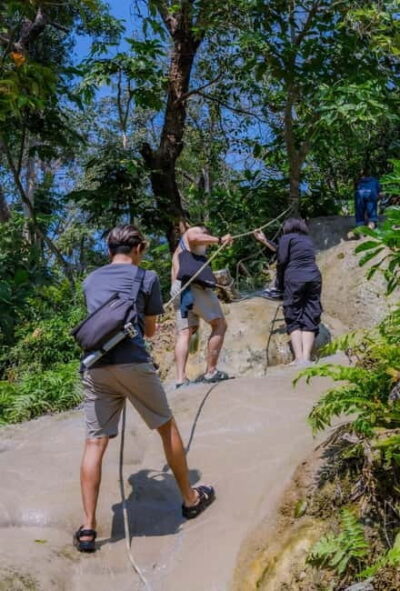 ★ 4.8Sticky Waterfall & Angel Waterfall Park Day TourFrom $411,371 reviews
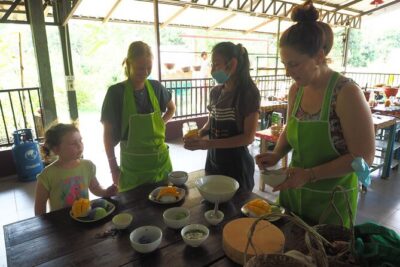 ★ 5.0Full Day Thai Cooking at Farm (Chiang Mai)From $391,127 reviews
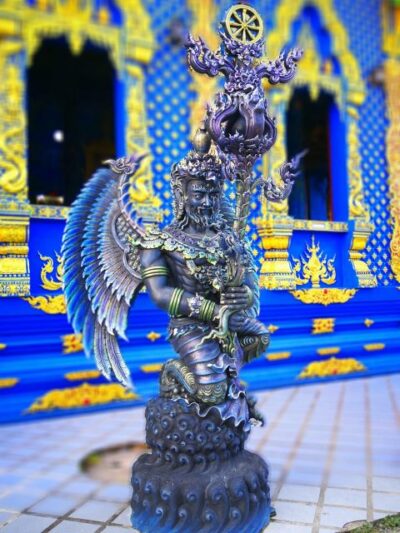 ★ 4.5Chiang Rai’s Temples Exploration Day TripFrom $51871 reviews
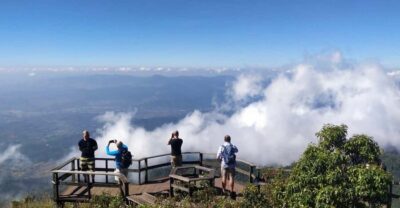 ★ 4.7Doi Inthanon Park with Kew Mae Pan Hike Day TripFrom $62841 reviews
 ★ 4.9HALF-DAY COOKING COURSE at a Thai Cooking FarmFrom $28705 reviews
 ★ 5.0Care Pride Elephants: Full-Day Tour ExperienceFrom $91658 reviews
Browse the lists this tour appears in