
REVIEW · CHIANG MAI FOOD & MARKET TOURS
Chiang Mai: Local Food and Markets Guided Walking Tour
Food, flowers, and street snacks in one walk.
What makes this tour such a fun idea is the mix of local markets and very specific Chiang Mai bites, from sweet dumplings to Hakka-style noodles. I also like that you follow a guide who can explain what you’re eating and why it matters in this city’s food story.
The one catch: food and tastings cost extra, so you will need cash and a healthy appetite.
Key things to know before you start
- Meet by Khua Khaek (Chansom Memorial Bridge): easy landmark, right by the Ton Lamyai Flower Market area.
- A tight 150-minute plan: short walking tour, but the pace can feel quick between stops.
- Stalls you likely skip on your own: Hakka-style noodles, pa thong go, and mango sticky rice from well-known market vendors.
- Bring cash, not just curiosity: tastings are at your own expense.
- Low-impact focus: GSTC-certified and includes carbon emissions offset credits.
Start at Khua Khaek Bridge, then let your stomach lead
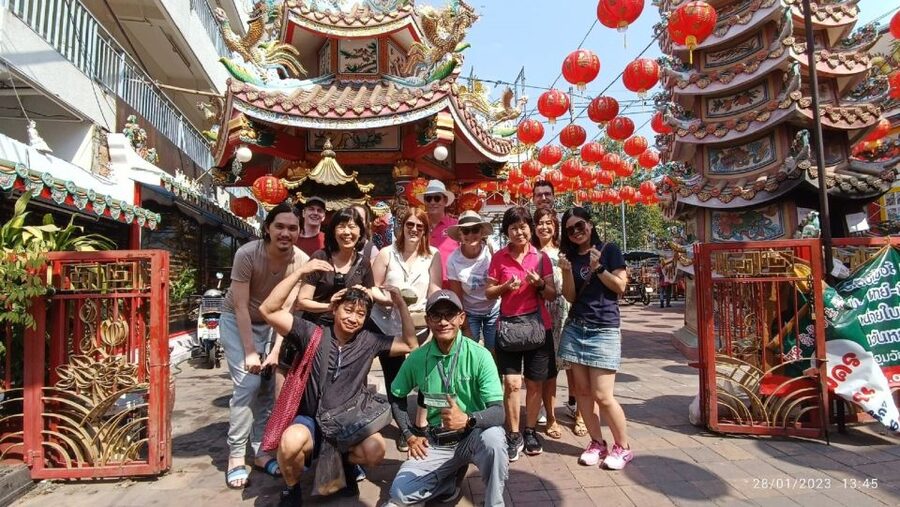
Your walk starts at Chansom Memorial Bridge, nicknamed Khua Khaek, opposite Ton Lamyai Flower Market. The guide holds a TripGuru sign, and you’ll want to be there about 10 minutes before pickup time, because the guide can only wait up to 10 minutes after the scheduled time.
Why this matters: Chiang Mai has busy roads, especially in the morning. If you want a calm start, pick an earlier slot and give yourself extra buffer getting there, or you’ll spend your first minutes stressed instead of hungry.
This tour is a good match for people who want a first-pass view of Chiang Mai’s food scene without building a whole game plan. You’re walking through market neighborhoods, but you’re also learning how the dishes fit local and Chinese-influenced food traditions.
You can also read our reviews of more walking tours in Chiang Mai


Sweet start at Lung Khajohn Wat Ket: Khao Kriab Pak Moh
The first food stop is Lung Khajohn Wat Ket, known for sweet steamed rice skin dumplings stuffed with peanuts. The snack is called Khao Kriab Pak Moh, and it’s a smart opener because it sets the tone: Chiang Mai street food can be playful, not just spicy.
A dumpling-first strategy works better than jumping straight into savory noodles. You get an easy taste of texture, sweetness, and portion size, and it helps you gauge how spicy or rich later bites might feel.
Practical tip: wear comfortable shoes. The tour is short, but you’re still moving between market pockets, and you’ll likely stand and eat in-between.
Ton Lamyai Flower Market is more than scenery
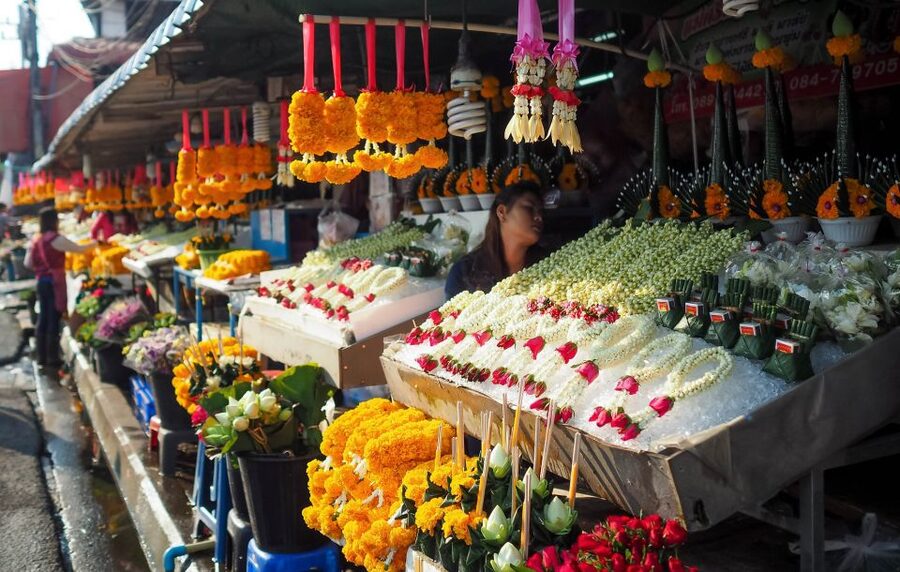
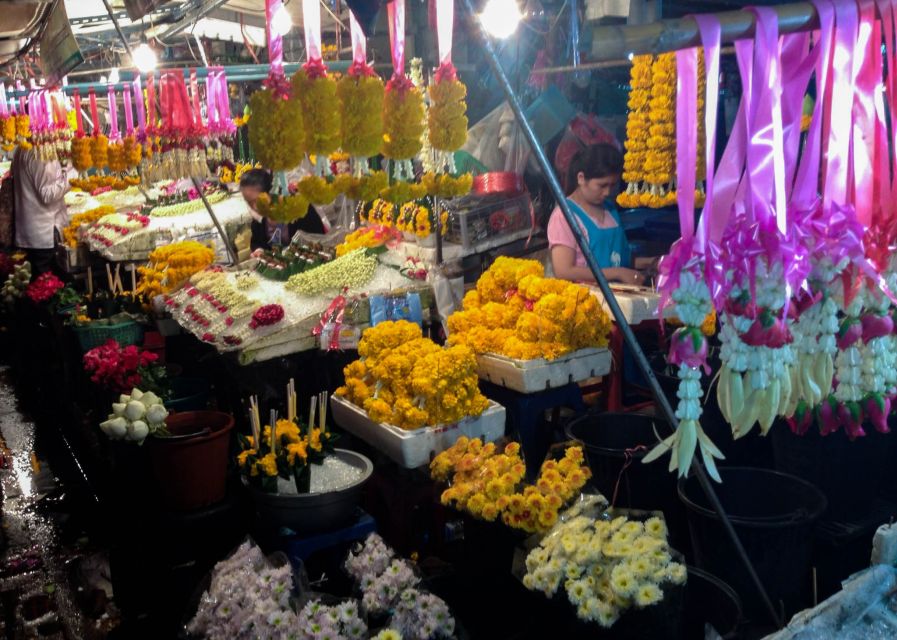
Right after the first bite, you pass through Ton Lamyai Flower Market. Flowers might sound like a detour until you remember what markets are for: they’re social hubs, not just shopping stops.
This part gives you a quick visual reset from the food and makes the walk feel more like exploring a neighborhood. It’s also a helpful moment to slow down and take photos before you hit the snack-and-stall rhythm again.
If you’re visiting during hot weather, shade and hydration matter. Sunglasses and sunscreen are a must, since you’ll likely be outdoors for stretches.
Go Neng and pa thong go: the dinosaur-bun moment
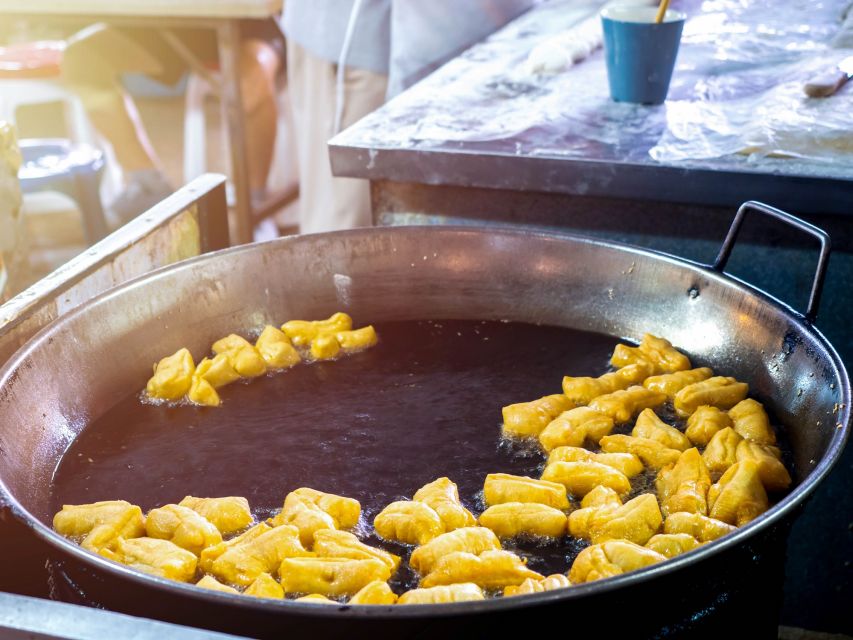
Next up is Go Neng, where you taste a Chinese-influenced street snack called pa thong go. These are oddly shaped, deep-fried dough sticks, and some people compare them to dinosaur shapes.
It’s one of those foods that’s simple but hard to explain unless you try it. The outside goes crisp and the inside stays airy, which makes it a great “grab and go” snack style. Plus, it’s the kind of dish you’d miss if you only searched for the usual tourist menu items.
Consider what you bring to the table emotionally: pa thong go is fried. If you ate a big breakfast, you’ll still taste it, but you’ll feel full faster. This tour works best when you go in with lighter meals.
Warorot Market food hunt and mango sticky rice payoff
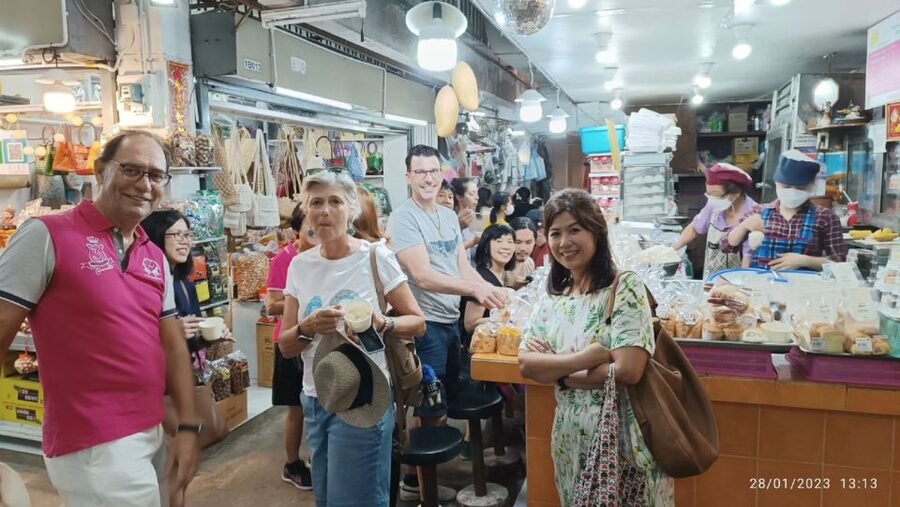
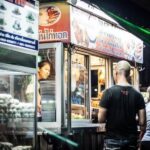
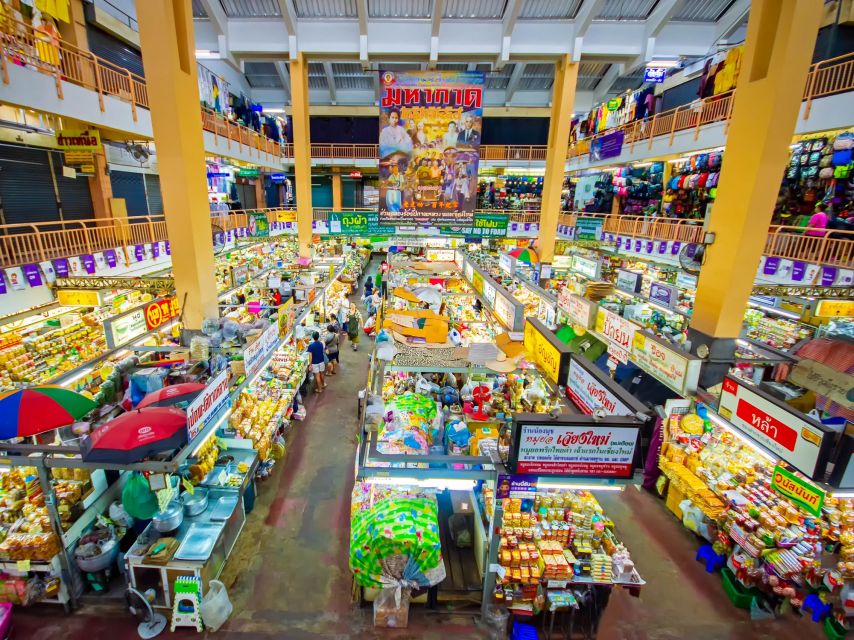
You then spend time around Warorot Market, one of the city’s famous market areas where you can find snacks, produce, and more. This stop is where the tour really leans into variety, because the market has lots of vendors and many different flavors in a small radius.
For a sweet finish inside this market, you’ll hunt down the stall selling mango sticky rice. That choice makes sense: mango sticky rice is familiar enough to enjoy, but the market context makes it feel like part of real daily life rather than a packaged dessert.
What to expect here:
- multiple small tastes rather than one big restaurant meal
- time spent walking and choosing stalls with your guide
- the chance to see how vendors display food and handle demand
The downside to Warorot is crowding and constant movement. If you don’t like fast-walking through busy areas, you might find parts of the market stop a little hectic. A good guide helps you move efficiently, so pay attention to their pacing.
You can also read our reviews of more food & drink experiences in Chiang Mai
Thana Ocha Hakka-style noodles: the savory “big finish”
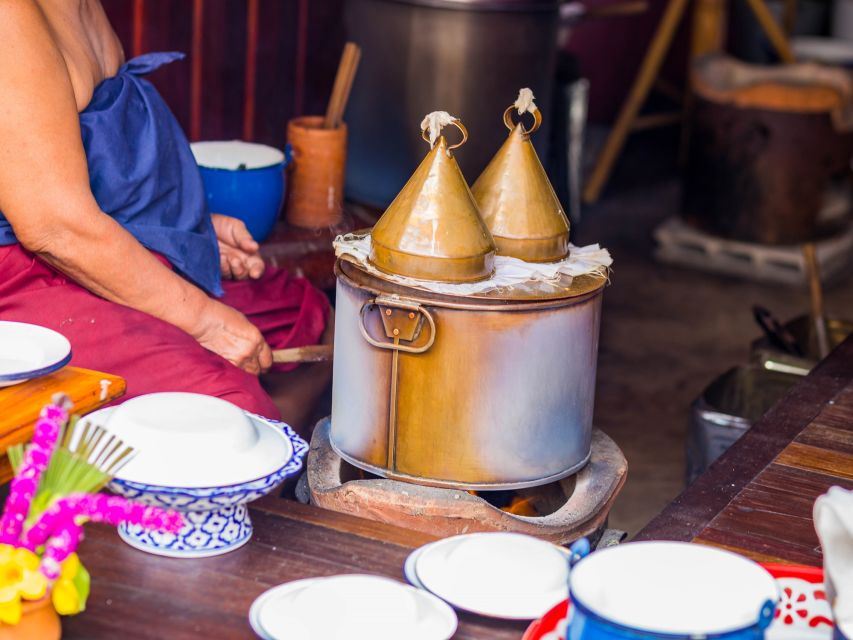
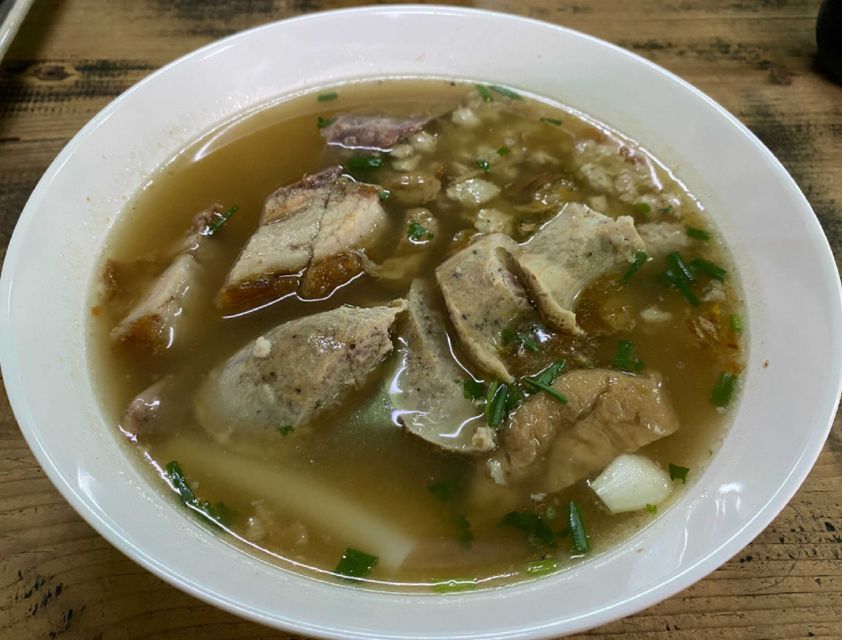
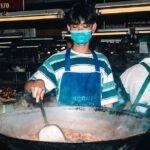
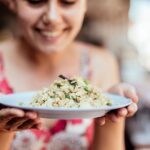
Your last stop is Thana Ocha, where you get a savory dish featuring Hakka-style noodles. This version comes with Hakka stuffed tofu, fish sausage, and wontons.
This ending is a strong choice because it balances the earlier sweetness and fried snacks. You’re ending with something more hearty and satisfying, which is perfect when your earlier tastes were more bite-sized.
Also, this is where the cultural story becomes real. You’re tasting the blend that shows up in Chiang Mai, where Chinese-influenced foods can become local staples. A guide’s explanation helps you connect ingredients to background rather than treating the food like a random lineup.
If you’re a noodle fan, this is the moment you’ll probably remember most.
What you might taste (and what you should budget for)
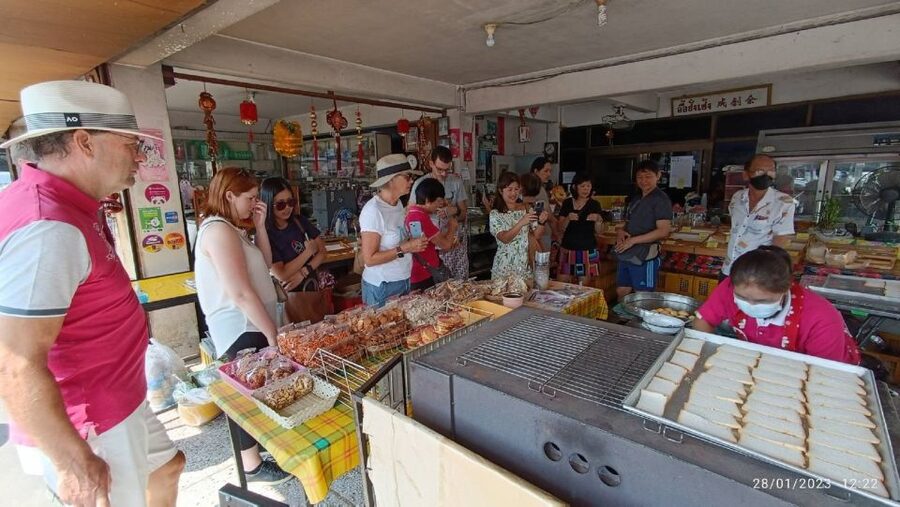
The tour includes the guide and walking, plus carbon offset credits. Food and tasting expenses are not included, so plan for extra costs at each stop. You can choose from tasting options at your own expense such as:
- Hakka-style noodles
- Sticky rice with mango
- Pa thong ko
- Khao Kriab Pak Moh
This is the main value question for your wallet. The tour price is reasonable for a guided market crawl, but you should think of it as paying for direction and timing, not for a full meal package.
One more budgeting note: bring cash. Market life runs on quick transactions, and it’s much easier when you’re not scrambling at every stall.
Price and value: why $48 can work if you go hungry
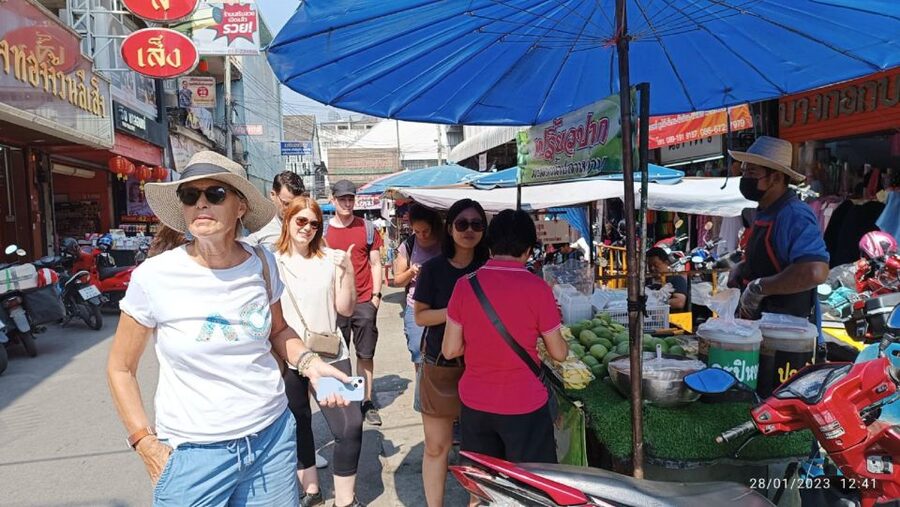
For $48 per person and about 150 minutes, you’re paying for:
- a guided walking loop through key market areas
- help ordering or selecting stalls so you don’t waste time guessing
- carbon offset credits as part of a low-impact approach
The trade-off is that you’re still responsible for tastings. If you only buy one or two items, the value drops. If you treat it like what it is, a guided sampler, it usually feels like a fair deal.
A good rule: eat a light breakfast or none at all. Then you can enjoy the sweet, fried, and savory sequence without forcing yourself to stop.
Pacing, walking, and who should skip this
This is a short walking tour, but it can still involve enough walking to matter. One practical point from the experience style is that it’s not a sit-down restaurant crawl, and you may walk a bit between stops and corridors inside markets.
It also has some clear limitations. It is not suitable for:
- pregnant women
- people with mobility impairments
- people with heart problems
- people with respiratory issues
- vegans
If you fall into any of those categories, you’ll be happier with a more tailored food plan. And if you’re managing mobility but can walk short distances, still be honest with yourself about standing time in markets.
Low-impact touring: the carbon offsets piece
This tour is GSTC-certified, and it includes carbon emissions offset credits. That doesn’t make street food automatically more sustainable, but it does mean the operator is building responsibility into the tour structure.
If you care about low-impact travel, it’s a nice match for market exploring, since you’re mainly walking rather than riding vehicles between destinations. The biggest practical win is simple: you see more of the neighborhood on foot without big transport emissions stacking up.
Timing: pick a start time that won’t rush you
You can choose from multiple start times, and there are choices for different group needs. Morning traffic can be heavy, and navigation apps can mislead you, so plan extra time to arrive.
One local-style tip: if you choose later slots, some restaurants and stalls may close earlier than you expect. That can lead to faster switching to alternative places, which might still taste great, just with less time to linger.
If you want the smoothest pace, lean toward a morning or earlier time slot so you’re not racing closure windows.
What to bring so you enjoy it instead of managing discomfort
For this walking food day, pack like you’re going to be outside and moving:
- Comfortable shoes
- Sunglasses
- Hat
- Camera
- Sunscreen
- Insect repellent
- Cash
Also consider what you wear. The markets are full of smells, heat, and movement. Light layers help, and closed-toe shoes keep you steady on uneven pavement and crowded walkways.
Should you book the Chiang Mai Local Food and Markets Guided Walking Tour?
Book it if you want a guided sampler of Chiang Mai street food with clear stop points and a guide who can help you order confidently. It’s especially worth it for first-timers who want dishes like Khao Kriab Pak Moh, pa thong go, mango sticky rice, and Hakka-style noodles without spending your first day researching stalls.
Skip it or choose something else if you want a fully included meal with no extra spending, or if you’re vegan (there’s no vegan option). Also skip if you can’t handle short market walking and standing.
My bottom line: this is a smart way to get your bearings in Chiang Mai’s market neighborhoods while eating the kinds of foods you’d hesitate to hunt down alone. Just go in hungry, bring cash, and wear shoes you can walk in for 150 minutes.
More Walking Tours in Chiang Mai

More Tours in Chiang Mai




More Tour Reviews in Chiang Mai


Not for you? Here's more nearby things to do in Chiang Mai we have reviewed




Chiang Mai Food & Market Tours, compared.
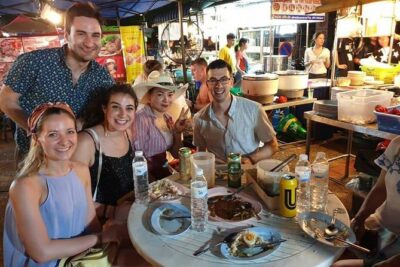 ★ 4.5Small-Group Chiang Mai Evening Street Food TourFrom $42826 reviews
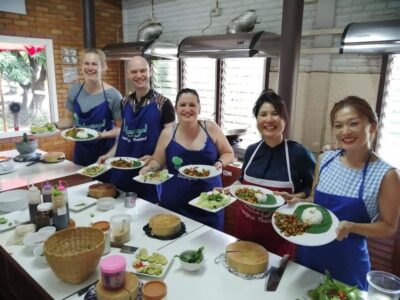 ★ 4.9Evening Cooking Class and Local Market VisitFrom $28648 reviews
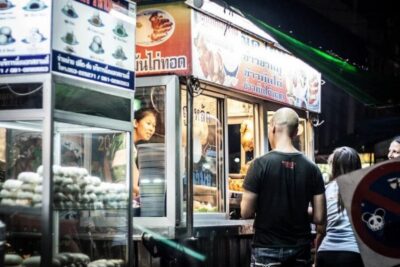 ★ 4.8Evening Local Street Food Market TourFrom $40604 reviews
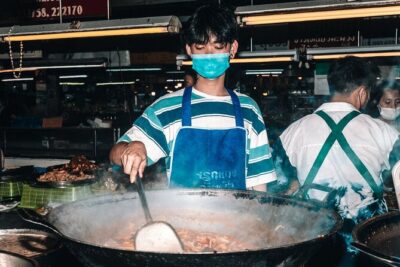 ★ 5.0Northern Flavours Chiang Mai Food Tour with 15+ TastingsFrom $59513 reviews
 ★ 4.7Kalare Night Bazaar Boxing Stadium Muay ThaiFrom $19507 reviews
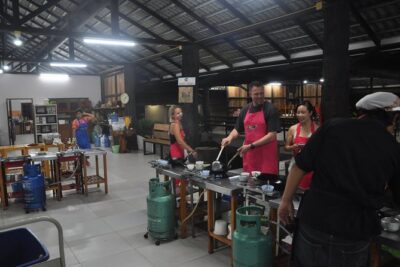 ★ 5.0Evening Cooking Class in Organic Farm with Local Market TourFrom $29394 reviews
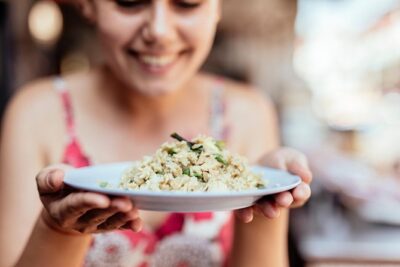 ★ 5.0The 10 Tastings of Chiang Mai With Locals: Private Street Food TourFrom $78216 reviews
 ★ 5.0Half-Day Cooking Class with Market TourFrom $36163 reviews
Browse the lists this tour appears in