
REVIEW · CHIANG MAI WALKING TOURS
Historic Temples and City Guided Walking Tour in Chiang Mai
Elephants, teak, and legends in one old-city walk. This 3-hour, low-impact stroll connects Chiang Mai’s most famous Lanna temples, starting at Wat Chiang Man and ending at Wat Chedi Luang.
I love the small, manageable group vibe, with a maximum of 10 people, which keeps the walk easy and questions flowing. I also like the practical touches, like bottled water on the route and guides who bring the sites to life, from Two Two and Jen to Pang and Tin.
The main thing to plan around is money for paid entrances, since Wat Phra Singh and Wat Chedi Luang do not have fees included.
Key Things To Know Before You Go
- Wat Chiang Man opens the show with a chedi surrounded by 15 stone elephants.
- A tight old-city route links major sites without wasting time on transfers.
- Classic Lanna architecture at Wat Phra Singh gives you a strong visual baseline for Chiang Mai temples.
- Wat Phan Tao is about teak and royal connections, including an enormous teak throne.
- Wat Chedi Luang ends with scale and ruins plus a standing Buddha inside the main prayer hall.
- Guides matter here, and past groups praised clear answers, good English, and humor.
Why This 3-Hour Chiang Mai Temple Walk Feels Like a Best-Of
Chiang Mai has hundreds of temples, which is exactly why a focused walk helps. This tour keeps you in the walled old town zone and moves you from one landmark to the next in a way that makes the city feel readable, not random. In about 3 hours, you get the sense of what different temple styles look like, and you learn the local stories that explain why these places matter.
Two things make this format work well for most visitors. First, it’s paced like an orientation, not a sprint. You spend enough time at the big hitters, especially Wat Phra Singh and Wat Chedi Luang, to actually notice details instead of only taking photos and moving on.
Second, it’s a low-impact plan. Walking means you see street life between sites, and you avoid the constant leapfrogging by vehicle that turns temple sightseeing into just a checklist.
One practical consideration: two entrances are extra. That’s not a deal-breaker, but it’s the one cost you should plan for so you do not get surprised mid-walk.
You can also read our reviews of more walking tours in Chiang Mai
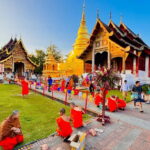

Wat Chiang Man: Elephant-Cheddi Beginnings
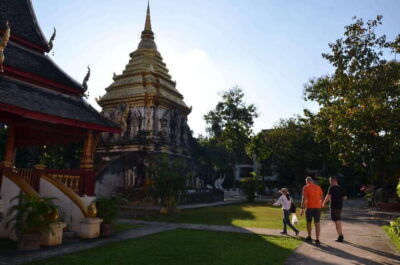
Most tours in Chiang Mai start strong, but Wat Chiang Man starts strong in a very visual way. The route begins here, and right away you get the iconic chedi wrapped in legend and imagery. The highlight is the elephant-surrounded chedi, where 15 stone elephants appear to carry the structure on their backs.
This is a smart first stop for a walking tour, because it gives you a reference point. From the start, you can see how temple design in northern Thailand uses repeating forms, symbolic figures, and layered ornament. Even if you are not a temple-architecture expert, your eye catches patterns quickly when you begin with something this distinctive.
It’s also an easy start time-wise. You spend about 30 minutes here, which is enough for your first photos, time to walk the grounds, and a calm moment to absorb the atmosphere before the rest of the route picks up.
If you want to get the most out of this first temple, I’d suggest keeping your questions for the guide early. Guides like Two Two and Jen have been noted for answering lots of questions clearly, and Wat Chiang Man is a great place to start asking how the temple fits into Chiang Mai’s older story.
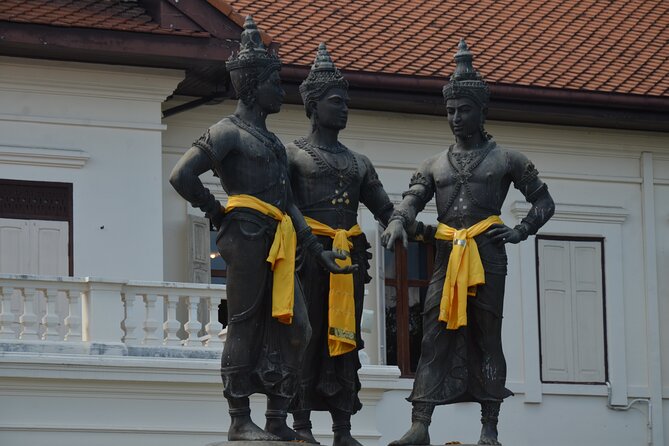
Three Kings Monument: The Old City Center You Can Feel
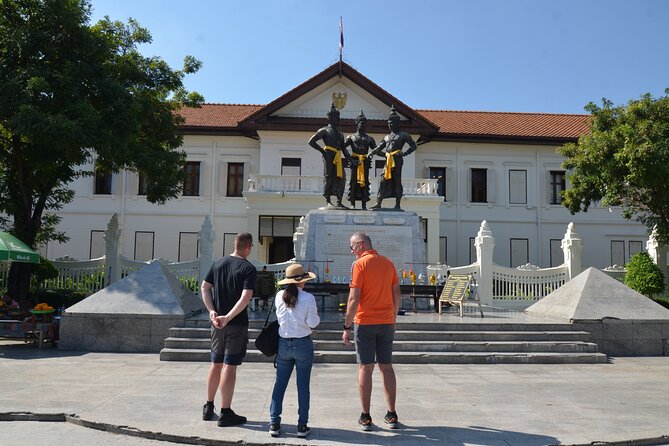
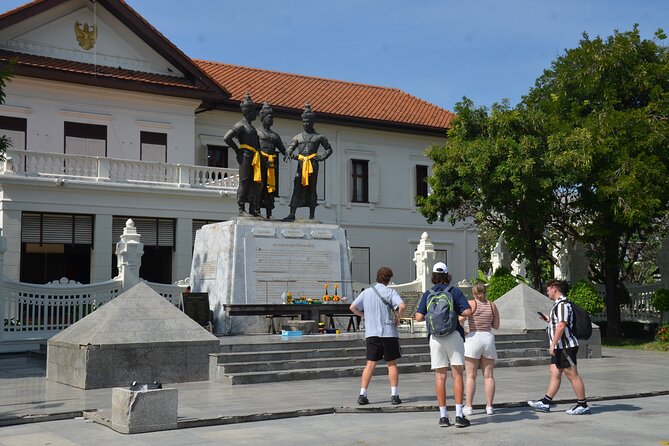
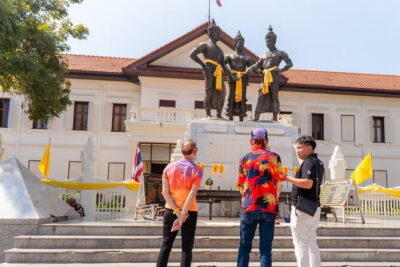
After Wat Chiang Man, you head toward the Three Kings Monument, which sits in an open square in the heart of the old city area. This stop is shorter, about 15 minutes, but it’s still worth your attention.
A monument like this matters because it acts like a map marker for culture. The guide explains the history behind the statue and its cultural significance, and that context helps you connect the dots between temples and the city that grew around them. Even if you only spend a quarter hour, it can make the later stops feel less random.
This is also a good point to check your energy. You are still close to your starting zone, and you have not yet had to deal with the bigger entrance costs that come later. Take a quick breather here, hydrate if you need to, and then you can settle into the longer temple blocks.
Wat Phra Singh: Classic Lanna Style You Can Compare
Wat Phra Singh is one of the must-see temples in Chiang Mai. The walking tour gives it about 50 minutes, which is key. You do not get just a quick peek, you get time to notice the style.
What stands out here is its classic Lanna temple architecture. The tour frames it as one of the finest examples of classic Lanna style in northern Thailand, and that matters because it gives you a baseline. When you later look at Wat Phan Tao and the ruined setting at Wat Chedi Luang, you can compare what you already saw here. The shapes, the materials, and the overall vibe become easier to understand.
Also, this stop is the first place where you should expect extra cost. Entrance fee for Wat Phra Singh is not included. I would plan for that small add-on so you can focus on the experience instead of logistics mid-walk.
Dress and temple etiquette still apply. You will be walking between sacred spaces, so cover up appropriately, keep your pace respectful, and remember you are sharing the grounds with worshippers.
If you are the kind of visitor who likes to understand what you are seeing, this is where you will likely spend the most mental energy. Ask about the design choices, the reason for certain temple features, and how Lanna architecture differs from what you may have seen elsewhere in Thailand.
Wat Phan Tao: Teak Wood, Royal Past, and a Strange Amount of Wow
Then comes Wat Phan Tao, which is one of the most distinctive stops on the itinerary. You get only around 15 minutes here, but the payoff is high because the temple is built almost entirely of teak wood.
This is where Chiang Mai temple culture becomes tangible. The tour explains that the temple was constructed in the 14th century, originally used as a palace, and later converted into a monastery. That royal-to-religious transformation adds weight to what you see. When the woodwork looks impressive, it helps to know it was not built for the simple purpose of decoration.
The biggest visual detail is in the main hall. There’s an enormous teak throne that once was used by Chiang Mai’s rulers. The building itself was originally part of a royal palace, so the hall carries both power and sacred function.
For many visitors, the easiest way to enjoy this stop is to slow down for the wood elements. Notice the color, the grain, and how the structure holds up as a key part of the building’s identity. Teak is not just a material choice, it shapes the whole feel of the place.
Another positive: Wat Phan Tao is free in terms of admission on this tour. That means you can keep your money reserved for the paid stops and spend more attention on the unique craftsmanship instead.
You can also read our reviews of more guided tours in Chiang Mai





Wat Chedi Luang Varavihara: Ruins With Meaning (and a Standing Buddha)
The final stop is Wat Chedi Luang Varavihara, one of Chiang Mai’s biggest temple scenes. You spend about 50 minutes here, and it’s a highlight even before you factor in the standing Buddha.
The main feature is the impressive chedi in a ruined state. Ruins can be tricky, because some people expect something fully restored. Here, the setting is part of the story. It shows how time changes grand structures, and it makes the scale more dramatic. The chedi feels monumental even when parts are damaged, and that sense of history is hard to replicate with a quick photo stop.
Inside the main prayer hall, you also find a majestic standing Buddha. That combination is why this end-point works well. You start with a chedi in working symbolic form at Wat Chiang Man, then you end with a giant chedi in ruin while also getting a strong spiritual focal point inside.
This is also the second stop with a separate entrance fee. The entrance for Wat Chedi Luang is not included, so expect that additional cost at the end of the walk.
As you finish, take a moment to look around and read the whole scene, not just the Buddha. Ruined chedis often make people aim their cameras at one angle. A short change in viewpoint can reveal more of the structure’s silhouette and how the grounds are laid out.
Price and Value: Is $16 Worth It?

At $16 for roughly 3 hours, the value is strong if you like a guided storyline. This is not a long, bus-heavy day. It is a focused old-town temple walk, with bottled water included and a mobile ticket for convenience.
The key value lever is that the tour compresses four major sites into one plan, and it adds context so you are not just looking at buildings. You learn the reason these temples are famous, and you get cues about what to notice while you are there. With guides known for answering lots of questions, it can turn your visit from, I saw a temple, into I understood why it matters.
The tradeoff is that two attractions require additional entrance fees. You should treat that as part of the real budget. Still, you get a lot for the base price, especially if you would otherwise pay for a guided orientation separately.
If you are traveling solo, you may find this plan even better. You get the benefits of a guide and a small group without needing to book a private tour.
What the Group Size and Guide Style Change for You
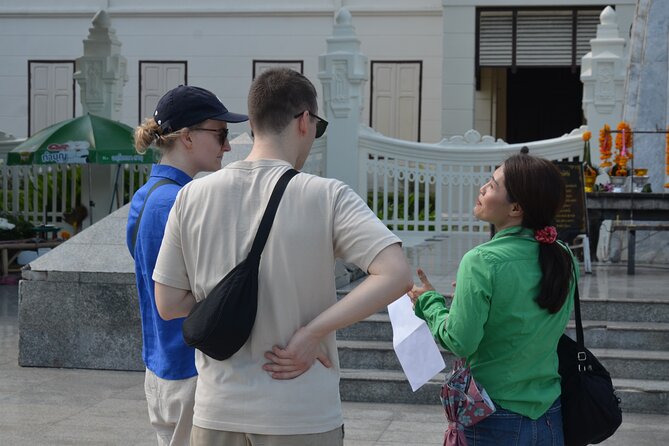
With a maximum of 10 travelers, you get a more personal rhythm than large-group tours. That matters in temples, where people slow down, stop for photos, and ask questions. In a small group, the guide can adjust pacing without constantly breaking formation.
The most praised element in past groups has been the guides themselves. Names like Two Two, Jen, Pang, and Tin show up in feedback, and the themes are consistent: clear explanations, strong English, and good humor that keeps the walk from feeling like a lecture.
You should think of this as an orientation tour as much as a temple tour. If you want to understand northern Thailand beyond Instagram highlights, a guide who can answer follow-up questions is the difference between sightseeing and learning.
Practical Tips: How to Have a Smooth Walk
This is a walking tour, so your comfort is part of the quality. Chiang Mai weather can swing, and the experience is described as needing good weather. If clouds roll in or rain hits, you may get offered a different date or a refund depending on how it’s handled.
Wear something breathable and respectful. You are visiting temples, so plan for covered shoulders and legs where needed. Comfortable shoes matter more than you think, because you are walking between sites across the old city area.
You’ll also want to keep a little cash or payment method ready for entrance fees at Wat Phra Singh and Wat Chedi Luang. You do not need a big buffer, but you do not want to scramble at the last minute.
If you visit on a Sunday, there’s a chance of cultural performances at a main temple, based on what was seen on one day during a past tour. It’s not guaranteed, but it’s a great reason to consider your travel dates if you like adding local life to your temple route.
Start to Finish Timing: What Feels Fast, What Feels Relaxed
The itinerary keeps a simple flow:
- Wat Chiang Man: about 30 minutes to get oriented with the oldest temple vibe and that elephant chedi.
- Three Kings Monument: about 15 minutes for context in the old city core.
- Wat Phra Singh: about 50 minutes for classic Lanna architecture and a longer, calmer look.
- Wat Phan Tao: about 15 minutes to see teak wood and the royal throne hall.
- Wat Chedi Luang Varavihara: about 50 minutes to finish with ruins and the standing Buddha.
The timing is balanced. You get your big attention stops, and the shorter stops prevent the day from dragging. If you are the type who gets bored at temples that feel repetitive, this route avoids that problem by changing the theme each stop.
Should You Book This Chiang Mai Historic Temples Walking Tour?
Book it if you want an efficient, guide-led way to see key Chiang Mai temples in a single morning block. The $16 price is a good start, and the bottled water plus small-group size make it feel practical, not gimmicky.
Skip it, or at least adjust expectations, if you hate paying entrance fees on top of the tour price. You will have extra costs at Wat Phra Singh and Wat Chedi Luang, and the tour relies on good weather to run smoothly.
If you like walking, you want context, and you are curious about what makes Lanna temple design different, this tour is a very sensible way to get your bearings fast in Chiang Mai’s old city.
FAQ
How long is the Chiang Mai historic temples walking tour?
The tour is about 3 hours.
What does it cost, and is bottled water included?
It costs $16, and bottled water is included.
Is this tour a mobile ticket?
Yes, the tour uses a mobile ticket.
Which temple entrances are not included in the price?
Entrance fees are not included for Wat Phra Singh and Wat Chedi Luang Varavihara.
Which temples are included on the walking route?
The tour includes Wat Chiang Man, Three Kings Monument, Wat Phra Singh, Wat Phan Tao, and Wat Chedi Luang Varavihara.
Where do you meet for the tour, and where does it end?
You start at Wat Chiang Man (171 Ratchapakhinai Rd, Tambon Si Phum, Amphoe Mueang Chiang Mai) and finish at Wat Chedi Luang Varaviharn (103 Prapokklao Road, Tambon Si Phum, Amphoe Mueang Chiang Mai).
How big is the group?
The maximum group size is 10 travelers.
Is the tour near public transportation?
Yes, it is described as near public transportation.
What happens if the weather is bad?
The tour requires good weather. If it is canceled due to poor weather, you will be offered a different date or a full refund.
Can I cancel for a full refund?
Yes, you can cancel for a full refund up to 24 hours before the experience starts. If you cancel less than 24 hours before, the amount paid will not be refunded.
More Walking Tours in Chiang Mai



More Tours in Chiang Mai




More Tour Reviews in Chiang Mai



Not for you? Here's more nearby things to do in Chiang Mai we have reviewed




Chiang Mai Walking Tours, compared.
 ★ 4.63 Hour Old City and Temples Guided Walking TourFrom $161,568 reviews
 ★ 4.7Historic Temples and City Guided Walking TourFrom $21650 reviews
 ★ 4.7Temple And City Walking Tour Part IFrom $15244 reviews
 ★ 4.3Local Food and Markets Guided Walking TourFrom $48175 reviews
 ★ 4.6Historical and Culture Exploration Walking TourFrom $1540 reviews
 ★ 4.5Chiang Mai Old City & Temples Guided Walking Tour – 3 HrsFrom $1634 reviews
 ★ 5.0Chiang Mai Temples Visit Walking Tour with Ex-Monk Guide Part 1From $2529 reviews
 ★ 5.0Old Town History and Culture Walking Tour at Chiang MaiFrom $1513 reviews
Browse the lists this tour appears in