
REVIEW · CHIANG MAI COOKING CLASSES
Chiang Mai: Traditional Thai-Akha Cooking Class& Market Tour
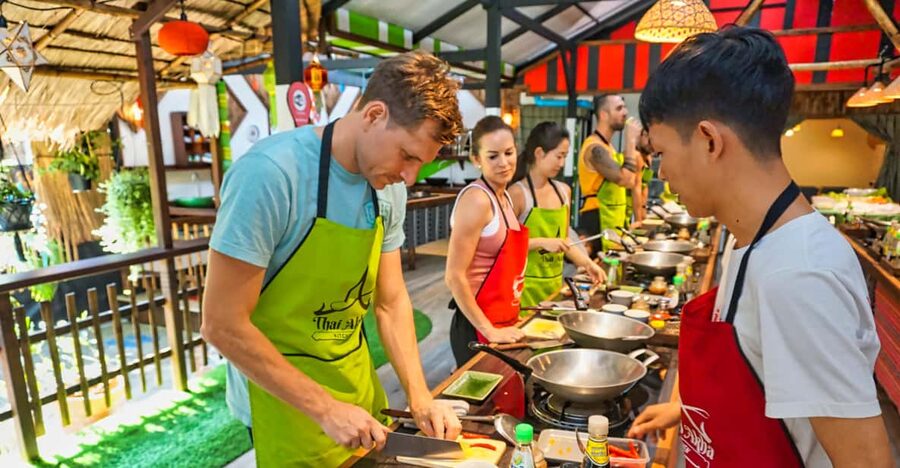
Spice lessons in Chiang Mai add up fast. I love the Thai-Akha cooking class with a menu built around Akha traditions, and I also like the market tour that shows you where the flavor starts. You get to learn dishes you do not usually see on a normal Thai menu.
The only real drawback is the schedule is packed. If you have allergies or you want a specific spice level, you will need to communicate it up front so the whole class stays comfortable.
Key things to know before you go
- Thai-Akha Kitchen focus: You are cooking Akha-influenced dishes alongside Thai favorites, not just copying a Western-style “cooking demo.”
- Market first, then class: The tour is built to help you understand ingredients before you start chopping.
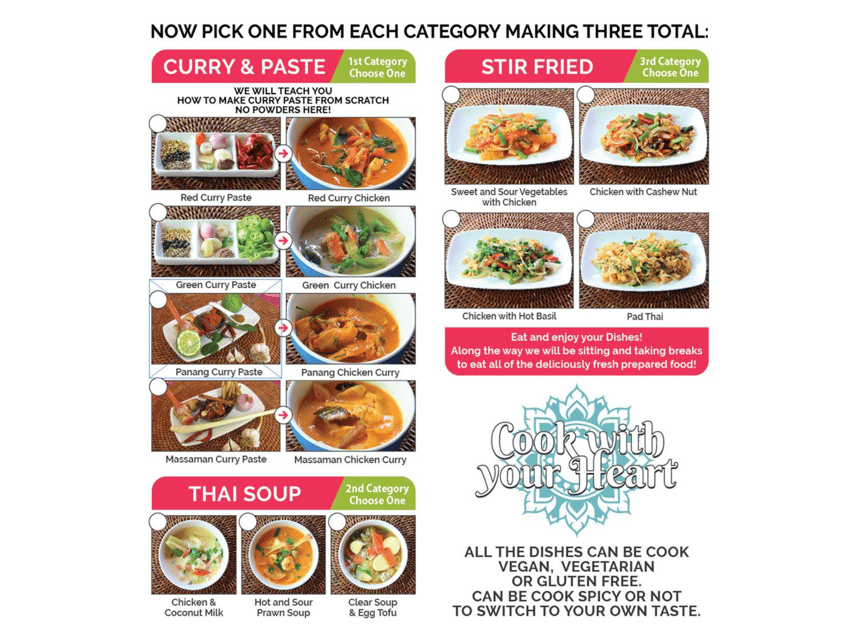
- A long, structured menu: You will work through appetizers, Akha dishes, curry/paste (1 choice), Thai soup (1 choice), and stir-fries (1 choice).
- Spice level can be adjusted: Instructors will guide you with how much heat to use so the food matches your taste.
- Take-home items are real: You get a recipe pack and a cookbook, and you may even take home spices.
Thai-Akha Kitchen and the Akha food story you actually taste
This experience centers on Akha culture through food, not just food as a souvenir. The Akha people migrated to Thailand in the early 1900s, and they developed cooking traditions shaped by mountain life, where freshness, health, and sustainability matter. At Thai Akha Kitchen, that idea shows up in what you cook: fresh herbs, fruit, crunchy salads, and soups with a lighter, cleaner feel than what you might expect from heavy street-food versions.
What makes this class feel different is the mix of Thai cooking technique and Akha dishes. You are not just making “Thai food with a theme.” You are learning how Akha flavors fit into Northern Thailand’s Thai-Akha fusion style. That is the part I think many people enjoy most, especially if you have already done one Thai cooking class in another city and want something with a clearer cultural angle.
You can also read our reviews of more shopping tours in Chiang Mai
A 5 to 6 hour Chiang Mai schedule that actually works
This is a half-day activity, usually 5 to 6 hours, and it is designed to feel like a full experience without eating your whole day. Hotel pickup from your Chiang Mai hotel is included, which matters here, because you do not want to spend time figuring out transportation and directions before you even get to the market.
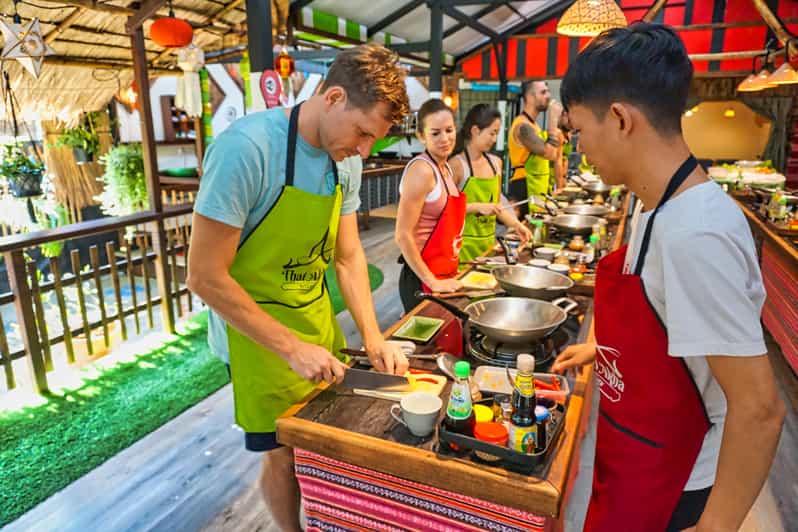
Once you arrive, the flow tends to go in two big blocks: a local market tour, then the cooking session. In practice, you should expect the class to move briskly. One important point from the experience is that you cook a lot more than many people assume you will, so come hungry and keep your water bottle nearby.
Hotel pickup to the first ingredient hunt: starting with a market tour

The market portion is more than a quick photo stop. The goal is to show you the ingredients behind Northern Thailand flavors, and you get the chance to sample local treats as you walk. I like that this part sets expectations. When you later make dishes like papaya salad or stir-fries, you understand what you are looking for and why.
Here is how to make this part more enjoyable for yourself:
- Pay attention to fresh herbs and greens because they show up again and again in Akha-style dishes.
- Watch for ingredients that seem “small” but matter, like peanuts in salads and crunchy textures in appetizers.
- Ask what is used for flavor and what is used for balance, since the teachers explain cooking logic as they cook.
And if you are a spice person, this is also the right time to be clear about your preferences. Many instructors will suggest how to adjust heat during cooking, so you get the taste you want instead of something too mild or too hot.
Cooking menu breakdown: appetizers, Akha dishes, and your curry and soup choices
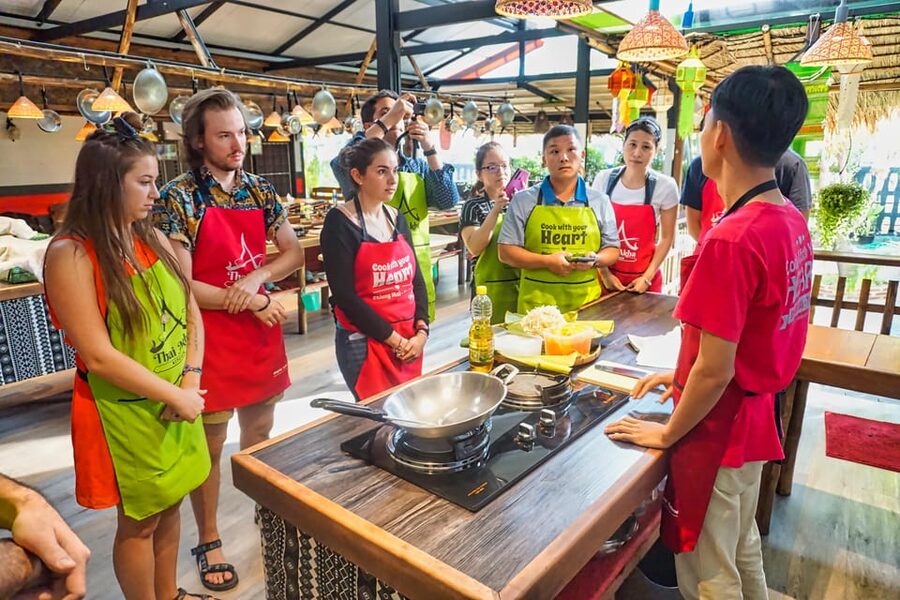
The cooking class menu is built like a full meal, with several fixed items and a few options. From the structure, it is easy to see why people end up feeling like they got a bargain: you are not only learning one recipe. You work through multiple dishes, from start to finish.
The appetizers and desserts you typically start with
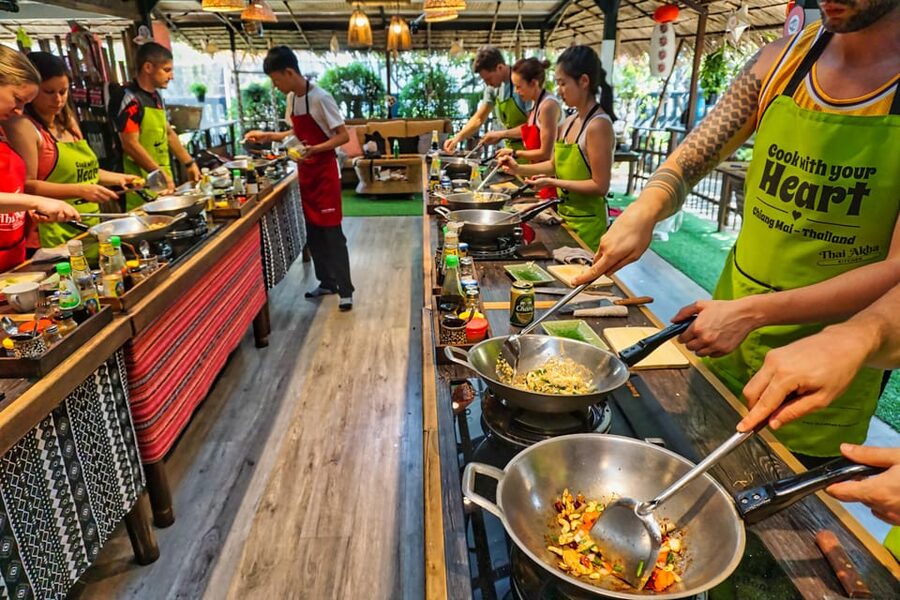
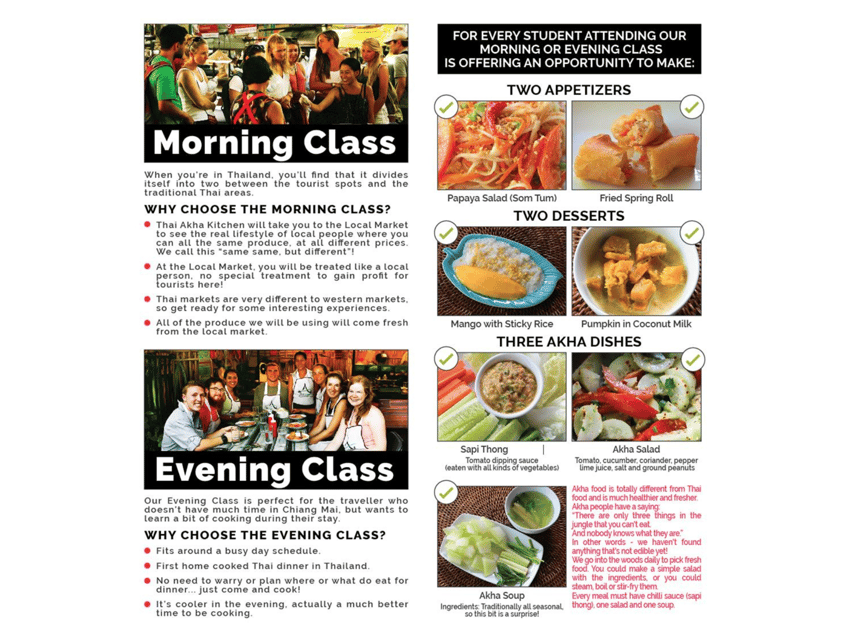
You will cook two appetizers:
- Papaya salad
- Fried spring roll
You will also make two desserts:
- Mango with sticky rice
- Pumpkin in coconut milk
These help balance the meal. The savory dishes teach you herb, citrus, and seasoning habits. The desserts give you a sweet baseline that helps you understand coconut and fruit flavors used later in soups and richer curries.
More Chiang Mai temple visits, food walks, elephant experiences, mountain trips, and northern Thailand day tours to compare


The Akha section: tomato dipping sauce, salad, and soup
This is the “Akha” heart of the class, and it is usually where people get the most surprised. You will make three Akha dishes:
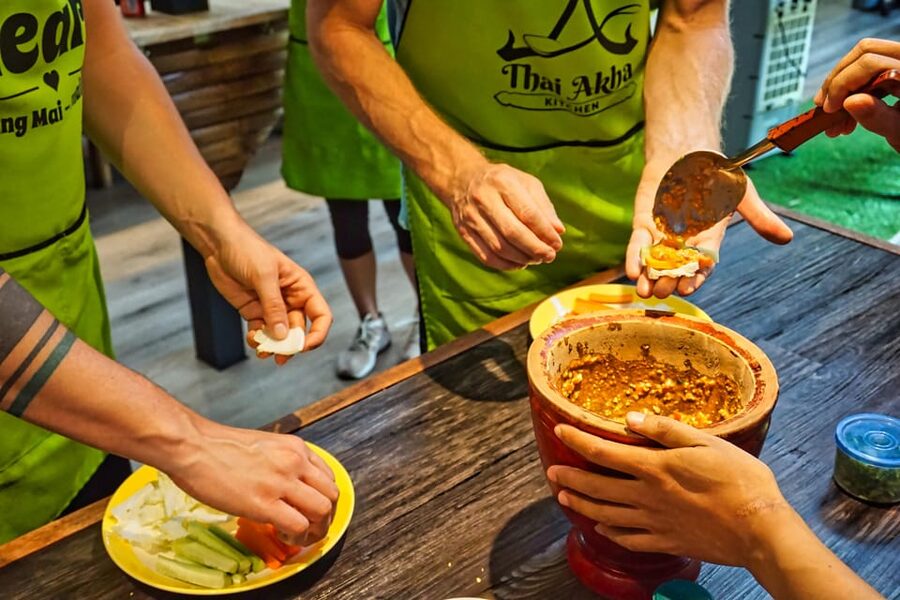
- Sapi Thong (tomato dipping sauce)
- Akha Salad (tomato, cucumber, coriander, pepper, lime juice, salt, and ground peanuts)
- Akha Soup
That salad ingredient list is a big clue about what Akha cooking emphasizes. It is not just about mixing ingredients. It is about balance: citrusy lime juice, fresh coriander, pepper, salt, and peanuts for texture. When you make it yourself, you start to feel how a salad can taste “complete” rather than like a side dish.
The choice parts: curry/paste, Thai soup, and stir-fried dishes
After the Akha dishes, you pick what you want for the rest of your meal. The menu offers:
- Curry and paste (choose 1): Red Curry Chicken, Green Curry Chicken, Panang Chicken Curry, or Massaman Chicken Curry
- Thai soup (choose 1): Chicken and Coconut Milk, Hot and Sour Prawn Soup, or Clear Soup with Egg Tofu
- Stir-fried dish (choose 1): Sweet and Sour Vegetables and Chicken, Chicken with Hot Basil, Chicken with Cashew Nut, or Pad Thai
A practical tip: if you are unsure, pick based on what you want to learn most. Chicken curries tend to teach curry-paste style flavor building. Soups are great for seasoning and timing. Stir-fries and Pad Thai are excellent for wok-style heat control and quick seasoning.
Instructors and pacing: how you end up cooking with confidence
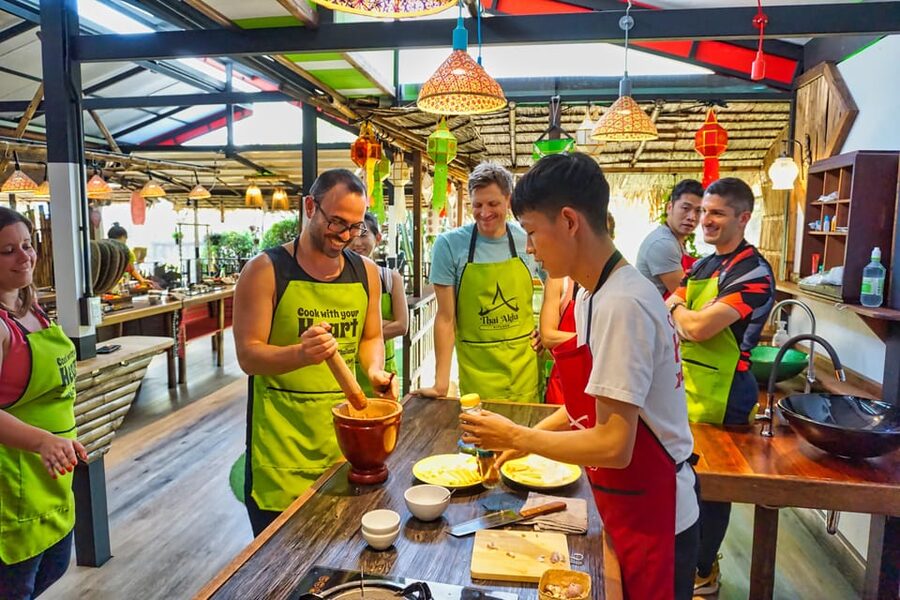
A lot of cooking classes are either too fast or too vague. This one aims to be structured but friendly, and that shows in the way classes get described. People often mention the teachers being fun, helpful, and really good at making everyone comfortable.
You might meet instructors like An, and some sessions are led by chefs such as Xuan and Evelyn. Across these different teachers, the common thread is adjustment. If you want less heat, or you want to steer the flavor a certain way, you can follow their guidance and still make it your own. That is a big deal in Thai cooking, where one spoon of chili can change the entire experience.
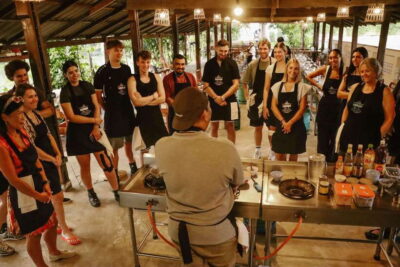
The pacing also matters. When instructors keep things organized, you spend time cooking instead of waiting around. You should also expect that you will take part in multiple stations, not just stand at one counter.
What you take home: recipe pack, cookbook, and spices
One of the smartest parts of the package is what happens after the meal. You get:
- Recipe
- Cook book
- Recipe guidance for what you cooked
In addition, some people mention receiving spices as part of the take-home experience. If you already own Thai pantry staples, that is a win. If you do not, it is a chance to rebuild your seasoning shelf so you can make the food again without guessing.
For me, take-home materials are what turn a cooking class from a fun night into a skill you can use later. When you have the recipe and ingredients list, you can recreate the papaya salad or the dipping sauce at home instead of trying to remember everything from memory.
Price and value: is $41 worth it in Chiang Mai?

At $41 per person, this feels like good value for what is included. You are paying for:
- A market tour session
- A full cooking session
- Organic ingredients
- A recipe and cookbook
- Hotel pickup service from Chiang Mai
If you compare that to the cost of booking a market tour and then buying ingredients and paying for a full cooking class separately, the package becomes easier to justify. And because the menu includes multiple dishes across savory, soup, and sweet categories, it is not a “one recipe” class price.
The only reason I would hesitate is if you are very time-limited and only want a light taste. If that is you, you might prefer a shorter food tasting tour. But if you like actually cooking, and you want a real meal you can recreate, the value is strong.
Who should book this Thai-Akha cooking class
This is a great fit if you:
- Want hands-on Chiang Mai cooking beyond the standard Thai itinerary
- Like Northern Thai flavors and want something tied to hill tribe traditions
- Enjoy markets and want to understand ingredients before cooking
- Prefer a structured class where you cook multiple dishes in one morning or afternoon
It is also ideal if you like leaving with usable tools, meaning recipes and a cookbook you can follow later.
If you have allergies, plan to communicate them in advance. The class specifically asks you to inform them so they can handle your menu safely. Also, if you hate spicy food, bring that up early. You will have a better experience when the instructor can guide you with your heat level.
Should you book this Chiang Mai Thai-Akha class?
I would book it if you want a meal that teaches you something, not just a meal you eat. The combination of market tour plus a full Akha-and-Thai menu is the main reason. Add in hotel pickup and take-home recipes, and it becomes one of those easy wins when your time in Chiang Mai is limited.
If you are hoping for a super slow, relaxed cooking day, you might find the schedule feels busy. But if you are hungry for flavor, and you like cooking your way through a menu, this one is an excellent choice.
FAQ
How long is the Chiang Mai Thai-Akha Cooking Class and Market Tour?
The experience lasts about 5 to 6 hours.
Is hotel pickup included?
Yes, pickup service from your Chiang Mai hotel is included.
What languages are the instructors?
The instructor speaks English and Thai.
What dishes do we cook?
The class menu includes appetizers (papaya salad and fried spring roll), desserts (mango with sticky rice and pumpkin in coconut milk), Akha dishes (Sapi Thong tomato dipping sauce, Akha salad, and Akha soup), plus choices for curry/paste (1 of 4), Thai soup (1 of 3), and a stir-fried dish (1 of 4).
Is organic ingredients included?
Yes, organic ingredients are included.
What if I have food allergies?
You should inform the team in advance of any food allergies via email or WhatsApp.
What is included in the tour price?
The price includes the cooking session, the local market tour session, recipe materials (including a cook book), organic ingredients, and hotel pickup.
Can I cancel and get a refund?
Yes, you can cancel up to 24 hours in advance for a full refund.
More Shopping Tours in Chiang Mai
More Tours in Chiang Mai



More Tour Reviews in Chiang Mai


Not for you? Here's more nearby things to do in Chiang Mai we have reviewed




Chiang Mai Cooking Classes, compared.
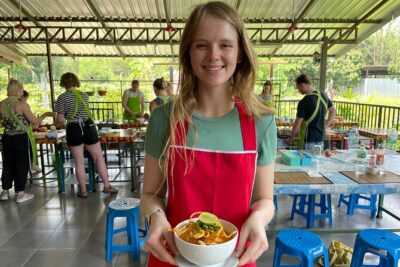 ★ 5.0Half-Day Thai Cooking Class at Organic Farm in Chiang MaiFrom $2919,087 reviews
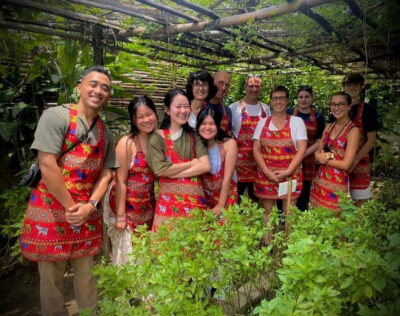 ★ 4.9Cooking Class, Market & Thai Herbs Garden TourFrom $314,824 reviews
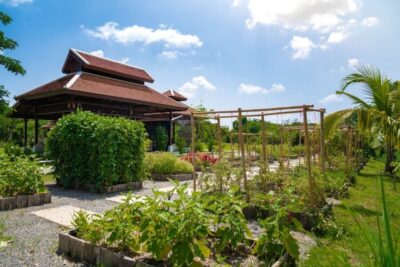 ★ 4.9Authentic Cooking Class with Market & Farm VisitFrom $344,546 reviews
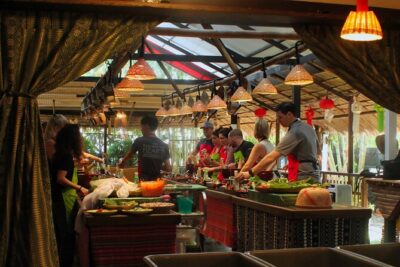 ★ 5.0Thai and Akha Cooking Class in Chiang MaiFrom $424,358 reviews
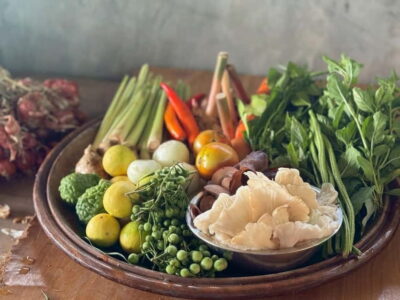 ★ 4.9Cooking Class with Market and PickupFrom $251,365 reviews
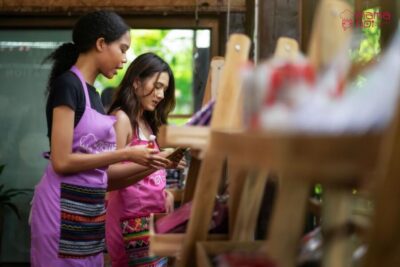 ★ 4.9Cooking Class with Organic Farm at Mama NoiFrom $321,151 reviews
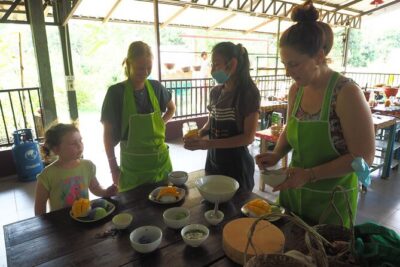 ★ 5.0Full Day Thai Cooking at Farm (Chiang Mai)From $391,127 reviews
 ★ 4.9HALF-DAY COOKING COURSE at a Thai Cooking FarmFrom $28705 reviews
Browse the lists this tour appears in