
REVIEW · DOI SUTHEP & MOUNTAIN TEMPLE TOURS
Chiang Mai Best City Tour with Doi Suthep & Iconic Temples
Chiang Mai temples hit different from up close. This half-day route strings together Doi Suthep views, classic old-city landmarks, and two quieter mountain stops, all with a guide who helps you connect the dots. I especially like the hotel pickup convenience and the small-group feel that keeps the day from turning into a hurried stampede. The main drawback to consider is time, you only get about 30 minutes at each temple, so you may want to plan extra time on your own if you’re the type who loves lingering.
For value, this is a solid pick if you want a guided hit of major sights without the hassle of coordinating transport. You’ll ride in an air-conditioned vehicle, see four meaningful stops, and get temple admission fees included where they apply. With a maximum of 15 travelers, it’s also easier to ask questions than on big bus tours.
Key Things to Know Before You Go
- Small group limit (15 max) keeps the pace more human
- Doi Suthep timing tips matter, the crowd energy changes as other tours move on
- Wat Pha Lat is the calmer mountain stop, steep and peaceful, not as crowded as the headline site
- Admission fees are handled for the paid temple stops, so you are not scrambling for tickets
- Guides can be a big difference maker based on the names and feedback from past tours
The Value Formula: What You Get in This 4-Hour Chiang Mai Tour
At about $42.18 per person for roughly 4 hours, the question is simple: does it feel like more than a drive between temples? In my view, it does, because the price covers the guide, air-conditioned transport, hotel pickup and drop-off for selected hotels, and the temple admission fees that apply. You are not just buying transportation, you are buying someone to explain why these places matter.
That said, the value depends on your style. If you want a deep, unhurried experience at one site, a half-day plan can feel tight. But if you are here briefly or want a clean introduction to Chiang Mai’s most iconic Buddhist sites, this tour packs a lot into a small time window.
Also keep expectations realistic. Each stop is about 30 minutes, so you will see the highlights, not master-level details on every altar and bell.
You can also read our reviews of more city tours in Chiang Mai

Pickup, Air-Conditioned Comfort, and a Smooth Start
This tour includes pickup and drop-off for selected hotels, which is a big deal in Chiang Mai when heat and traffic can turn a short day into a stressful one. You’ll travel in an air-conditioned vehicle, so the ride up the mountain is not a sweaty endurance test.
The activity ends back at the meeting point. The stated starting point is Chiangmai Tours by Sightseeing Chiang Mai Duang Tawan Hotel, 132 Loi Kroh Rd, Tambon Chang Khlan, Amphoe Mueang Chiang Mai. If you are staying outside the pickup zone, you might need to make your way there.
You’ll also receive confirmation at booking time, and it uses a mobile ticket. If you like simple check-ins, this is the kind of setup that tends to work well.
Finally, the tour is SHA Plus certified, meaning it follows approved Covid-19 health and preventative protocols.
Wat Chedi Luang Varavihara: The Pagoda With an Earthquake Story
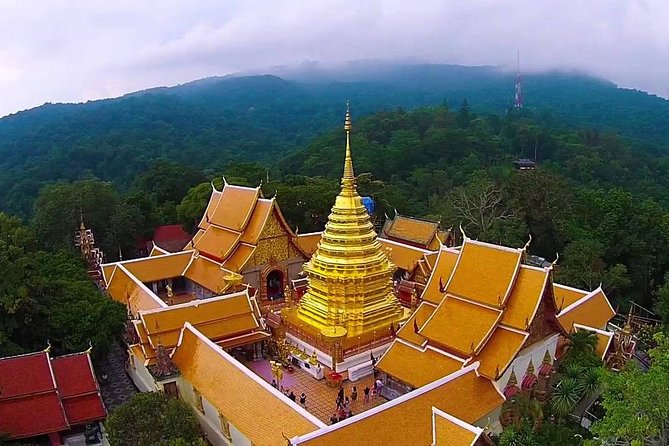
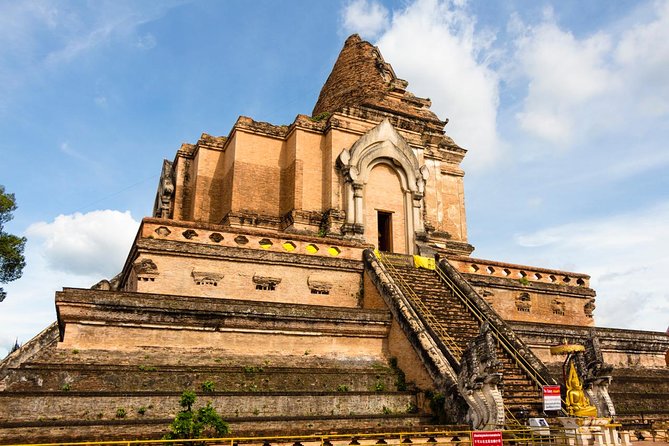
The first stop is Wat Chedi Luang Varavihara, a temple anchored by an enormous pagoda that was originally about 280 feet high. The key detail here is that part of it was destroyed by an earthquake in 1545, which gives the site a sense of history you can feel in the structure itself, not just in explanations.
In your 30-minute visit, you’re mostly here to orient yourself. You’ll see the main temple complex and get a sense of how old Chiang Mai’s religious power sat right inside the city. This stop works well as a warm-up, because it teaches you what to look for before you head uphill.
One practical note: since the day begins in town, this is often a good moment to catch the easiest walking areas and settle into the rhythm of temple etiquette. I like that this stop is included with an admission ticket, so you can focus on the visit instead of figuring out entry.
Wat Phra That Doi Suthep: The Big Icon and the Crowd Timing Trick
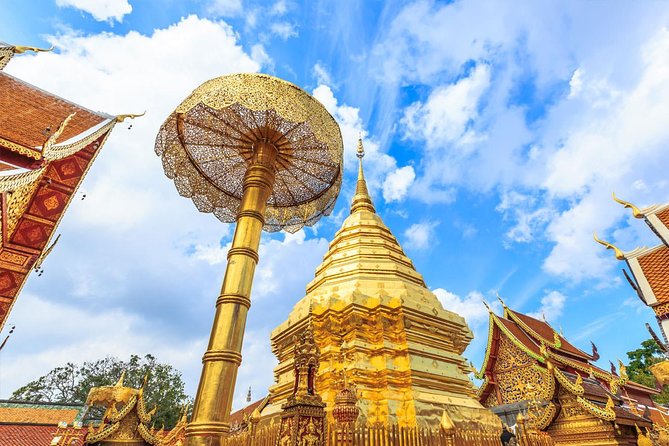
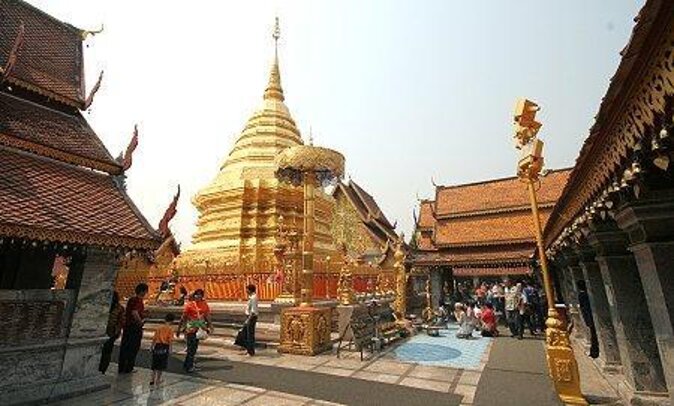
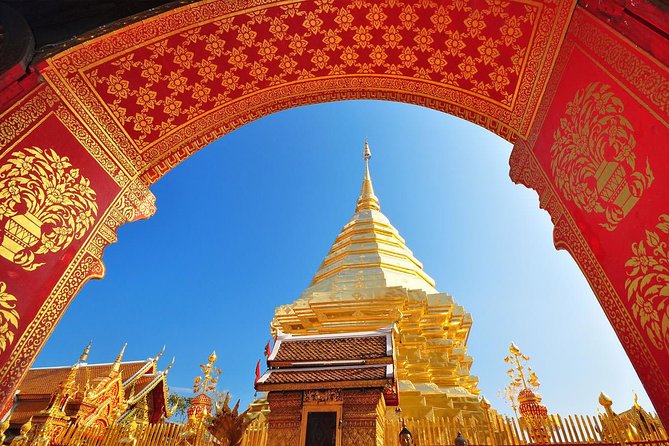
Then comes the headline stop, Wat Phra That Doi Suthep. This is a tremendous temple complex where the view hits you every time you turn your head. Even if you have seen photos, it’s one of those places where the scale and setting keep surprising you.
The practical crowd advice is worth listening to. Doi Suthep is popular with tour buses, so the energy can feel busy right around arrival. The sweet spot is when other groups move on, because you can actually look around and take your time with the details.
You also get another 30 minutes here, and the admission ticket is included. For many people, this is the stop they planned the whole day around, so it’s smart to treat it like your anchor. If you want your photos, do them early, then use the remaining time to walk, look up, and let the guide connect the Buddhist meaning to what you are seeing.
You should expect the walkways to be active and the atmosphere to be lively. Comfortable shoes are a must.
Wat Pha Lat: The Steep, Serene Mountain Counterpoint
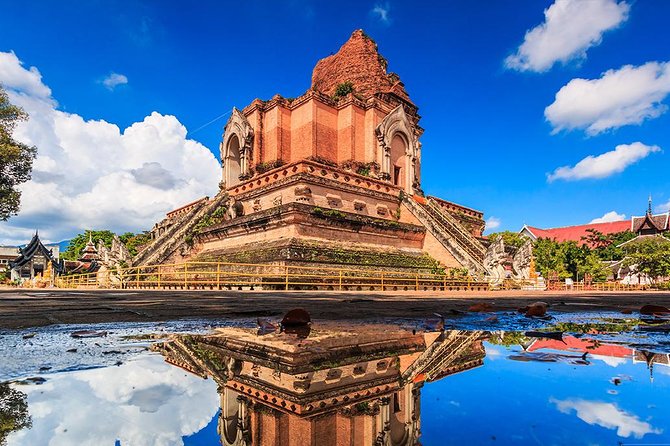
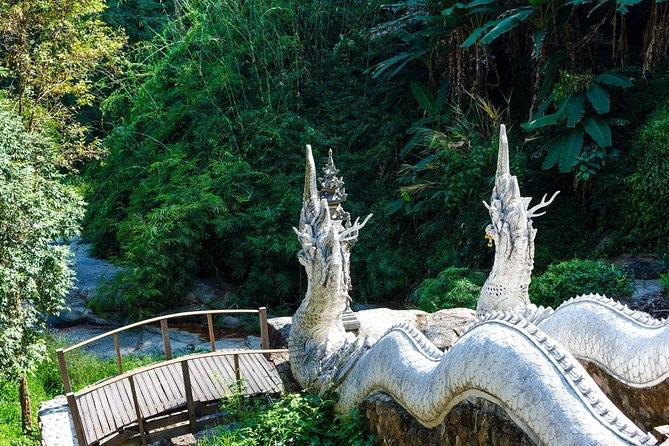
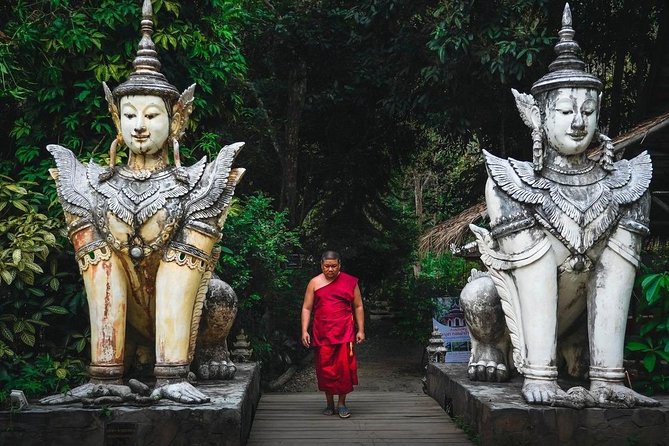
After Doi Suthep’s grand scale, you shift to Wat Pha Lat, often the quieter mood change you did not know you needed. This temple is described as an ancient precursor, located lower on the mountain than Doi Suthep, and it tends to feel more personal and peaceful.
Here’s why it’s a great second mountain stop: it’s steep with history and reverence, but it does not carry the same “photo stop” pressure as the main icon. The tour keeps it to about 30 minutes, and importantly, admission is free for this stop.
If you like calm places where you can actually hear yourself think, Wat Pha Lat is the moment. From past guide-led experiences, the best tours are the ones where the guide talks about how the older sites relate to the later, more famous complex. That contrast helps you understand why the mountain is not only a view, it’s a layered religious story.
Also, this stop is described as streamside. That matters because it adds to the feeling that this is not just a walkway with stairs, it is a specific physical setting.






Tha Phae Gate: Old Chiang Mai’s Historic Doorway
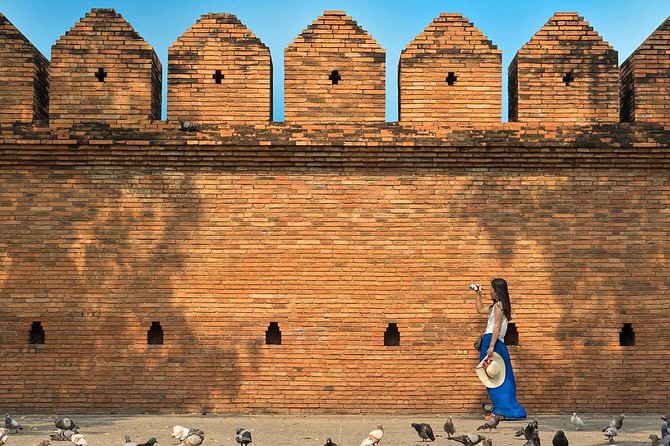
The final stop is Tha Phae Gate, a historic gate that sits in the old city area. The tour frames it as romantic, beautiful, and enchanting, and it gives you a sense of how Chiang Mai functioned when it was founded by King Mangrai.
In practice, Tha Phae Gate is where the tour lowers the intensity a notch. You are back in the city vibe after the mountain temples, and you get to absorb how the religious sites connect to the streets and daily life around them.
One small, memorable detail from previous experiences is the lively presence of pigeons around the gate area, where people end up walking through them like it is part of the choreography. If you want the classic Chiang Mai street flavor, this stop delivers it.
It’s also a free admission stop, which is nice after two paid temples. And at about 30 minutes, it’s long enough for a photo and a quick orientation, but not so long that it drags.
How the Timing Works and How to Beat the Heat
This tour runs for about 4 hours and hits two paid temple stops plus two additional sites, with about 30 minutes at each. That rhythm is efficient, but you should plan around Thailand’s heat and sun.
From guide-led tips, the heat can be a factor at the time of day, so I suggest booking in a cooler part of your schedule if you can. Even a little shift in timing can change how much you enjoy the stairs, viewpoints, and outdoor walkways.
When you are on the mountain, there’s a second challenge: crowds and movement. Doi Suthep can be busy, and that can reduce your ability to fully slow down. The trick is to let the guide time the moment, then take advantage of the calmer periods after the bus groups thin out.
Hydration matters too. Wear light layers, and bring something for sun protection. You are moving between outdoor spaces, not just sitting in a van.
Guide Quality Makes or Breaks It, So Here’s What to Look For
This is where reviews offer a useful clue, because the best experiences are clearly guided. Many past tours highlight guides who explain Buddhism and temple context in clear English, and who handle questions without rushing you.
You might be lucky enough to get a guide like Ooh, who was praised for answering questions and explaining Buddhist culture. Another name that came up is Som, noted for being very knowledgeable and speaking good English. Palit is mentioned for being excellent, friendly, and helpful with photos. Emmy is also singled out for great English and strong explanations.
A different example is Thaphaphak, also called Timmy, who was praised for Thai history and culture, and even for identifying foods at a market on another version of the tour. That tells me the guide’s role can go beyond the temples if the schedule allows it.
On the flip side, one less satisfying experience mentioned the guide spending too much time chatting with the driver instead of explaining what you are passing. That’s a reminder to watch for engagement. If your guide is quick to answer questions and talk about what you are seeing, your day will feel richer fast.
Bottom line: choose this tour for the structure, then rely on the guide for the meaning.
Price, Crowds, and the One Complaint You Should Actually Consider
There is one criticism you should take seriously: the feeling that the day is mostly transport for one major attraction plus smaller stops. If Doi Suthep is the only thing you care about, then yes, the value may feel uneven.
But here’s the counterpoint. The tour includes admission fees for the temple stops that charge, and it pairs Doi Suthep with both Wat Chedi Luang and Wat Pha Lat, which changes the story. Chedi Luang anchors you in old city roots, Doi Suthep gives you the icon and the mountain setting, and Wat Pha Lat provides a quieter precursor site. Tha Phae Gate ties the old city together at street level.
Also, the transport part matters in Chiang Mai. The mountain temples can be harder to do well on your own, especially in heat. If your priority is efficiency with a guide, the price starts to make sense.
So I would frame it like this: you are paying for a guided, structured “see the key sites in half a day” plan, not for a slow temple retreat.
Who Should Book This Half-Day Temple Tour
This is a great fit for:
- First-time Chiang Mai visitors who want the big temple set without planning
- Travelers who prefer a small group pace and like asking questions
- People who want both old city temple context and mountain viewpoints
- Short-timers, since you get four major stops in about 4 hours
It may not be ideal if:
- You want long, unhurried time at a single temple
- You dislike bus-tour crowds and cannot handle busy outdoor areas
- You prefer to travel completely independently without a set route
In terms of pace, it’s active but not exhausting. The main walking happens at the temples, especially on mountain terrain.
Should You Book This Chiang Mai Best City Tour?
I think this tour is worth booking if you want an organized, guided overview of Chiang Mai’s most important temples and historic gate without spending time figuring out transport. The strongest reasons are practical: hotel pickup for selected hotels, air-conditioned comfort, included temple admissions where needed, and a group size capped at 15.
If you are the type who likes understanding why places look the way they do, choose it. With guides like Ooh, Som, Palit, Emmy, or Timmy, you have a good chance your visit will come alive through clear context and thoughtful explanations.
If, however, you only care about one temple and you hate tight schedules, you might feel rushed. In that case, consider pairing your own time at Doi Suthep with a separate half-day or evening plan for one calmer site.
My call: book it early, wear comfy shoes, and plan your expectations for a highlight tour. Done that way, it’s a smart, high-value introduction to Chiang Mai.
FAQ
How long is the Chiang Mai Best City Tour with Doi Suthep and iconic temples?
It runs for about 4 hours.
What sites are included on the tour?
You visit Wat Chedi Luang Varavihara, Wat Phra That Doi Suthep, Wat Pha Lat, and Tha Phae Gate.
Is hotel pickup and drop-off included?
Yes, hotel pickup and drop-off are included for selected hotels.
Do I need to pay temple admission tickets?
Admission fees are included. Wat Chedi Luang Varavihara and Wat Phra That Doi Suthep have admission tickets included, and Wat Pha Lat is listed as free.
Is there air-conditioned transportation?
Yes, the tour includes an air-conditioned vehicle.
How large is the group?
The tour has a maximum of 15 travelers.
What is the price per person?
The price is $42.18 per person.
Is free cancellation available?
Yes, cancellation is free. You can cancel up to 24 hours in advance for a full refund.
Is the tour SHA Plus certified?
Yes, the tour is SHA Plus certified with approved Covid-19 health and preventative protocols.
More City Tours in Chiang Mai

More Tours in Chiang Mai


More Tour Reviews in Chiang Mai

Not for you? Here's more nearby things to do in Chiang Mai we have reviewed




Doi Suthep & Mountain Temple Tours, compared.
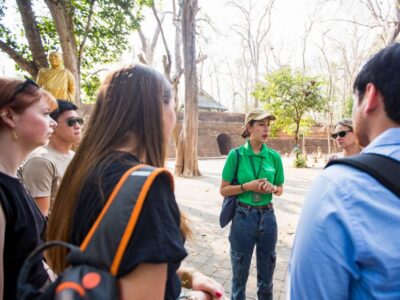 ★ 4.6Doi Suthep and Wat Umong Enchanting Evening TourFrom $271,811 reviews
 ★ 4.7Doi Suthep, Wat Umong, and Pha Lat Sunrise TourFrom $321,425 reviews
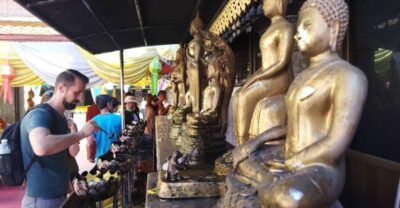 ★ 4.8Wat Pha Lat & Wat Phra That Doi Suthep TourFrom $241,207 reviews
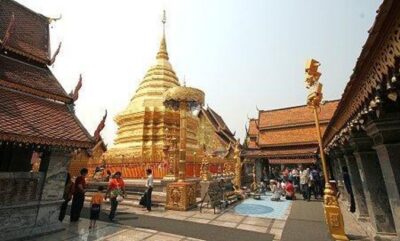 ★ 5.0Wat Phra That Doi Suthep spiritual Sunrise Tour with an Ex-monkFrom $64798 reviews
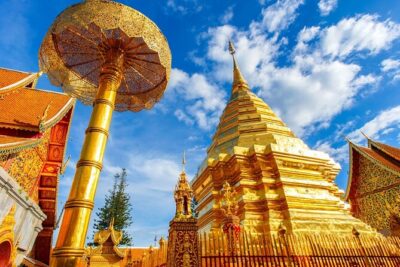 ★ 4.6Chiang Mai – Doi Suthep Temple & Wat Pha Lat HikeFrom $25740 reviews
 ★ 4.74-Hour Doi Suthep & Hmong Hill Tribe Village from Chiang MaiFrom $36696 reviews
 ★ 4.9Spiritual Sunrise Wat Doi Suthep, Pha Lat, Alms & MeditationFrom $59674 reviews
★ 5.0Chiang Mai – Doi Suthep Temple & Wat Pha Lat HikeFrom $26657 reviews
★ 4.9Spiritual Sunrise Wat Doi Suthep, Pha Lat, Alms & MeditationFrom $59674 reviews
★ 5.0Chiang Mai – Doi Suthep Temple & Wat Pha Lat HikeFrom $26657 reviews
Browse the lists this tour appears in