REVIEW · CHIANG MAI COOKING CLASSES
Cooking class in organic garden and local market tour ThaiCottage
Four hours in Chiang Mai, and you leave fed.
ThaiCottage (Thai Cottage Home Cookery School) strings together a local market stop and an organic herb garden cookery lesson, so you learn ingredients and techniques, not just recipes. In classes run by instructors like Toey and Kat, you get hands-on direction and plenty of time at your own station.
I especially like two things. First, you get real choice. You can pick the dishes you want to cook, so your plate reflects your taste and your comfort level. Second, you learn the “core” skills everyone talks about, like making curry paste from scratch and preparing the classic sweet finish.
One thing to consider: some cooking steps may be partly prepped before you start, like rice or components already taken care of. If you want every single step from zero to finished with zero shortcuts, this might feel less hands-on than you hoped.
Quick hits before you go

- Small group (max 8) keeps it interactive and easier to ask questions
- Round-trip pickup within 3 km cuts down on Chiang Mai logistics stress
- Curry paste from scratch teaches flavor-building, not just assembly
- Choose-your-dishes format helps you cook what you actually want to eat
- Organic herb garden visit connects the market ingredients to what’s growing
- PDF recipes in English make it easier to repeat the food at home
Thai Cottage in Chiang Mai: what $35.86 covers, and why it feels fair

At about $35.86 per person for roughly 4 hours, this class is priced like a “value” cooking experience, not a fancy, all-day foodie production. You’re paying for two main things: instruction that gets you cooking, and the ingredients that go directly into the meal you eat. The included round-trip hotel transfer (within 3 km of the city area) also matters. In Chiang Mai, that transport piece can quietly add up if you have to arrange it yourself.
The small group size, up to 8 travelers, is a big part of the value. It means you’re not standing in a crowd watching someone else cook. You get your turn with guidance, and the instructor can course-correct if your curry paste is too thick, too spicy, or missing key aromatics.
Also included: the class provides ingredients, instructions in English, and drinking water. You’ll get a recipe book online in PDF form, which is the part many cooking classes leave out.
You can also read our reviews of more shopping tours in Chiang Mai
Getting picked up and arriving ready to cook

The day starts with hotel pickup, then you head to the market. The transfer is specifically round-trip within 3 km from the city area, so it’s built for convenience inside central Chiang Mai. If your hotel is outside that radius, you’ll want to confirm what your fallback option is, since the data only guarantees the transfer within that limit.
What I like about the format is that it gets you out of “tour mode” early. You’re not driving around for an hour just to reach the kitchen. You start with ingredients, then you move to herbs growing nearby, then you cook.
Expect a group rhythm that stays practical. You visit the market first, then you go to the organic garden, and the cooking session follows without a long gap.
Market visit: how to spot Thai ingredients before you touch a knife
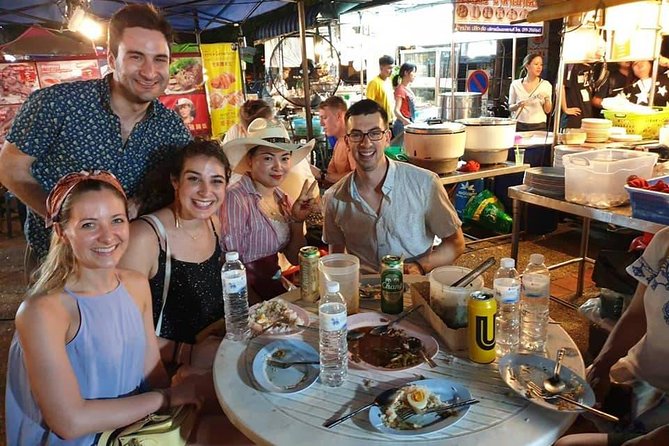
The market stop is part shopping lesson, part orientation. Your guide takes you through ingredients used in Thai cooking and shows how each one fits into flavor and texture. After that, you’ll have time to look around the market atmosphere and get familiar with what you’ll later cook with.
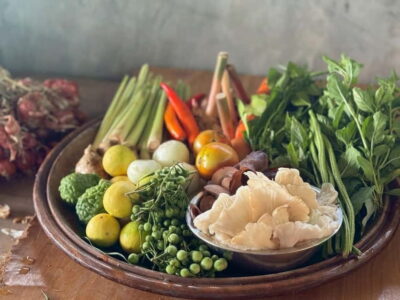
This stage is where you learn to recognize key Thai kitchen staples, even if you’re not an expert yet. You’ll be thinking about aromatics, fresh herbs, chilies, and the way Thai cooks build flavor layers.
A practical note from the way the class runs: if you want heavy detail on every single item in the market, your experience may depend on how time is managed on the day. Some people find the market component informative and structured, while others feel it moves faster than they expected. If you like to ask lots of ingredient questions, go in with a few topics ready, like how to choose chilies for paste, or what changes when a herb is fresh versus dried.
Organic herb garden: seeing the plants behind the flavors

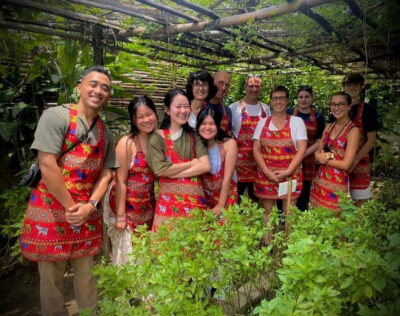
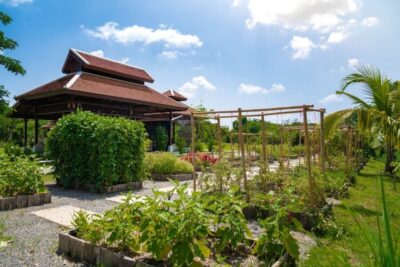
After the market, you head to the organic Thai herb garden attached to the cookery school. This isn’t just a photo stop. It’s where you connect what you saw at the market to what’s actually growing, and which herbs end up featured in your cooking.
From a learning perspective, the garden visit helps you understand why Thai flavors taste the way they do. For example, curry paste flavor doesn’t come only from “spices.” It comes from how fresh aromatics behave: their oils, their sharpness, and the way they blend when ground together.
In the garden, you’ll also get direction on what you’ll prepare in class. Then the cooking phase begins, and it becomes hands-on.
The cooking setup: family-style kitchen, your own station

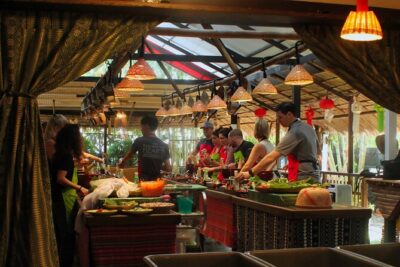
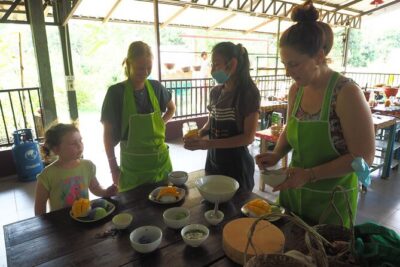
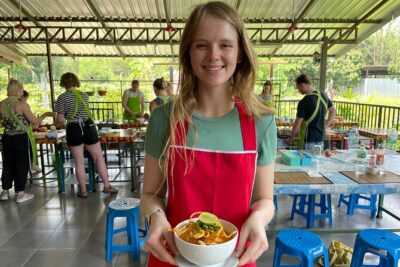
This is where ThaiCottage feels different from the typical “watch the instructor, then cook one dish” setup. The class is taught in a traditional Thai family style in an outdoor kitchen garden setting. Importantly, many classes run so each person has their own cooking station, often a covered setup so you can keep working even if the weather changes.
That matters for two reasons. One, you control your pace. You can focus on technique without rushing to keep up. Two, your questions get answered in context, while you’re actively working, not after the fact.
The instruction is designed for different skill levels. Even if your Thai cooking experience is limited, the step-by-step guidance helps you get through key techniques like grinding paste, balancing seasonings, and getting the right consistency for curry.
More Chiang Mai temple visits, food walks, elephant experiences, mountain trips, and northern Thailand day tours to compare
Curry paste from scratch: the skill that makes everything taste Thai

Everyone makes curry paste from scratch, and that’s one of the most praised parts of the experience. This isn’t a shortcut paste you buy and heat. You learn how to build the flavor base by combining ingredients and grinding them into something that behaves like Thai curry paste, not a generic spice mix.
If you care about recreating results at home, this is the section that makes the whole class worth it. Most Thai dishes taste “right” because the base flavors are right. When you can make the base, you can adjust heat, sweetness, and brightness later.
What you should expect here is active prep: grinding, tasting, and fine-tuning. If your paste is too thick, the instructor can guide you toward the correct texture. If it’s missing punch, you’ll get direction on how Thai cooks think about balancing flavors.
Choosing your dishes: how the menu flexibility works

One of the biggest highlights is that you can choose what you cook. That prevents the classic cooking class problem where you end up stuck with a dish you don’t enjoy.
The exact dish list can vary by what’s being taught that day, but the experience is structured around teaching multiple Thai dishes across categories. In practice, many classes end up with a lineup like soup, stir-fry, curry, and dessert, plus the sticky rice and curry paste that are central to the course. So even with choice, the “Thai core” stays in place.
Here’s what choice does for you as a cook:
- You can pick something you’re curious about, like a stir-fry if you love wok-style flavors.
- You can pick mild options if you’re sensitive to heat.
- You can split dishes with family or friends so you all taste more Thai variety in one sitting.
Also, the class is taught in a way that helps you succeed, not just “perform.” You get ongoing instruction so your dishes stay on track.
The meal you make: what traditional family-style cooking feels like

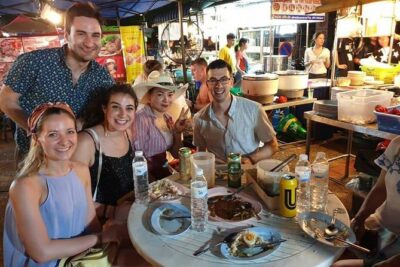
Once cooking is underway, you’re not just producing food. You’re participating in a meal that follows traditional Thai family style. You cook, then you eat what you made.
This is a practical benefit: you learn how each dish tastes as a finished plate, not only as a separate recipe. Many Thai dishes rely on balance across salty, sour, sweet, and spicy elements. Eating right after cooking helps you recognize what you nailed and what might need adjustment next time.
Small details also help. Between dishes, the kitchen team keeps things moving, and your station stays set up for the next step.
If you’re the kind of person who enjoys chatting during cooking, you’ll likely enjoy this part too. The class structure is social by design, and it’s easier to connect when everyone is actively doing something.
Sticky rice with mango: the sweet lesson you can repeat
A signature part of the class is that everyone learns how to make sticky rice for the sweet sticky rice with mango. This is a classic Thai dessert that feels simple when you see it, but it’s all about texture and timing.
The key takeaway for you is not just the ingredients, but the method. Sticky rice has a particular behavior when cooked correctly, and the dessert depends on that consistency. You learn the steps needed to get the rice right, so you can reproduce the results when you get home.
If you’re only coming for one part, I’d rank sticky rice as the one that turns “I tasted Thai food” into “I can actually make it.”
PDF recipe book in English: how to use it without turning it into homework
The class includes a PDF version recipe book online, in English, with ingredients and instructions. This matters because cooking classes often hand you paper recipes that are hard to follow later.
With a PDF, you can search, zoom, and replay the steps when you’re standing in your kitchen. The best use is to cook one dish again within a week or two, while the steps and flavors feel fresh. If you wait too long, you’ll forget what “correct” looks and tastes like.
Also, because you cooked multiple dishes (with curry paste and sticky rice as constants), the PDF becomes a menu you can return to, rather than a single recipe souvenir.
What’s not included: alcohol and other practical notes
Alcohol is not included, but it’s available to purchase. The rest is covered: ingredients, instructions in English, market and garden access, and the included drinking water.
Weather matters. The experience requires good weather, and if it’s canceled due to poor weather, you’ll be offered a different date or a full refund. Since the cooking happens in an outdoor kitchen setting, this makes sense.
And one more practical consideration: if you prefer fully “from scratch” cooking where nothing is done ahead, know that some components may be partly prepared to keep the class on schedule. That doesn’t ruin the learning, but it does affect how “A to Z” the experience feels.
Who should book ThaiCottage, and who might want a different style
This class is ideal for you if:
- you want a hands-on Thai cooking session, not a lecture
- you like market-to-kitchen learning and want to connect ingredients to the dish
- you enjoy curry paste and want to learn the real base flavor technique
- you want a group size that stays personal, up to 8 travelers
- you want choice in what you cook
It may be less ideal if:
- you are traveling far outside the city core and don’t have an easy way to reach the pickup area, since transfer is only guaranteed within 3 km
- you expect every element to be cooked completely from raw with zero pre-prep
- you prefer a solo cooking experience rather than a shared group format
Should you book this Thai cooking class in Chiang Mai?
If your goal is to leave with real Thai technique, not just a full stomach, book it. The biggest reasons are simple: you learn curry paste from scratch, you make sticky rice with mango, and you get to choose what other dishes you cook. Add the market ingredient walk, the organic herb garden context, and the English PDF recipe book, and the value starts to make sense fast.
One last decision tip: go in hungry, but also go in curious. If you ask a couple targeted ingredient questions at the market and keep tasting during paste making, you’ll get much more out of the class. That’s where this experience shines, because it teaches the why behind the flavors, not just the final dish.
FAQ
How long is the cooking class?
It runs for about 4 hours.
Is hotel pickup and drop-off included?
Yes, round-trip hotel transfers are included within 3 km from the city area.
Do I get to choose what dishes to cook?
You can choose among the dishes taught in the class. The class also includes sticky rice with mango and curry paste for everyone.
Is the instruction available in English?
Yes. Ingredients, recipes, and instructions are provided in English.
Do I get recipes to take home?
Yes. You receive a PDF version recipe book online.
What’s included in the class price?
Included: hotel round-trip transfer (within 3 km), visit to the local market, organic Thai herb garden visit, ingredients, drinking water, and English recipes and instructions.
Is alcohol included?
No. Alcoholic drinks are available to purchase, but they are not included.
What if the weather is bad?
The experience requires good weather. If it’s canceled due to poor weather, you’ll be offered a different date or a full refund.
Can I cancel for free?
Yes. You can cancel up to 24 hours in advance for a full refund.
More Shopping Tours in Chiang Mai
More Tours in Chiang Mai
More Tour Reviews in Chiang Mai
Not for you? Here's more nearby things to do in Chiang Mai we have reviewed
Chiang Mai Cooking Classes, compared.
★ 5.0Half-Day Thai Cooking Class at Organic Farm in Chiang MaiFrom $2919,087 reviews
★ 4.9Cooking Class, Market & Thai Herbs Garden TourFrom $314,824 reviews
★ 4.9Authentic Cooking Class with Market & Farm VisitFrom $344,546 reviews

★ 5.0Thai and Akha Cooking Class in Chiang MaiFrom $424,358 reviews

★ 4.9Cooking Class with Market and PickupFrom $251,365 reviews
★ 4.9Cooking Class with Organic Farm at Mama NoiFrom $321,151 reviews
★ 5.0Full Day Thai Cooking at Farm (Chiang Mai)From $391,127 reviews
★ 4.9HALF-DAY COOKING COURSE at a Thai Cooking FarmFrom $28705 reviews
Browse the lists this tour appears in