REVIEW · GUIDED
Guided Chiang Mai City Night Tour by EV Tram
EV trams make night sightseeing quieter. This guided Chiang Mai City Night Tour is built for orientation, not a sprint, with temple stops and local-market time under the evening calm.
What I like most is the pacing and point of view. You get context about how Chiang Mai’s beliefs and history show up in daily life, and you move between places with an electric tram that feels gentler on the street and your ears. One thing to consider: if you only want big, famous landmarks with lots of free time for photos, this tour’s structured flow may feel like you are seeing a lot, then moving on.
Key highlights

- EV tram between stops, keeping the evening quieter and easier to manage
- Temple-to-market balance, with orientation plus real street-life time
- Local-market food time, including snacks and drinks plus included Chiang Mai Gate Night Market admission
- Inthakin and King Mangrai context around the Three Kings Monument area
- Small group size (max 12) for a relaxed pace and easier guide Q&A
EV Tram at 6:00 pm: Night Chiang Mai, Without the Noise

Starting at 6:00 pm is a sweet spot. It is dark enough for a different mood than daytime, but not so late that everything feels rushed or fully winding down. The EV tram matters here: it helps you cover distance without the usual traffic noise and it keeps the tour feeling calm and controlled.
This is also the kind of tour that works on your first evening. You are not just collecting sights. You are getting a mental map of where things are, how the old city layout connects to daily neighborhoods, and why certain gates and temples anchor the city.
The group size is capped at 12 travelers, which is a big deal at night. Smaller groups make it easier to pause, listen, and ask questions instead of spending your whole time trying to stay on pace.
You can also read our reviews of more guided tours in Chiang Mai
Where You Meet: Three Kings Monument to a Full Circle Feel

You meet at Three Kings Monument on Prapokklao Road. The tour ends back at the same meeting point, so you do not have to worry about figuring out a second drop-off.
No pickup or drop-off is included, but there is an optional option. If you are within 5 km of the city center, pickup or drop-off is THB 500 per way per group. If you are outside that range, the data does not say, so you would want to confirm directly when booking.
Dress code is smart casual. That is helpful for night markets too, because you can comfortably cover up for temples and still move easily for walking and browsing.
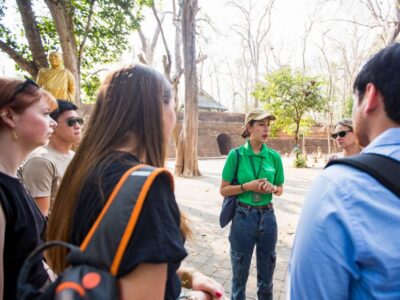
Stop 1, Three Kings Monument and the Inthakin Connection
The tour starts at the Three Kings Monument area, where your guide sets the stage for Chiang Mai’s story. This is not just a backdrop. It is tied to the idea of the city pillar.
You get the thread of a key detail: the city pillar called Inthakin is said to have been erected in 1296 by King Mangrai in the area around Wat Inthakin Sadeu Muang. It is a moment that helps you understand why later places like Wat Chedi Luang come up again in the tour, since the pillar concept connects across the old-city story.
You also do a bit of walking here, then hop on the tram to begin the rolling part of the evening. Admission is listed as free at this stop, so you are mostly paying attention to the explanation and the atmosphere.
Stop 2, Wat Chiang Man: A Lanna-Style Chedi With Elephant Buttresses

Next is Wat Chiang Man, described as the oldest temple in the Lanna-style tradition. The chedi design is a standout detail, supported by rows of elephant-shaped buttresses.
Even if you have seen temple architecture before, it is worth slowing down here. Elephant buttresses are not a generic decoration, they are part of how the temple structure communicates meaning and style. This is one of those spots where the guide’s explanation helps you notice what you would otherwise gloss over.
This stop is short, about 5 minutes, and admissions are noted as free. The short time fits the overall tempo: listen, look, then move on before the group gets stretched out.
Stop 3, Wat Lok Molee: Wooden Charm and Terracotta Sculptures

Wat Lok Molee is next, and it has a different feel than the more stony, heavy-looking temple zones. It is described as a wooden complex dotted with terracotta sculptures and considered one of the most attractive wát outside the city walls.
You also learn a history link: it is thought to have been founded in the 14th century for monks from Burma. That detail matters because it turns the temple from a pretty building into evidence of how Chiang Mai absorbed influences through Buddhism over time.
This stop clocks in around 20 minutes. That extra time compared to the prior stop is a good sign. It gives you a chance to walk slowly through the visual texture, not just snap and go.
You can also read our reviews of more city tours in Chiang Mai
The City Wall Reminder: Chang Puek Gate and Night Market Energy

Then you reach Chang Puek Gate, the northern gate of the old city with ruins of the city wall. This is where the tour naturally shifts from temple architecture to city life.
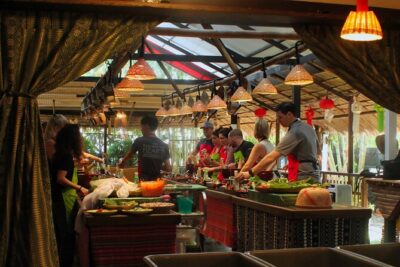
Here, the setting becomes a night market scene, with popular street food and dinner options. It is a smart pause because you get a feel for the dining culture in a place locals and visitors both recognize.
One practical note: your best photos here will depend on how crowded the stalls are at your exact time. If you see people moving quickly in front of an opening, reposition calmly rather than forcing it. The guide’s job is to keep the group flowing, so you will still have time to take a few good shots.
Stop 4, Wat Pa Pao and the Tai Yai Connection

Wat Pa Pao comes up next as the first temple of the Ngiaw or Tai Yai in Chiang Mai. That is a specific cultural label, and it is the kind of detail that makes this tour feel more like orientation than sightseeing shopping.
This stop is about 15 minutes, with admissions noted as free. Since it is shorter, I recommend you focus on the way your guide frames the temple’s role for that community, rather than trying to catalog every architectural feature.
In tours that jump only between the biggest, most famous temples, you can miss these identity links. Here, the mix is part of why the evening works.
Burmese-Shan Style at Wat Nong Kham

After Wat Pa Pao, you visit Wat Nong Kham, described as a Buddhist temple of special interest with Burmese-Shan temple styles.
The key value of a stop like this is contrast. You get to see how Chiang Mai’s temple language shifts across different influences. And because this is a night tour with a small group, you can actually hear the explanations before everything fades into a blur.
The provided details do not specify exact time or ticket notes for this stop, but it is clearly included in your evening route as part of the temple-focused half.
Warorot Market: Seeing What Locals Buy
Next is Warorot Market, described as the biggest local fresh market in Chiang Mai. This is your chance to explore the kind of goods sold to local people, not just tourist-friendly snacks.
The best way to use market time is simple: look, smell, and ask your guide what to notice. Even if you do not buy much, the value is understanding what everyday shopping looks like, how markets are organized, and how locals plan meals and staples.
There is no admission fee mentioned as a separate item here, and your included package covers some snack and drinks during the foodie portions, plus bottled water.
Also, the tour notes that extra food and drinks are not included. So if you want a big dinner meal, budget for it separately. The included bites are meant to let you try, not to replace every meal.
Tha Phae Gate: Chiang Mai’s Public Activity Center
You pass through Tha Phae Gate, described as the main center of public city activities and festivals.
Think of it as the city’s social switchboard. In daytime, it can look like a pass-through landmark. At night, the area’s role shows up more through foot traffic, nearby food zones, and the general sense that something is always happening.
This stop is not presented as a long temple visit. It works better as a transition point, helping you connect your earlier temple stops with where people actually gather, eat, and move through the city.
Chiang Mai Gate Night Market: Street Food Time With a Guide
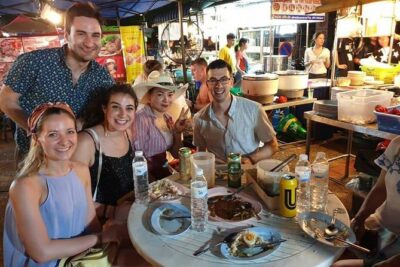
The evening’s foodie highlight is the Chiang Mai Gate Night Market. You get about 25 minutes here, and admission is included.
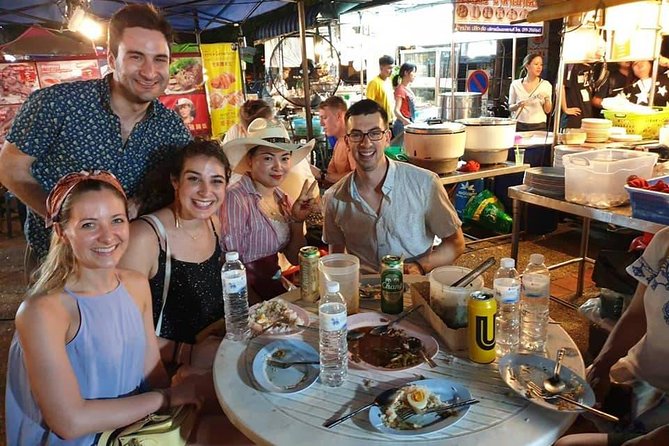
The description focuses on the street food scene with a local foodie style, which is exactly why a guide helps. Night markets can be fun, but they can also be chaotic. With guidance, you can focus on what looks good and appropriate, and avoid the trap of choosing the first item you see.
You also get some snack and drinks during this foodie part, and bottled water is included. That is a practical value, especially on a 2-hour-ish evening tour, where you might otherwise get too thirsty before you find something.
This is also the portion where smart pacing matters most. If you want to eat, it is better to commit early rather than hover too long. If you want photos, move a few steps to see where the light falls and where sellers are least likely to turn their stall for foot traffic.
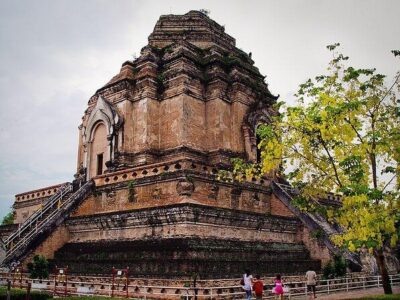
Wat Chedi Luang Varavihara: The Big Stupa and Tripiṭaka Link
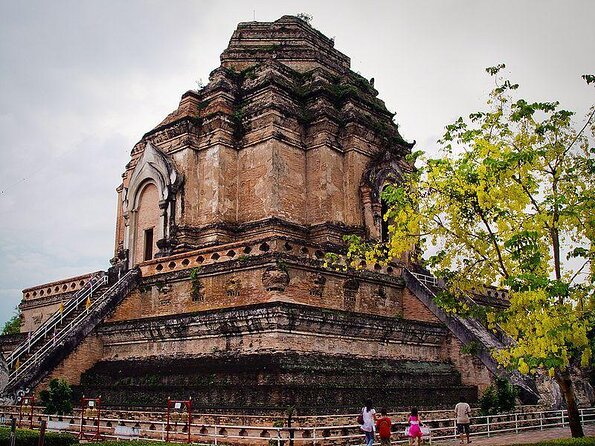
The next major temple stop is Wat Chedi Luang Varavihara. Here you see the temple of the biggest stupa, and you also learn that it housed the city pillar along with the Tripiṭaka, the Buddhist scriptures.
This is one of the stops where the tour’s earlier Inthakin context pays off. Once you understand the pillar idea near Three Kings Monument, Wat Chedi Luang becomes more than an impressive building. It becomes a key place where city symbolism and religious texts intersect.
Admission is noted as included, and the stop is about 10 minutes. It is short, so treat it like a focused visit: look first, then listen, then look again. If you do the listening part, you will leave with a stronger sense of why the place matters.
Wat Phra Singh: Northern Style Chapel Beauty
The final temple stop is Wat Phra Singh, described as having the most beautiful architecture in northern style reflected from the chapel.
Because the tour ends back at the meeting point, this final segment helps you wrap up the night with a clear visual style. Northern temple architecture tends to have its own character, and with the evening lighting, details can feel sharper.
The provided info does not specify admission details or exact time for this last temple, but it is included as part of the guided closing flow.
Price and Value: Why $27.43 Works for a First Night
The price is $27.43 per person, and it is typically booked about 36 days in advance on average. That tells me this is a popular entry-level way to see Chiang Mai in an organized way, without losing your whole evening to logistics.
Here is what you get for the money, based on the listed inclusions:
- EV tram transport during the trip
- A professional English-speaking guide
- All admission fees as mentioned in the tour
- Some snack and drinks during the foodie portion
- Bottled water
- Travel accident insurance
For a night tour, the EV tram plus guide plus entry fees are the big value levers. Without a tour, you can still visit temples and night markets, but you would spend more time deciding routes and entrances. This tour is designed to reduce that mental load and help you leave with a sense of where things are.
If you are traveling solo, a group tour at this price can also make your evening safer and easier. Just remember: extra food and drinks are not included, so plan for at least some self-funded dinner bites if you have a big appetite.
Who Should Book This Tour (and Who Might Skip It)
This tour is a great fit if you want:
- Your first night orientation in Chiang Mai
- A balanced mix of temples plus local market time
- A night plan that avoids guesswork and keeps walking manageable
- A calmer experience thanks to the EV tram and small group size
It might not be the best fit if you:
- Only care about spending long stretches at fewer sights
- Prefer to fully control your own food choices with no structure
- Want a purely photo-based temple crawl with lots of downtime
The tour’s sweet spot is learning. You will get more out of it if you are open to stories about why places are important and how cultural beliefs show up in everyday life.
Should You Book the Guided Chiang Mai City Night Tour by EV Tram?
Yes, you should book this tour if you want an organized, friendly introduction to Chiang Mai that feels thoughtful, not rushed. The EV tram option plus the temple-to-market flow makes it a smart first-night move, and the included snacks, drinks, and water take the edge off the evening.
I would especially recommend it to couples, first-time visitors, and anyone who wants a guide to help connect the dots between the old-city layout, major temples, and where people actually eat at night. If you want a short evening with real context, this is one of the more practical ways to do it.
If your goal is purely photos and maximum time at a single landmark, you may feel a bit stretched. But if you like learning as you go, this tour is an excellent value for a calm night in Chiang Mai.
FAQ
How long is the EV Tram City Night Tour in Chiang Mai?
The tour lasts about 2 hours.
What time does the tour start?
It starts at 6:00 pm.
Where do I meet for the tour?
You meet at Three Kings Monument on Prapokklao Road, Tambon Si Phum, Amphoe Mueang Chiang Mai.
How many people are in a group?
The tour has a maximum of 12 travelers.
Is the EV tram included?
Yes. EV Tram is included during the trip.
Are temple or attraction admission fees included?
Yes. All admission fees as mentioned in the trip are included, with some stops specifically listed as free and others listed as included.
What food and drinks are included?
You get some snack and drinks during the foodie tour, plus bottled water. Extra food and drinks are not included.
Is pickup or drop-off included?
No. Pick up and drop off service is optional, with a cost of THB 500 for a location within 5 km from City Center (THB 500 per way per group). The tour ends back at the meeting point.
What should I wear?
The dress code is smart casual.
What is the cancellation policy?
You can cancel for free up to 24 hours in advance for a full refund. If you cancel less than 24 hours before the start time, the amount you paid is not refunded.
More Guided Tours in Chiang Mai
More Tours in Chiang Mai
More Tour Reviews in Chiang Mai
Not for you? Here's more nearby things to do in Chiang Mai we have reviewed
Guided, compared.
★ 4.63 Hour Old City and Temples Guided Walking TourFrom $161,568 reviews
★ 4.6Doi Inthanon Trip with Pha Dok Siew Guided TrekFrom $50910 reviews
★ 4.7Historic Temples and City Guided Walking TourFrom $21650 reviews
★ 4.3Local Food and Markets Guided Walking TourFrom $48175 reviews
★ 4.9Taste of Chiang Mai: Michelin Guide & Street Food TourFrom $31159 reviews
★ 5.0Chiang Mai Countryside Guided Bike TourFrom $59153 reviews
★ 5.0Full-Day Guided Tuk Tuk Chiang Mai Adventure and RaftingFrom $193140 reviews
★ 5.0Half-day E-bike Nam Phrae (hilly, fully paved roads, GUIDED)From $50122 reviews
Browse the lists this tour appears in