Chiang Mai Active E-bike Countryside Ride

REVIEW · CHIANG MAI CYCLING & E-BIKE TOURS

Chiang Mai Active E-bike Countryside Ride

5.0 · 24 reviews From $75 Operated by Discova Thailand · Bookable on Viator
Book on Viator →

First thing you do is board a train. From there, you’ll pedal an e-bike through quiet lanes, temple grounds, and countryside paths, then end with a well-timed lunch break in Rajapruek Royal Park. What I like most is how this mixes real local scenery with guided stops, and how the small group helps keep things calm, not rushed. One consideration: it’s listed for moderate fitness, so if you prefer totally flat, slow sightseeing, you may find the day’s riding a bit more active than expected.

The rhythm of the day is simple: a morning start at 8:30 am, an early shift out of the city, a lunch you don’t have to hunt for, and a return that avoids the worst traffic. You get bikes, helmet, entrances, food, and a one-way transfer back, so you can focus on the ride instead of logistics.

Key points worth your attention

Chiang Mai Active E-bike Countryside Ride - Key points worth your attention

  • Train to Lamphun first: you start by swapping city roads for quiet streets fast.
  • Small group (max 10): less crowd pressure, more guide attention.
  • Forest and rice-field riding: your route is built around trails near Ob Khan National Park.
  • Ping River lunch stop: a real break in a village setting, not a quick snack stop.
  • Baan Tawai woodcarving village: you get to see craftsmanship up close.
  • Rajapruek lunch and garden time: you finish with park wandering built into the schedule.

Why this e-bike ride works in Chiang Mai

Chiang Mai Active E-bike Countryside Ride - Why this e-bike ride works in Chiang Mai
Chiang Mai can be great for biking, but it can also be chaotic on busy roads. This tour solves that by splitting your day into two parts: a quick rail hop, then a guided ride through less stressful areas. The train start is a smart move because it gets you out toward Lamphun and into the countryside zone without burning energy fighting traffic.

The other reason this ride makes sense is pacing. You’re on an electric bike, so you’re not spending the day grinding uphill. Still, you do pedal, which keeps it active and lets you actually enjoy the environment instead of just sitting and moving from place to place. The best version of this day is when you treat it like a moving day trip, not a fitness challenge.

And yes, the group size matters. With a maximum of 10, the guide can keep an eye on spacing and route choices. That shows up in how guests talk about feeling safe and guided throughout the day, not herded around.

You can also read our reviews of more cycling tours in Chiang Mai

Getting started at Discova at 8:30 am (and why timing matters)

Chiang Mai Active E-bike Countryside Ride - Getting started at Discova at 8:30 am (and why timing matters)
You meet at Discova Day Tour Shop Chiang Mai at 10, 3 Wiang Kaew Rd, Tambon Si Phum. Check-in is set for 8:15 am, and the ride leaves at 8:30 am sharp because you’re catching a train. That early start is not just a formality. It prevents delays later and helps the whole day stay on track.

You’ll do a quick bike fitting and briefing first, then head to the railway station. This is one of those small details that makes the rest of the day easier. If you get comfortable with the bike controls right away, the countryside riding feels more natural once you’re away from the city.

Also, bring the required identification. Foreign visitors need the original passport to show state railway officer. Thai citizens need an ID card. If you show up without it, you can run into problems getting onto the train.

One more practical note: you’ll be riding with helmet use provided, but you should still dress for Thai weather. Light layers that breathe, sun protection, and shoes that feel secure for pedals help a lot.

Lamphun’s sacred chedi and quiet streets, with a guide’s context

The train ride takes you from Chiang Mai to Lamphun in about 30 minutes. When you arrive, your biking starts in a more local setting, with quiet streets and lanes and a route that takes you past an ancient city wall.

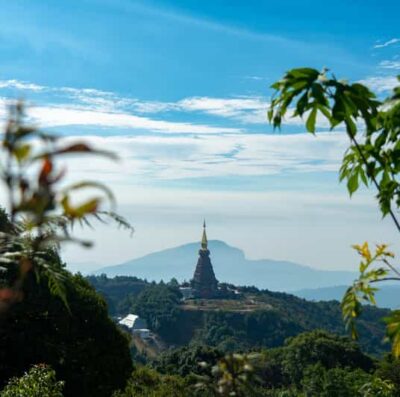
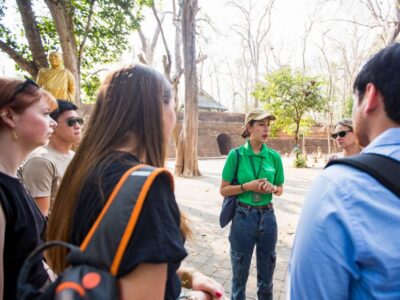
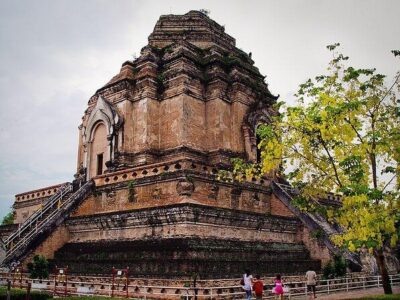
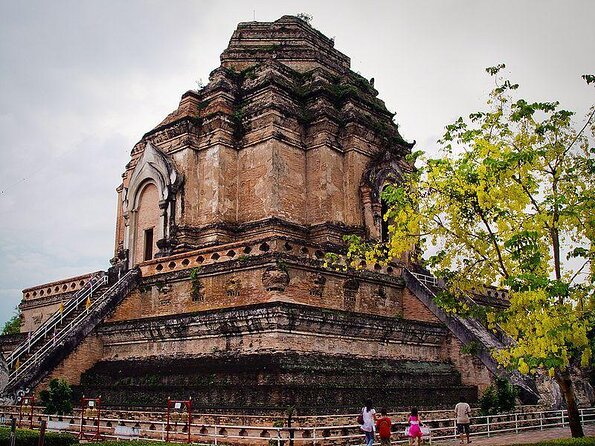
Your main cultural stop here centers on Wat Phra That Hariphunchai and its imposing golden chedi. This is where the guide’s role becomes especially valuable. A temple is easier to appreciate when you know what you’re looking at and why the site matters. You get time in the mix of streets and sacred grounds, with an expectation of a dedicated stop for viewing.

A drawback to keep in mind: the temple part can involve some walking. The tour is framed as moderate fitness, so plan on being comfortable with short walks, plus the riding before and after.

If you want photos, this is a good phase of the day to grab them. Early light can be kind, and you’re not yet fatigued from later countryside segments.

E-bike countryside after the city, with Ob Khan National Park nearby

Chiang Mai Active E-bike Countryside Ride - E-bike countryside after the city, with Ob Khan National Park nearby
Once you’re rolling out of the city zone, the ride turns into countryside time. The route is described as passing fruit orchards and canals, then continuing into forest riding and past rice paddies. Ob Khan National Park is part of the scenery you’ll be cycling near, including time around the water.

This is one of the tour’s strongest themes: you’re not just seeing the edges of Chiang Mai, you’re moving through the kinds of places where people actually live and work. Fruit orchards, irrigation canals, village lanes, and fields all give you a different texture than the usual Old City loop.

The electric bike helps you keep your speed steady without draining yourself. That’s useful because the terrain here can be uneven, and the route can include undulating sections. You’ll still feel like you’re traveling under your own power, but you’re not stuck arriving sweaty and miserable.

If you’re the type who likes window-shopping with your eyes, you’ll enjoy this stretch. You’re far enough from the main roads that the experience feels slower and more local. And because the group stays small, you get more moments of stillness between stop points.

Ping River lunch in a village setting

Chiang Mai Active E-bike Countryside Ride - Ping River lunch in a village setting
Around mid-day, the tour takes a break on the banks of the Ping River. You get about an hour here, with a meal described as deliciously simple Thai food.

This matters because a great e-bike day can fall apart if lunch is awkward or overpriced. Here, lunch is included, and the plan builds it into the route. You’re not left scrambling for a restaurant once you’re tired.

One practical tip: Thailand heat can feel relentless. Even with an hour, you’ll likely appreciate a bottle of water and sun protection. Your tour provides beverages and snacks, but bringing a small personal water bottle can help you feel comfortable if you drink more than average.

This is also a useful reset point. After the morning riding segments, you want a place where you can sit, eat, and breathe. This river stop does that without turning into a long detour.

More Chiang Mai temple visits, food walks, elephant experiences, mountain trips, and northern Thailand day tours to compare

Baan Tawai woodcarving village: watching real craft work

After lunch, you’ll cross the Ping River and bike through rice paddies toward Baan Tawai, a wood carving village. The schedule gives you about an hour here.

This isn’t just a photo stop. You park the bikes and walk around to admire craftsmanship. If you like seeing how things are made, this village time can be one of the most memorable parts of the day because you’re not just looking at finished souvenirs. You’re watching the makers’ world.

A consideration: because it’s a craft village, there can be shops and sales pressure. If you dislike that, focus on walking and observing the work rather than browsing every stall. In a small-group setting, it’s easier to stay on the path your guide suggests.

If you’re shopping, you’ll get more value by comparing quality and asking about materials and carving style. But you don’t have to buy anything to enjoy the stop.

Doi Suthep foothills and the forest-shrine pause

After the village portion, the ride continues with cycling through backroads and country lanes. You’ll work your way out across the plain toward forested lanes in the foothills of Doi Suthep. On the way, there’s a stop at an ancient forest shrine.

This part is where the ride starts feeling more like a countryside trek, even though the bike handles the motor work. You’re cycling among small villages, then moving toward greener, quieter lanes that feel less like city sprawl.

The forest-shrine pause is brief but meaningful. It gives the day a cultural beat in between riding segments. It’s also a chance to stretch legs, cool down, and get back into the biking rhythm.

This is also a section where your guide’s pacing matters. A good guide keeps the group together but allows people to look, take photos, and regroup without rushing everyone like a parade.

Rajapruek Royal Park: lunch break, garden time, and easy walking options

Your next major stop is Rajapruek Royal Park. After a few undulating hills, you reach the park and take a well-deserved break. The schedule gives you a 30-minute stop, and the day description notes that lunch happens here as well.

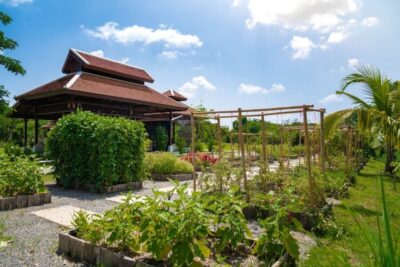
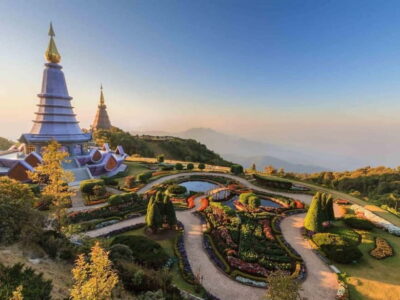
Rajapruek is known for manicured gardens, and this stop is built for a relaxed finish. You’re not ending the day right after a steep push. You arrive, get time to recover, and then transition out of the riding portion.

Some riders specifically call out that there are water features and areas that are easy to hike to inside the park. I’d treat this as optional. If you have the energy, a short walk is a great way to stretch after the bike. If you’re more heat-sensitive, you can stay close to the lunch area and still feel like you made the most of the stop.

A small caution: your time here is not unlimited. With only about 30 minutes allocated, keep your priorities in mind. If waterfalls and paths interest you, plan for quick choices rather than slow wandering.

Getting back after the ride without fighting traffic

Near the end, you gather your bikes and load them onto a vehicle for the return to the shop area. This is described as a route that helps avoid congested roads during peak hours, which is a big quality-of-life detail.

This matters more than it sounds. If you were to bike back into traffic, you’d spend your final time stressed and alert instead of relaxed. The vehicle transfer lets your shoulders and legs recover for the rest of your day in Chiang Mai.

It also fits the tour’s value style: you’re paying for a complete experience, not just a few hours of riding. The return transfer is included, and that makes it easier to plan what you do after.

Price and value: what $75 actually includes

At $75 per person for about 7 hours, the price feels fair when you look at what’s included.

You get:

  • bike and helmet
  • an English-speaking guide
  • entrance fees for each attraction point
  • beverages and snacks
  • lunch
  • a one-way transfer back from the end of the bike route

What’s not included is hotel pickup and drop-off. So your main cost planning item is getting yourself to Discova Day Tour Shop Chiang Mai by 8:15 am. Once you’re there, the tour covers the big buckets: transportation support for the route, food, and site entry.

For me, the best value element is the total time you get. This isn’t a half-day loop that feels cut short. It’s long enough to feel like you left the city and actually saw how people live, but not so long that it turns into a slog. Guests who wanted something longer than a typical half-day often land here as the sweet spot.

Who should book, and who might want to skip

This is a good fit if:

  • you want a countryside day without white-knuckle road riding
  • you enjoy mixing cultural stops with moving scenery
  • you like having a guide handle route safety and pacing
  • you want lunch and entrances included so the day stays simple

You might think twice if:

  • you prefer mostly flat routes. The day includes at least some undulating hills, plus riding after temple and village segments.
  • you don’t want any walking. Temple stops and the woodcarving village involve walking time.
  • you are very short. For safety and comfort, the tour does not recommend customers shorter than 170 cm.

For families, children must be accompanied by an adult. Child seats are available on request for kids up to 14 kg, but you need to plan ahead when booking.

The tour size also helps. A maximum of 10 means you’re less likely to feel squeezed or ignored. It’s a more personal day than big coach excursions.

Practical FAQ for planning your day

FAQ

What time does the Chiang Mai Active E-bike Countryside Ride start?

The tour meets at 8:15 am and departs at 8:30 am sharp from Discova Day Tour Shop Chiang Mai.

How long is the tour?

It runs for about 7 hours (approx.).

What’s included in the price?

It includes the use of bicycle and helmet, an expert English-speaking tour guide, entrance fees for each attraction point, beverages, snacks, lunch, and a one-way transfer back to the meeting point from the end of the bike route.

Is hotel pickup included?

No, hotel pickup and drop-off are not included. You’ll need to get to the meeting point on your own.

Do I need to bring ID or a passport?

Yes. Foreigners need to bring the original passport to show the state railway officer. Thai citizens need an ID card.

Can I cancel for a full refund?

Yes, you can cancel for a full refund if you cancel up to 24 hours in advance of the experience start time.

Final call: should you book this ride?

I’d book this if you want a Chiang Mai day that feels like real local travel: train out, quiet lanes, temple time, countryside riding near Ob Khan National Park, a Ping River lunch break, woodcarving village craft viewing, and a calm garden finish at Rajapruek. It hits a strong value mix, because food, entrances, bike use, and part of your transportation are handled for you.

Skip it if you’re looking for a gentle stroll-only day, or if you know you prefer zero riding stress and zero hills. If you’re comfortable with moderate activity and you like the idea of learning from a guide while you move through neighborhoods, fields, and forests, this one is a smart way to spend your time.