REVIEW · CHIANG MAI COOKING CLASSES
Chiang Mai: Authentic Cooking Class with Market & Farm Visit
Cook Thai food where Chiang Mai families live, with market lessons and an open-air kitchen. At Grandma’s Home Cooking School, the day feels less like a tour and more like being welcomed into a working kitchen family routine.
I especially love the way this class teaches ingredients, not just recipes, from curry paste basics to Chiang Mai’s signature soup, Khao Soi. I also love that you cook at your own station with clear guidance from English instructors such as Kiki and Jimmie, so you’re not stuck watching while everyone else eats.
One consideration: your start time can feel late in the day, with pickup often around 3:30 PM to 4:00 PM, and the van ride is sometimes a bit snug. If you hate tight seating or don’t like waiting around, plan a relaxed mindset.
Key things I loved

- Real ingredient context at the market, so you understand what Thai dishes are actually built from
- Farm time with animals, including feeding and hugging chickens and collecting fresh eggs
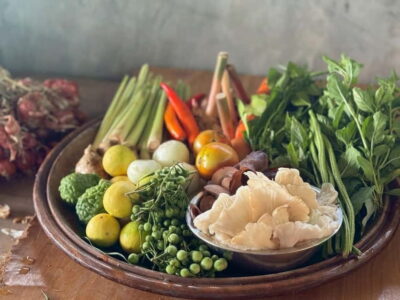
- Pick, smell, and learn, from mushrooms at a mushroom hut to herbs and fruits grown on site
- Your own cooking station, where you cook step by step and taste as you go
- Signature dishes like Khao Soi, plus curry paste made with a mortar and pestle
- Full-day coconut milk from scratch, using a traditional wooden grater
Grandma’s Home Cooking School: family energy, your own station, and Thai comfort food

This is the kind of Chiang Mai activity that makes you feel busy in the best way. You start with Thai ingredient shopping or farm time, then move into a kitchen setup where you actively cook, smell, and taste instead of collecting photos and leaving hungry.
The big win for you is the structure. You choose your menu at the start, then cook at your own station with step-by-step coaching from the English-speaking instructors. Even if you’ve never cooked Thai food before, you’re guided through sauces, timing, and how flavors should feel as they come together.
Another thing I appreciate is how practical the teaching feels. It’s not just, add this, now stir. You learn what ingredients do, like how curry paste changes as it cooks, and why certain sauces balance heat, sourness, and sweetness. When you’re done, you’re not only full, you’re more confident ordering and cooking back home.
You can also read our reviews of more shopping tours in Chiang Mai
Market first: how the ingredient hunt makes your Thai food taste right

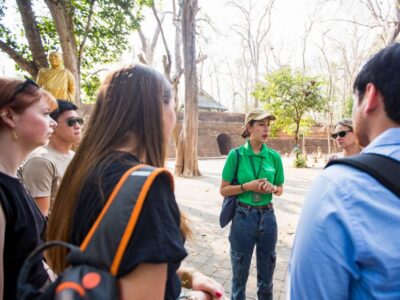
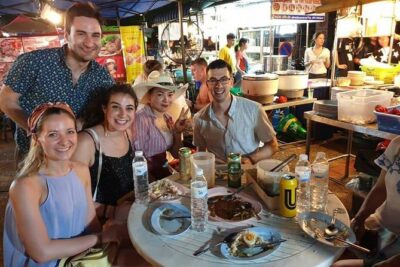
Depending on your session, your day may begin with a lively local market. This is where you get the “why” behind Thai cooking. You walk the stalls with instructors, then translate what you see into what you’ll use later in the open-air kitchen.
Here’s what the market time helps you do. When you learn which herbs and produce matter most, it becomes easier to recreate dishes later instead of guessing. You also start spotting how Thai kitchens build flavor layers: aromatics first, then sauces and pastes, and then the cooking liquids that tie everything together.
If you’re the type who likes to shop like a local, this part is especially valuable. You can later return to Chiang Mai markets with a better sense of what to look for, like herbs used for stir fries, the vegetables that show up in curries, and the ingredients that give soups their depth.
A small drawback to keep in mind: market time is more about ingredient education than shopping freedom. You won’t leave with a full cart of supplies. You leave with better taste awareness, which matters more.
Organic farm time with chickens, eggs, mushrooms, and herb smells

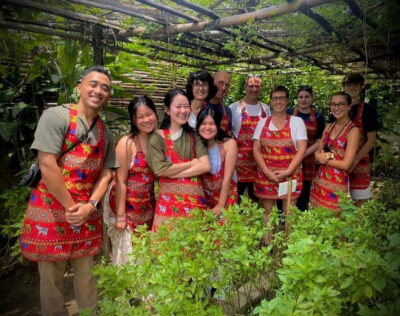
One of the most memorable parts is the farm visit at Grandma’s organic property. You’re surrounded by rice fields and greenery, and the pace slows just enough to make everything feel real, not staged.
You do hands-on animal activities. You can feed chickens, and you can even give them a gentle hug. Then you collect fresh eggs. It’s simple, but it changes how you experience the food. Eggs stop being “an ingredient,” and start being something you literally gathered.
You also pick mushrooms and explore a mushroom hut, where you can learn how mushrooms fit into Thai flavors. In addition, you smell and learn about Thai herbs and vegetables, and sometimes harvesting happens too, depending on what’s ready.
For me, this is where the experience becomes more than cooking. You’re learning about Thai cuisine through the farm supply chain, so when you cook, you understand that many flavors come from very specific plants and stages of freshness.
The only practical consideration is footwear. You’ll walk around the farm area, so bring comfortable shoes that can handle uneven ground.
The open-air kitchen flow: curry paste mortar work, Khao Soi, and step-by-step guidance

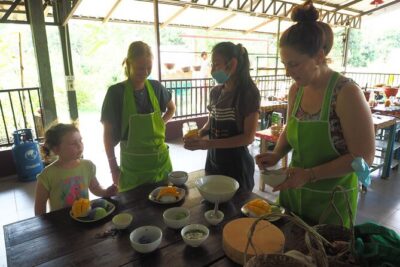
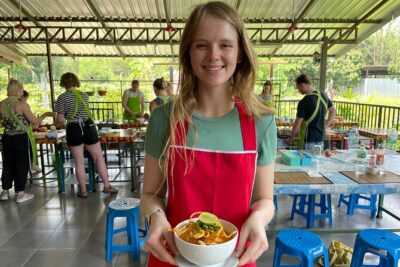
After the market and/or farm time, you move into the cooking portion of the day. This is where you’ll see how the school keeps things organized. You get your own cooking station, with tools ready, ingredients laid out, and instructions that guide you through each step.
Most classes include hands-on cooking for a set of Thai favorites. Common menu options include Pad Thai, Pad Kra Prao, Green Curry, Red Curry, Panang, Tom Yum, Tom Kha, Som Tam, spring rolls, and the big star: Khao Soi.
What I think you’ll love is the curry paste part. You make curry paste from scratch using a mortar and pestle. That changes everything about the final dish. You understand why the paste tastes the way it does and how grinding aromatics affects flavor intensity.
Khao Soi deserves its own spotlight because it’s a Chiang Mai signature. It’s also not the kind of dish you learn well just by watching someone else cook. You get the chance to build it yourself, which makes it far easier to reproduce later.
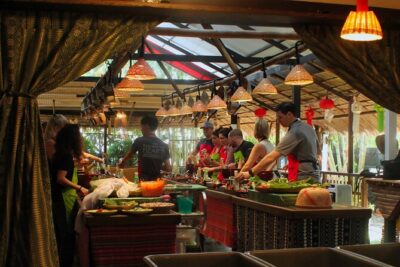
From a comfort standpoint, the open-air kitchen setting helps. It feels airy and relaxed, and you’re not trapped in a hot room while cooking. Plus, since you eat what you make, your pacing is built around cooking and tasting instead of waiting for a separate meal service.
A small note from real experiences: one person mentioned that the QR code they received did not provide their recipes. To avoid that stress, I’d make sure you can access your digital recipe e-book right away when you get it.
What you’ll cook: Pad Thai, curries, soups, and spring rolls at your chosen level

At the start of class, each guest chooses their menu before cooking begins. That’s a smart setup because it helps you cook dishes you actually want to eat. It also means you can adjust your selection if you’re more into stir-fries versus soups versus curry-based meals.
In most sessions, your dish list can vary, but the classics show up often. I like that you’re not just making one safe dish. You’re learning Thai cooking through multiple flavor styles, like:
- a noodle favorite like Pad Thai
- spicy basil stir-fries such as Pad Kra Prao
- coconut-based curries like Green Curry, Red Curry, or Panang
- sour-heat soups such as Tom Yum and Tom Kha
- creamy citrus soup like Tom Kha
- crunchy fresh salads like Som Tam
If you have dietary restrictions, pay attention here. Vegetarian and Halal options are available if you tell the school before the class starts. Gluten-free needs can also be handled, including substitutions like gluten-free soy sauce and oyster sauce mentioned in an experience where an instructor accommodated an allergy. If you have an allergy, this is exactly the kind of activity where you should message early so ingredients can be adjusted before you start cooking.
More Chiang Mai temple visits, food walks, elephant experiences, mountain trips, and northern Thailand day tours to compare
Morning, afternoon, evening, or full day: the mango sticky rice and coconut milk differences

Grandma’s class comes in several session lengths, and the extras matter. All sessions still include the core structure: guiding you through Thai ingredient knowledge and cooking at your own station, then eating the meal you create.
Here’s how the sessions differ based on what’s included:
- Morning sessions: you get market time, plus mango sticky rice as a dessert
- Afternoon sessions: you typically get market time too, plus mango sticky rice
- Evening sessions: you still cook Thai dishes and get the mango sticky rice taught as part of the cooking
- Full day sessions: you add more farm time and a major highlight, making coconut milk the traditional way with a wooden grater
If you want the farm story and the cooking story in one day, the full day format is the best fit. The coconut milk preparation is hands-on and teaches you what’s happening behind so many Thai dishes, especially curries and soups.
If your schedule is tight, the evening or half-day formats still work well. You’ll cook Thai classics, eat a satisfying meal, and leave with a recipe e-book to help you repeat the flavors later. One practical tip: this is not an activity you should pair with a big lunch beforehand. The meal portion can be substantial, especially when you’re cooking multiple dishes.
Timing also matters. Pickup is included within 5 km of the city center, and pickup is often around 3:30 PM to 4:00 PM. Plan around that so you don’t end up stuck waiting when you’d rather be eating or exploring nearby.
Price and logistics: why $34 feels fair for a full meal and a full skill set

At around $34 per person, this class is strong value because you’re paying for more than ingredients. You’re paying for instruction, prep, tools, and a meal you actually eat.
You’re also getting built-in transportation within 5 km of Chiang Mai city center. That reduces hassle, and it matters because you’re traveling to a cooking school setup outside the busy center.
The transport quality is rated highly, and the rides are generally described as smooth. Still, keep expectations realistic. One comment mentioned the van can feel snug if the group is larger than expected. If you’re tall or sensitive to cramped seating, I’d consider arriving early at the pickup point and asking the driver how seating is arranged.
What you’ll likely notice when you walk into the cooking area is professionalism. The kitchens are organized, equipment is ready, and assistants help during cooking so you can focus on learning the process rather than hunting for tools.
Finally, consider the recipe output. You get a digital recipe e-book. That can be your main souvenir if you cook at home. Just make sure you can access it without relying on a QR code that might not work smoothly for everyone.
Who should book this Chiang Mai cooking class, and who might want a different option

This is a great match if you want:
- hands-on cooking, not just a demo
- a meaningful farm visit, including chicken feeding and egg collection
- a clear ingredient education through market walking
- Thai classics such as Pad Thai, curries, Tom Yum, and the Chiang Mai signature Khao Soi
- flexible dietary options like vegetarian, Halal, and gluten-free support when you request in advance
It’s also a good fit for families, since children under 10 can join cooking with parents. If a child needs their own station, the school asks you to book as an adult price.
This might not be the best fit if:
- you hate late-afternoon pickups
- you want total freedom to roam a market without guidance
- you’re looking for a short, quick photo tour rather than a full meal and active cooking
And if you’re the type who loves Chiang Mai because it feels personal and food-centered, this class usually lands well. The combination of farm, market, and cooking creates a chain you can taste.
Tips to get the most from your day in Grandma’s kitchen

Bring comfortable shoes for the farm walk, plus a sun hat. You’ll be outside for parts of the day, and it’s easier to enjoy everything when you’re not dealing with sore feet or overheating.
Plan your meal timing. Because you cook and then eat what you make, you should not arrive starving and also not arrive already stuffed. Aim for a light snack earlier in the day, then let the class become your main meal.
If you care about dietary needs, message early. Vegetarian, Halal, gluten-free options are available, and instructors can adjust ingredients when you tell them before the class starts.
When choosing dishes, don’t only pick what you already know. If you’ve never had Khao Soi, consider making it part of your menu choice. If you love spicy food, prioritize curries or Som Tam. If you prefer sour and fragrant soups, choose Tom Yum or Tom Kha.
Should you book this Chiang Mai cooking class?
Yes, I’d book it if you want a genuine food-focused day with hands-on cooking, strong ingredient education, and an experience that connects the market and the farm to the plate. At this price point, you’re getting a full skill set, a lot of food, and the kind of Chiang Mai detail you can actually use later.
If you’re short on time, choose the session length that matches your energy level, morning or afternoon for market time and mango sticky rice, full day for coconut milk from scratch and the most farm immersion. And if you’re picky about comfort, plan for that hotel pickup window and be ready for a potentially snug van ride.
When the day ends, you should feel like you can recreate these flavors, not just describe them.
FAQ
What is included in the class price?
Hotel pick-up and drop-off in an air-conditioned van within 5 km of the city center, market tour (for morning, afternoon, and full-day), farm tour and activities, a hands-on cooking class at your own cooking station, digital recipe e-book, welcome drink, herbal drink during the class, unlimited drinking water, and mango sticky rice (morning and afternoon) or as taught in the cooking for full day and evening. Coconut milk preparation is available for the full day option.
How long is the experience?
It runs from 210 minutes up to about 7 hours, depending on which session you choose.
Where does pickup happen?
Pickup is included for hotels within 5 km of Chiang Mai city center. You wait at the hotel lobby. If your hotel is outside that area, a nearby meeting point or a small extra charge may apply.
What dishes can I cook?
Your menu choices can include Thai favorites such as Pad Thai, Pad Kra Prao, Green Curry, Red Curry, Panang, Tom Yum, Tom Kha, Som Tam, and spring rolls. Khao Soi is highlighted as a key dish. You choose your menu at the start of class.
Is there a coconut milk activity?
Yes, coconut milk preparation using a traditional wooden grater is part of the full day option only.
Can you accommodate vegetarian, Halal, or gluten-free needs?
Vegetarian and Halal options are available if you inform the school before the class starts. Gluten-free and allergies can also be accommodated if you share details in advance.
What should I bring?
Wear comfortable shoes for the farm walk and bring a sun hat.
More Markets in Chiang Mai
More Shopping Tours in Chiang Mai
More Tour Reviews in Chiang Mai
Not for you? Here's more nearby things to do in Chiang Mai we have reviewed
Chiang Mai Cooking Classes, compared.
★ 5.0Half-Day Thai Cooking Class at Organic Farm in Chiang MaiFrom $2919,087 reviews
★ 4.9Cooking Class, Market & Thai Herbs Garden TourFrom $314,824 reviews
★ 5.0Thai and Akha Cooking Class in Chiang MaiFrom $424,358 reviews

★ 4.9Cooking Class with Market and PickupFrom $251,365 reviews
★ 4.9Cooking Class with Organic Farm at Mama NoiFrom $321,151 reviews
★ 5.0Full Day Thai Cooking at Farm (Chiang Mai)From $391,127 reviews
★ 4.9HALF-DAY COOKING COURSE at a Thai Cooking FarmFrom $28705 reviews
★ 4.9Evening Cooking Class and Local Market VisitFrom $28648 reviews
Browse the lists this tour appears in