REVIEW · CHIANG MAI DAY TOURS
Chiang Mai | TeeTee Elephant Home Elephant Care Half-Day
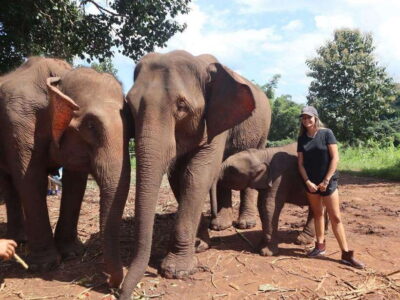
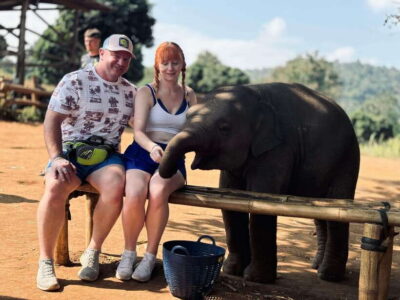
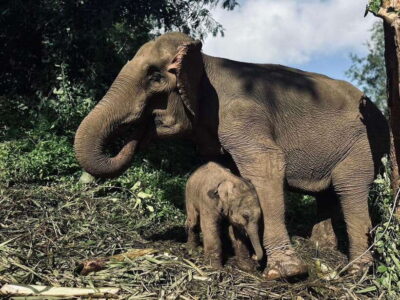
Chiang Mai elephants deserve more than selfies. At TeeTee Elephant Home, you spend a short half-day doing hands-on care with a small number of elephants. I especially like how the day is built around close, gentle interaction with elephants named Nam Chok, Phu Pha, San Dee, and older matriarchs like Mo Jo Ko and Lam Yai. One thing to consider: this is a care experience, not a theme-park show, so the schedule is tight and you are active around the elephants.
You’ll get picked up from Chiang Mai City and transported about 1.5 hours to Kuet Chang District, where the home sits in a mountainous area by a river. Once you arrive, expect wildlife viewing first, then lunch, then fruit feeding, vitamin ball prep, walking with elephants, and a shower session. If you value respectful treatment, this is the kind of visit where you can feel how much attention the team gives each animal.
Just know there’s some natural mess and movement involved. You’ll be given a local shirt, hat, and flip-flops, plus a towel, but it’s still a practical outdoor day. Plan to dress for getting splashed and to be flexible with timing, since the half-day format can run on a compressed schedule.
Key things worth knowing before you go

- Small number of elephants means you learn individual personalities, not just pass by for photos
- Nam Chok, Phu Pha, and San Dee are part of the hands-on focus, plus older elephants like Mo Jo Ko and Lam Yai
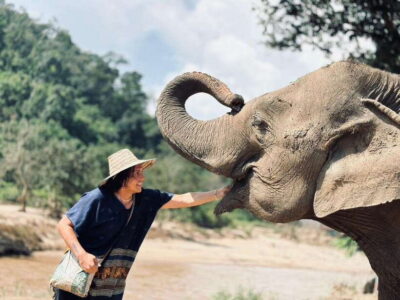
- Fruit feeding and vitamin balls turn you from a spectator into an actual helper
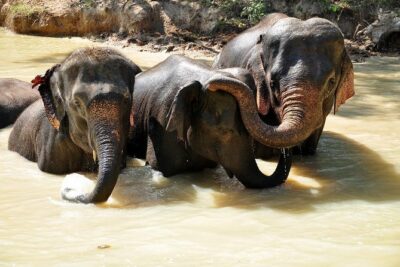
- Shower time is part of elephant care, so expect a wet, real-world interaction
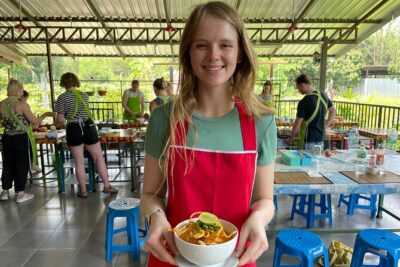
- Vegetarian Pad Thai lunch is served with time to observe the animals
- Tour guide support in English and Chinese, with guides like Ping mentioned for being warm and attentive
Where TeeTee Elephant Home fits in your Chiang Mai plan

Chiang Mai is full of elephant tours. Some are loud. Some feel rushed. This one is different in how it’s paced and what it asks you to do. The half-day experience is designed around care tasks, not a performance line. That matters, because it changes your mindset. You stop thinking of elephants as a photo stop and start thinking of them as working companions in a day-to-day routine.
The setting also helps. You’re in Kuet Chang District, in a mountainous area near a river. Even before you get close, you get the sense that you’re going somewhere that’s more about land, water, and space than a fenced walkway.
And the key detail for many people: this isn’t a huge herd experience. You spend time with a limited group of elephants, so you can actually notice patterns. Which elephants are curious. Which ones prefer gentle attention. Which ones ask for more food than you expected. That personal feel is a big part of why the experience scores so well.
More Chiang Mai temple visits, food walks, elephant experiences, mountain trips, and northern Thailand day tours to compare
Getting there: Chiang Mai pick-up and the real travel time

The trip starts with hotel pick-up in Chiang Mai City. Then you head to Kuet Chang District, about 1.30 hours away. That travel time is part of the deal, so it helps to treat this as a half-day block, not just “150 minutes with elephants.”
On a typical day, the schedule feels like this:
- time to leave the city and settle in for the drive
- a period of wildlife viewing on arrival
- lunch and hands-on care later in the program
- return back to Chiang Mai
The good news is that you’re not left to figure out transport, which is where many DIY elephant day plans go off the rails. The tour includes transfers, plus insurance and a guide. That makes the day smoother, especially if you’re juggling other Chiang Mai activities.
The elephant encounters: Nam Chok, Phu Pha, San Dee, and the older matriarchs

The heart of the experience is the way you meet different elephants at different stages of life. You don’t only interact with one “cute baby.” You get a mix of youngsters and older elephants, which gives you a better sense of elephant behavior across ages.
Here’s who you’ll focus on, by name:
- Nam Chok, a baby elephant that’s described as very cute, and yes, also tricky in the best way (young elephants can be restless and curious)
- Phu Pha and San Dee, growing elephants that are enthusiastic about eating, meaning you’ll see a lot of repeat feeding moments
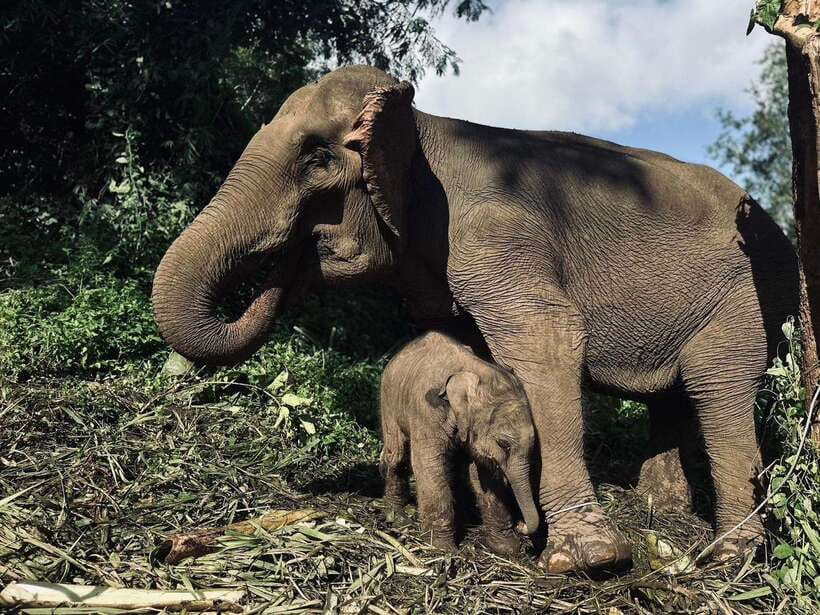
- Old elephants, including mother figures like Mo Jo Ko and Lam Yai, where the interaction feels warmer and more grounded
This “multiple stages” approach is one reason the experience feels more authentic. A baby’s body language is different from a growing elephant’s. And older elephants often respond differently too. When you’re watching them as individuals, you start to understand why careful handling and calm movement matter.
Practical note: some elephants will be eager for food. Others want space. Your job is to follow your guide’s direction and keep your actions gentle and predictable. The whole experience runs better when you treat each elephant’s mood like information, not something to force.
Feeding fruit, making vitamin balls, and learning the rhythm of care
A big chunk of the half-day is hands-on, which means you’ll do more than just stand near an elephant. Expect fruit feeding, making vitamin balls, and walking with the elephants. These tasks may sound simple, but they’re carefully chosen.
Why fruit feeding is a big deal: it’s immediate, and it lets you practice calm, close-range behavior. You learn how quickly elephants can approach, and how important it is to wait for the guide’s cue instead of rushing.
Vitamin balls add a second lesson. They’re not just “snacks.” They represent a routine part of care. When you help make them, you get a clearer idea of the work behind the scenes. That’s where a lot of the value lives. You’re not just watching an animal. You’re participating in preparation.
Walking with elephants is another care task. It tends to bring a closer sense of coordination. You follow the elephant’s pace, stay aware of your footing, and use the guide as your safety and timing reference.
Then comes the shower session. That’s one of the more memorable parts because it turns “touching” into “care.” In practical terms, it means you should expect water and movement around you.
Wildlife viewing and how to get something real from it

Before the lunch and care tasks, there’s wildlife viewing time. This gives you a slower start and a chance to settle your brain. Even if you came only for close elephant time, I think this viewing step helps you understand what you’re stepping into.
Wildlife viewing is also when you notice the overall feel of the place:
- how calmly the elephants move
- how the caretakers position themselves
- how the environment looks and sounds
- how the elephants behave when they are not being rushed
One reason I like this sequence is simple: it reduces the “panic energy” that can happen on animal days. You get your first impressions before you get hands-on. That makes your later feeding and shower time feel more natural and less chaotic.
Lunch with the elephants in mind: vegetarian Pad Thai and generous portions

Lunch is vegetarian Thai food, and Pad Thai is specifically included. In the more complete version of the day, you also get cooking time for a Thai menu like Pad Thai, but for the half-day you’ll focus on eating while staying close to the action.
Lunch is served for about 1.5 hours in the program flow. That’s long enough to actually relax a bit and refuel. It’s also long enough for you to keep watching what’s happening around you, without feeling like the day is constantly yanking you forward.
What I like about this lunch setup: it turns the meal into part of the experience rather than a separate break in the middle. You’re not trekking away to a random restaurant and losing the feel of the place.
And because it’s vegetarian, it’s usually easier to match with different dietary preferences. Still, if you have strict allergies, treat this as something to confirm with the operator before you go.
Your outfit, what’s provided, and what to bring anyway

The tour includes an outfit: local shirt, hat, and flip-flops. You’ll also get a towel, plus drinking water. Those details matter in Thailand, because outdoor days can get hot fast and sun can sneak up on you.
What to bring is all about comfort and water readiness:
- wear clothes you don’t mind getting wet or dusty (the elephant shower is part of the care flow)
- pack something simple to keep your phone safe from splashes
- bring sunscreen and keep reapplying if the sun stays strong
You will not be wandering on your own. The guide and team lead the pace, and the provided towel helps with the mess. But your best day happens when you show up prepared for an outdoor, hands-on session.
Also, keep your expectations realistic. You’ll be closer to animals than at most zoo-style visits, so you should expect your day to feel more physical and less “museum quiet.”
Price and value: why $57 can make sense

At about $57 per person for a 150-minute half-day, the first question is always: what are you really paying for?
In this case, your price covers a lot of the hidden costs:
- hotel pick-up and drop-off
- elephant food
- your outfit and towel
- vegetarian lunch with Pad Thai
- drinking water
- insurance
- a Chinese or English speaking tour guide
On top of that, you’re getting a structured experience with multiple elephants by name. You’re not only watching; you’re feeding, making vitamin balls, walking, and participating in shower time. Those care tasks are where you get the most meaning from the money.
Could there be cheaper elephant outings? Sure. But cheaper often means fewer elephant care details, larger groups, or less time with the animals as individuals. Here, the small-group feel is repeatedly emphasized, and that’s a tangible value point. You pay more when someone invests in lower volume and more attention per person.
So I’d think of the price as paying for a calmer, more deliberate elephant-care day with fewer “factory lines.”
The ethical angle to watch for, without getting preachy

Many people care about ethics. I do too. But ethics can be hard to measure from marketing lines, so here’s what you can look for in the experience itself.
On this day, the big ethical signals are practical:
- you are doing care tasks like feeding and bathing, not just posing
- the elephants you meet are named and handled with individual attention
- you’re guided on how to interact, which reduces rough handling
- the group experience feels intimate rather than crowded
One review mention that the elephants looked healthy and that they have daily freedom in the mornings. That kind of statement matters because it points to routines behind the scenes, not just a one-time interaction.
If you want a better emotional read, watch how staff move. Calm, patient movement and consistent cues tend to go together with healthy elephant behavior. If you notice rushing or frantic handling, that’s a red flag on any tour type. On this one, the overall tone is described as gentle and caring.
Who should book this half-day, and who might prefer something else
This half-day works best if you want:
- close contact without a full-day commitment
- real interaction like feeding, vitamin ball making, walking, and shower time
- a guided experience with English or Chinese support
- a structured day that includes lunch and transfers
It may not be ideal if you:
- hate outdoor heat or wet activities
- only want a quick viewing experience and prefer minimal physical involvement
- expect entertainment-style activities with long photo pauses
If you’re traveling with kids, consider what your family enjoys. The interaction is hands-on and animal-focused. That can be great for curious, patient kids. It might be less great for kids who want constant action and no waiting.
If you’re the type who wants more activities, there is also a full-day option described with hiking, cleaning the live area, and Thai cooking like Pad Thai. That’s a better match if you like longer, more work-like participation.
Should you book TeeTee Elephant Home half-day in Chiang Mai?
Book it if you want a short, meaningful elephant-care experience. The combination of small, personal elephant interactions, hands-on tasks like fruit feeding and vitamin balls, and the included vegetarian Pad Thai lunch makes it feel like more than a ticket to an attraction. Add transfers, insurance, and guide support, and the value becomes easier to justify.
Skip it or pick another style if you’re looking for a purely relaxed zoo visit. This is active, outdoor, and closer to animal care than performance. Also, if your schedule is inflexible, remember the location is about 1.30 hours from Chiang Mai city, so the day will feel like a true half-day block.
FAQ
What’s the duration of the half-day experience?
The half-day Chiang Mai | TeeTee Elephant Home Elephant Care experience is listed at 150 minutes.
Does the tour include hotel pick-up and drop-off?
Yes. Hotel pick-up and drop-off are included.
What activities are included in the half-day option?
You can expect wildlife viewing, feeding fruit, making vitamin balls, walking with elephants, and showering the elephants.
Is lunch included, and what food is it?
Yes. A vegetarian lunch is included, with Thai menu items, including Pad Thai.
What should I wear or expect for clothing?
The tour provides an outfit including a local shirt, hat, and flip-flops, plus a towel.
What language will the tour guide speak?
The tour guide provides English and Chinese support.
What’s included in the price besides the elephant time?
The package includes elephant food, vegetarian lunch, drinking water, outfit, towel, insurance, and the tour guide, plus transfers.
If you’d like, tell me your travel month and whether you prefer mornings or afternoons. I can help you build a simple Chiang Mai schedule around this so the drive time feels less painful.
More Half-Day in Chiang Mai
More Tour Reviews in Chiang Mai
Not for you? Here's more nearby things to do in Chiang Mai we have reviewed
Chiang Mai Day Tours, compared.
★ 5.0Half-Day Thai Cooking Class at Organic Farm in Chiang MaiFrom $2919,087 reviews
★ 4.8Elephant Sanctuary Feeding Program Half-Day TourFrom $274,527 reviews
★ 4.6Chiang Rai White Temple and Blue Temple Day TourFrom $273,366 reviews
★ 4.8Sticky Waterfall & Angel Waterfall Park Day TourFrom $411,371 reviews
★ 5.0Full Day Thai Cooking at Farm (Chiang Mai)From $391,127 reviews
★ 4.5Chiang Rai’s Temples Exploration Day TripFrom $51871 reviews
★ 4.7Doi Inthanon Park with Kew Mae Pan Hike Day TripFrom $62841 reviews
★ 4.9HALF-DAY COOKING COURSE at a Thai Cooking FarmFrom $28705 reviews
Browse the lists this tour appears in