Aroidee’s Farm-Fresh Thai Cooking Experience

REVIEW · CHIANG MAI COOKING CLASSES

Aroidee’s Farm-Fresh Thai Cooking Experience

5.0 · 8 reviews From $41 Operated by A ROI DEE Cooking school Chiangmai · Bookable on Viator
Book on Viator →

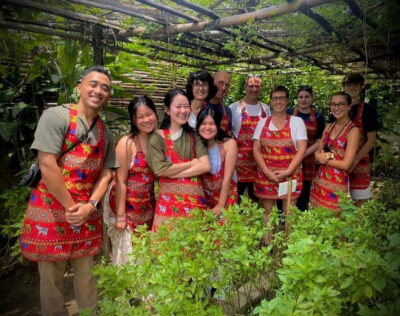
Farm cooking beats another generic Thai class. At A Roi Dee Organic Farm, you start with real farm time, harvesting herbs and produce you will actually cook with, plus egg collecting and animal visits. I love the hands-on herb education and the way you make curry paste yourself, not just watch someone else do it. One thing to think about: it starts early at 8:00 am and much of the experience happens outdoors, so you’ll want to be comfortable in morning sun and bugs.

This is also set up for real people traveling in real mixes, families included. With a maximum of 15 guests, the class stays personal, and the staff and guide Aom stand out for being friendly and clear. If you want a class where you get both food skills and farm stories, it works.

Finally, the value is strong for the time you get. You’re looking at about 4 hours, and you return to the same meeting spot near Wat Suan Dok. Vegetarian and vegan menus are available, and ingredients can be adjusted for allergies, which makes it easier to eat confidently in Thailand.

Key highlights at a glance

Aroidee’s Farm-Fresh Thai Cooking Experience - Key highlights at a glance

  • Harvest what you cook in the organic garden, including herbs and vegetables used in your dishes
  • Egg collecting and farm animal time, with a chance to visit and feed animals like buffaloes, chickens, geese, and goats
  • Pad Thai and Tom Yum Kung get proper hands-on instruction, plus curry paste making
  • Outdoor kitchen teaching that explains what you are using and why it matters in Thai flavor
  • Small group feel with a cap of 15 travelers, so you are not shouting across a crowd
  • Mango sticky rice is the sweet finish, tied directly to your class cooking

From Wat Suan Dok to an organic farm kitchen

Aroidee’s Farm-Fresh Thai Cooking Experience - From Wat Suan Dok to an organic farm kitchen
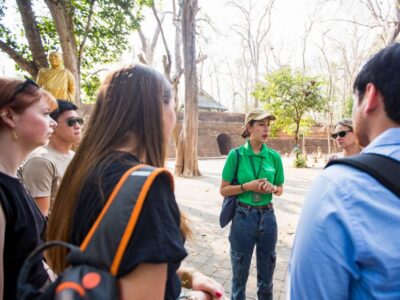
Most people will aim for the same start point: Wat Suan Dok (139 Suthep Rd, Chiang Mai). The class begins at 8:00 am, and it runs for about 4 hours, ending back at the meeting point. If pickup is offered for your booking, that can simplify the morning, but you still have a clear “plan A” if you prefer to meet there.

This matters more than it sounds. A cooking class often wastes time in traffic, waiting around, or trying to find the place in a system that is not built for foreigners. Here, the structure is straightforward, and the day is paced so you get both the farm portion and the cooking portion without feeling like you only did one.

Also, you’ll get a mobile ticket, which is handy when you are juggling Thai street maps, cash, and phone battery. Just make sure your ticket is saved before you head out.

You can also read our reviews of more cooking classes in Chiang Mai

Harvesting herbs and ingredients, the part most classes skip

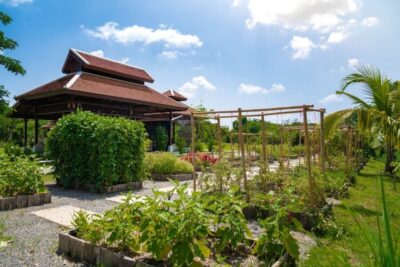
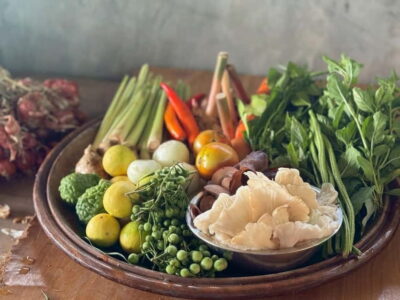
The best reason to do a farm-based class is simple: it teaches you how Thai food starts before it hits the wok. At A Roi Dee, you go into the garden and pick fresh herbs and vegetables for your cooking. You are not just choosing ingredients on a cutting board later, you’re seeing them in the field and learning what they are used for.

I like this part because it changes how you taste. When you understand the herb behind the fragrance, you stop eating on autopilot. For example, a good Thai soup or curry depends on the balance of aromatics, not just heat. Getting that herb explanation while you are holding the leaves helps it stick.

Another detail I value is that the instruction includes time spent explaining what you are selecting. The difference is obvious when you cook. You know what the herb is supposed to do, and you can adjust confidently if the plant looks slightly different than you expected.

Practical tip: wear shoes you do not mind getting dusty. Garden time is real farm time, not a photo-op stroll.

Animal visits and why this is more than cute downtime

Aroidee’s Farm-Fresh Thai Cooking Experience - Animal visits and why this is more than cute downtime
Yes, farm animals are part of the charm. But the animal time is also part of the learning atmosphere. You get to interact with farm animals such as buffaloes, chickens, geese, and goats, and you can collect eggs. That egg collecting sounds simple, but it adds a sense of connection that makes the meal feel earned.

In a lot of classes, animals are a quick photo stop. Here, you’re given actual time to visit and feed some of the animals, which turns it into a calmer, more comfortable rhythm. It’s also why this experience works for families. Kids often enjoy the movement, the animals, and the sense that they are part of something alive.

One consideration: farm environments come with farm rules. You should expect to follow staff instructions closely around animals and keep hands clean before cooking. If you are sensitive to animal smells, plan for that reality and treat it like part of an outdoor morning.

Outdoor kitchen lessons: making Pad Thai and Tom Yum Kung

Aroidee’s Farm-Fresh Thai Cooking Experience - Outdoor kitchen lessons: making Pad Thai and Tom Yum Kung
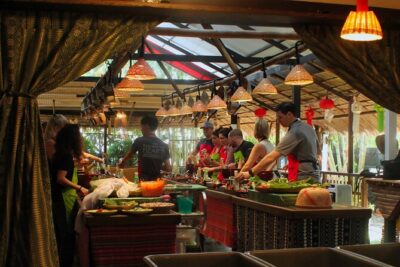
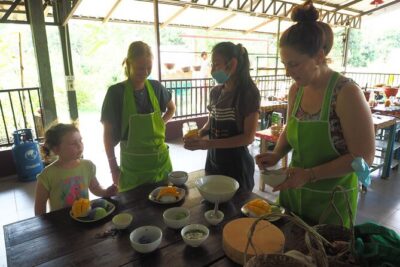
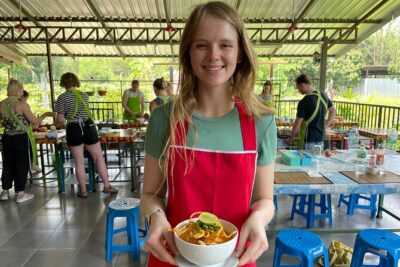
Once you’re in the outdoor kitchen, the class shifts gears from farm to flavor. This is where you learn to cook multiple Thai favorites, including Pad Thai and Tom Yum Kung. You’re also taught to make curry paste, which is a major difference-maker in Thai cooking. Many cooking classes skip the paste step, or they treat it like a side task. Here, it is built into the core lesson, so you understand the foundation.

I especially like the explanation style. The staff takes time to explain what you’re working with and how ingredients behave in Thai cooking. That herb-and-vegetable grounding from the garden time pays off. When you go from picking to chopping, you start noticing the small differences that matter for flavor.

What I think you’ll enjoy most is the hands-on workflow. You’re not just tasting and watching. You’re doing the steps that create the dish: mixing, cooking, adjusting, and learning how the flavors come together. The class focuses on practical technique, not just producing a finished plate for photos.

If you want to recreate Thai dishes later, this is the part to pay attention to. Curry paste and soups teach you the logic of Thai seasoning. Pad Thai teaches you the balancing act between sweet, salty, and tangy.

Curry paste and Thai spicy soup, where the flavor foundation clicks

Aroidee’s Farm-Fresh Thai Cooking Experience - Curry paste and Thai spicy soup, where the flavor foundation clicks
Thai curry paste is not just “spice.” It’s the engine of the dish. In this class, you learn how to make curry paste and use it to create a flavorful Thai spicy soup. Even if you’ve cooked Thai once before, having a guided paste-making lesson gives you a clearer idea of how aromatics and seasonings build into something cohesive.

This is one of the most praised aspects of farm-based cooking classes for a reason. When you cook the paste yourself, you get to see the texture change and smell the aromatics blend. That makes later cooking easier. You stop guessing at what the paste should taste like and start understanding the role of each ingredient.

Practical tip: Thai cooking often moves fast once heat is on. If you are the type who likes to “take a slow moment” with every step, you might want to keep your pace and listen for cues. The class is well paced, but it is still cooking. Your job is to follow along, ask questions when needed, and keep moving.

More Chiang Mai temple visits, food walks, elephant experiences, mountain trips, and northern Thailand day tours to compare

Mango sticky rice, the sweet finish you’ll actually remember

Aroidee’s Farm-Fresh Thai Cooking Experience - Mango sticky rice, the sweet finish you’ll actually remember
Every great Thai meal needs a finish, and here it ends with mango sticky rice. The point is not only that it tastes good, it’s that dessert in Thai cuisine often has a specific texture and flavor balance. Sticky rice, coconut, sweetness, and mango ripeness all matter.

I like that this is included as the closing dish because it gives you something complete: you experience the full arc from savory stir-fry and soup to sweet comfort food. By the time dessert arrives, you’ve already learned how to build flavor in savory dishes, so the contrast makes it feel even better.

Another bonus for value: you leave with a dish you can describe clearly after the fact. Many cooking classes end with something vague like “a dessert.” This ends with a recognizable Thai classic you can recreate and share.

Price and value: where $41.95 makes sense in real life

Aroidee’s Farm-Fresh Thai Cooking Experience - Price and value: where $41.95 makes sense in real life
At $41.95 per person for about 4 hours, this class prices itself as a mid-range day. It can feel like a bargain because you are not just paying for cooking. You are paying for a full experience: farm time, garden harvesting, animal interaction, outdoor teaching, and multiple dishes (plus the mango sticky rice finish).

Also, the group size helps justify the cost. With a maximum of 15 travelers, you get attention and can actually do the steps. In bigger classes, you can end up cooking half-heartedly while someone else takes the lead. Here, the smaller scale makes it easier to learn rather than simply complete.

One more practical angle: it’s booked about 19 days in advance on average. That tells me demand is steady, which is good for you because staff and operations are likely running smoothly, but it also means you should not wait forever if your Chiang Mai dates are tight.

Who this is best for, and who may want to choose another class

Aroidee’s Farm-Fresh Thai Cooking Experience - Who this is best for, and who may want to choose another class
This experience is a strong fit if you want a more grounded Thai cooking day. If you enjoy outdoors, like learning where food comes from, or you want a class that includes both cooking and culture through farming practices, it will click.

It also works well for:

  • Families with kids who enjoy animals and hands-on activities
  • Couples who want something more interesting than sitting through a standard cooking demo
  • Solo travelers who value a small-group format and friendly staff

Where it may not be perfect:

  • If you hate outdoor mornings, expect the early start and open-air setting to bother you
  • If you want a purely advanced culinary workshop, you might find the class more about foundational technique and flavor building than deep restaurant-level mastery

My advice: if you’re unsure, treat it like an early taste of northern Thailand beyond markets. The farm angle is the main reason to pick this one.

Quick packing tips for an 8:00 am outdoor class

You start at 8:00 am, so plan like it’s morning heat, even if it starts cool. Bring:

  • Comfortable shoes you can get dusty
  • Sunscreen and a hat
  • Insect repellent
  • A light layer if the mornings feel breezy
  • A water bottle if you tend to get thirsty quickly

You’ll be moving between garden work, animal areas, and the outdoor cooking space. Light, breathable clothing helps. And if you have dietary needs, review them during booking so staff can adjust ingredients or offer a vegan or vegetarian menu.

Timing in Chiang Mai: pair it with a slower day

This class is short enough that it doesn’t eat your whole day, but early enough that it can anchor your schedule. After you’re done (and you’re back near Wat Suan Dok), you can shift into a slower rhythm, whether that means temple time, a café break, or an easy market stroll.

If you plan a heavier day later, schedule it with rest in mind. Cooking a full meal plus farm walking is fun, but it’s still activity. Give yourself space to digest both the food and the stories.

Should you book A Roi Dee’s Farm-Fresh Thai Cooking Experience?

If you want a Thai cooking class that feels connected to where the ingredients come from, I think you should book this. The combination of farm harvesting, animal time, and hands-on cooking is what makes it memorable, not just the dishes on paper. The inclusion of classics like Pad Thai and Tom Yum Kung, plus learning curry paste and ending with mango sticky rice, gives you real take-home food knowledge.

I’d skip it only if you strongly dislike outdoor mornings or you want a strictly indoor, fully formal cooking workshop. Otherwise, it’s a solid value at $41.95 for a small-group, morning-to-meal experience.

If your schedule allows, book soon, since demand is steady and this format feels like it sells out for certain weeks. And if you have dietary restrictions, this is one of those experiences where you should feel comfortable asking for adjustments.

FAQ

What time does the Thai cooking class start, and how long is it?

It starts at 8:00 am and lasts about 4 hours.

Where do I meet for the experience?

Meet at Wat Suan Dok, 139 Suthep Rd, Tambon Su Thep, Amphoe Mueang Chiang Mai, Chang Wat Chiang Mai 50200, Thailand.

Does the experience include pickup?

Pickup is offered, and the activity ends back at the meeting point.

Can the menu be adjusted for vegetarian, vegan, or allergies?

Yes. A vegan and vegetarian menu is available, and ingredients can be adjusted to any allergy.

How large is the group?

The experience has a maximum of 15 travelers.

What happens if I cancel, or if the weather is bad?

Cancellation is free up to 24 hours in advance for a full refund. If the experience is canceled due to poor weather, you will be offered a different date or a full refund.