REVIEW · CHIANG MAI FOOD & MARKET TOURS
Go where the locals go, Eat what the locals eat! Food Tour with Local Foodies
Ready to eat like a Lanna local? This Chiang Mai Foodie Tours food tour mixes old-city temples with market stops, so you learn the story behind dishes while you actually taste them. You can do the morning Old City route or the late-afternoon Warorot Market route, both built around the same idea: go where the locals eat.
I love that the schedule is designed around time spent eating, not just riding around town. I also like the practical touch of a private driver to cut traffic, plus headsets available on request so you can follow the guide even when you are walking and snacking.
One possible drawback is the focus on tastings rather than full meals, so if you crave bigger servings, you may feel the price is high for the number of stops. Also, temple visits mean you should dress appropriately and be ready for some walking.
Key Things I’d Prioritize on This Food Tour

- Old City landmarks tied to food like Wat Chiang Man and the dish origins behind Khao Soi
- Warorot Market (Kad Luang) diversity plus a mix of street-style bites and classic desserts
- Northern Thai specialties you might not order on your own like Sai Oua, Gaeng Hunglay, and Yum Samunprai
- Optional headsets that make a real difference when the group is moving fast through busy areas
- Small groups up to 20 people, which keeps the vibe from feeling like a factory tour
- Guides with real flexibility, including examples of adapting for late arrivals and families with young kids
What This Chiang Mai Food Tour Is Really About (and who it fits)

This tour is built for you if your main goal in Chiang Mai is Northern Thai food, not just taking photos in markets. Instead of doing one quick snack stop and calling it a day, the route is structured around multiple tastings at an old open-air market, temple area walks, and a proper sit-down restaurant meal.
The biggest win is that the food is tied to context. When you hear how dishes developed and why they show up in Chiang Mai, you taste more than flavors. You start noticing differences, like the way Northern Thai meals often lean into herbs, aromatics, and punchy spice profiles that feel distinct from what many people expect from Thai food.
Price-wise, this is not a bargain street-food-only crawl. At $50.52 per person, it is closer to a guided culinary outing that includes a guide, bottled water, snacks, and a driver to keep your time efficient. You are paying for coordination, not just food.
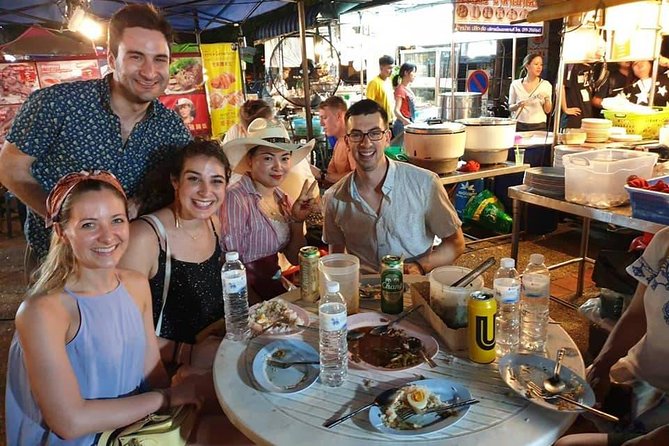
This is also a strong fit if you like group energy but do not want it to be chaotic. The tour caps at 20 travelers, and the reviews highlight guides like PT, Sky, and Pondtip for being friendly and able to adjust when situations change.
You can also read our reviews of more food & drink experiences in Chiang Mai
Meeting Point Timing: Morning Old City vs Late Afternoon Warorot Market

You need to pick the start time, and you should also double-check where you meet. The tour has two different schedules, and they do not use the same meeting point.
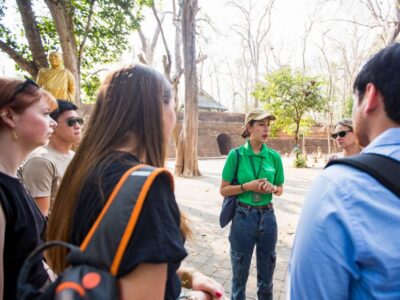
- Morning version (around 9:00am): you meet at Three Kings Monument inside the Old City area. This route is heavier on Old City temple walking and dessert stops tied to Chiang Mai staples.
- Late afternoon version (around 4:00pm): you meet at Warorot Market (Kad Luang). This version is more market-forward, then shifts into a Northern Thai restaurant meal and nearby sights.
Duration is listed as 4 to 8 hours (approx.), which is a wide range, so plan your day with some breathing room. Expect it to feel like a half-day outing in practice, but the exact pace depends on group flow, walking breaks, and how quickly you move from one tasting to the next.
My practical advice: if your day is already packed with temple tickets, cooking classes, or night market wandering, choose the time that matches your energy. Morning has more walking and early landmarks. Late afternoon helps you roll straight from market hunger into a proper meal without rushing through daylight.
Three Kings Monument to Temple Walks: Kao Man Gai, Khao Soi, and Wat Chiang Man
Starting at Three Kings Monument puts you in a great position to understand Chiang Mai as a city of layers. You are not just eating snacks. You are moving through an area that connects landmarks to the dishes people actually order.
Early on, you eat Kao Man Gai, a simple staple that is famous locally and has been family-owned since 1957. That kind of longevity matters, because it usually means consistent flavor and a menu designed for locals who know what they want. For you, it is a fast, satisfying anchor before you tackle more complex dishes later.
Then the tour adds a temple component. You will visit Wat Chiang Man, described as the first temple built in the Old City, and you also stop near Wat Gate Community. This is where the “food through local eyes” idea becomes real, because you see the neighborhood context around eating culture, not just the market food itself.
You also get Khao Soi, Chiang Mai’s famous noodle dish. The guide explains its history and origins, which is exactly what helps you appreciate it beyond the first bite. Khao Soi is not one-note comfort food. The layers and textures are the point, and the story helps you taste with intention.
In some cases, guides have taken groups to a higher-end Khao Soi stop such as a Michelin star restaurant, so you might find the tour reaches beyond street stalls. That can be great if you want a wider taste range without giving up the local feel.
Warorot Market (Kad Luang): How the Market Stop Changes Everything

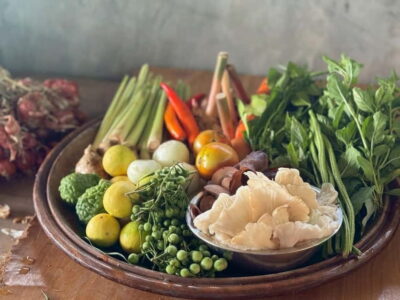
Warorot Market (Kad Luang) is one of Chiang Mai’s oldest and largest open markets, and the tour uses that reputation in a smart way. Instead of sending you into a maze with no plan, you stop at favorite stands and taste what makes sense in the moment.
Expect a spread that often includes:
- Sai Oua (Northern Thai sausage)
- Golden Curl (a fried snack style, freshly made)
- Mango sticky rice
- Thai iced tea
This combination is more useful than it sounds. The meats, fried bites, fruit dessert, and milky tea give you a full “Northern Thai day” snapshot. You also learn how these foods fit together, not just how each one tastes alone.
One practical detail I really like: the market stop is not treated as a quick photo stop. Groups have reported trying 15-plus items during the Warorot portion, which usually means you have room for variety without feeling like you are stuck eating the same thing repeatedly.
There is also a nearby flower market stroll. It is not the main event, but it breaks the pace and keeps your senses from burning out after sweet and savory tastings.
If you are the type who wants to shop later, the market layout can also help you get your bearings. Even if you do not buy anything, you learn where stall styles and ingredients tend to be grouped, so your independent street wandering later feels easier.
The Northern Thai Restaurant Meal: Gaeng Hunglay, Larb Moo, Khua Jin Som, and Yum Samunprai

After the market tastings, you head to an authentic Northern Thai restaurant and get a more sit-down, composed meal. This is an important shift because it changes what you get to taste.
Instead of only street-style bites, you eat dishes that show how Northern Thai flavors play out when cooked and served properly, often with stronger herbal tones and deeper spice balance.
The specific dishes listed for this stop include:
- Gaeng Hunglay
- Larb Moo
- Khua Jin Som
- Yum Samunprai herbal salad (called award winning)
I like this meal format because it prevents the classic problem with food tours: too many snacks, not enough “wow, this is a full dish.” You are still tasting throughout, but you also get the chance to understand how each plate works as a whole.
If you have dietary preferences, you might find it helpful to tell the guide what you avoid, since at least some groups describe the tour as having room for adjustment. The tour does not advertise a formal menu customization policy in the basic info, so treat any changes as something you should ask about early.
One more reason this restaurant stop matters: it slows the pace enough for you to process what you just ate. After market chaos, sitting down helps you notice spice levels, herb intensity, and texture differences that you might miss if you keep sprinting stall to stall.
More Chiang Mai temple visits, food walks, elephant experiences, mountain trips, and northern Thailand day tours to compare
Dessert Targets: Sakoo Sai Hmoo and Kao Griap Paak Hmaw

Chiang Mai does desserts differently, and this tour makes sure you do not miss the Northern Thai classics. On the morning route, one of the stops is described as a top dessert destination, with tastings centered around Sakoo Sai Hmoo and Kao Griap Paak Hmaw.
Even if you think you are not a dessert person, I would still treat these tastings as part of the cultural lesson. Thai desserts often feel light to travelers, but Northern styles can lean more into chewy textures, coconut, and fruit-forward flavors. Eating dessert on a tour also keeps you from guessing what to order on your own when menus look intimidating.
The tour structure also matters here. If dessert came at the end of a normal day, you might be full from street food and skip it. But because the tour is paced as a series of tastings, dessert becomes a predictable final note rather than a sugar gamble.
My tip: keep a little space. Bring a water bottle mindset, but do not try to “save your appetite” by skipping early tastings. The early bites help you handle sweet flavors later. Also, if you are sensitive to very sweet foods, tell your guide so you can adjust portion sizes without feeling awkward.
Transport, Headsets, and Group Size: Why It Feels Easier Than DIY

Food tours can go wrong when logistics get in the way. Here, the tour is designed to reduce that problem.
You get a private driver, and that can be the difference between spending your half-day in traffic and actually tasting more. The tour also lists headsets available on request, which is a big deal in markets where sound carries strangely and crowds shift fast. If you have ever struggled to hear a guide while standing near food stalls, this feature is worth asking for.
Group size is kept to a maximum of 20 travelers, and the reviews frequently highlight guides who keep the pace friendly and manageable. Some groups have even described getting a more relaxed, small-group feel when numbers were low, which can make asking questions and taking in the details easier.
One other practical detail: temple visits come with a dress code. You do not need formal clothes, but you should plan for shoulders and legs being covered enough for temple settings. Comfortable shoes also matter, because you will do walking.
If you are traveling as a family, there is evidence the guide approach can be flexible, including handling situations like young kids. Still, plan on a real walking component, not a purely sit-and-eat program.
Price and Value: What $50.52 Buys You in Chiang Mai

At $50.52 per person, this is not the cheapest way to eat in Chiang Mai. But the list of included items helps explain what you are paying for.
Included:
- Professional guide
- Food tasting
- Bottled water and snacks
- Driver/guide
- Mobile ticket
Not included:
- Alcoholic drinks (available to purchase)
So the value is not just the food. You are paying for:
- Clear routing through major stops like Three Kings Monument and Warorot Market
- Translation and context, including dish origins like Khao Soi
- Time savings via private transport
- Coordination that keeps you from spending your energy searching for the right stall
In places like Chiang Mai, DIY food hunting can be fun, but it can also lead to wasted time and missed specialties, especially when Northern Thai dishes are not on the menus you find outside Thailand. This tour addresses that directly by focusing on specific items such as Kao Man Gai, Khao Soi, Sai Oua, Gaeng Hunglay, and Yum Samunprai herbal salad.
The one value warning I would give you is about expectations. The tour is built around tastings, and if you want large servings in very few stops, you might feel the amount of food is lighter than expected. On the other hand, if you want variety, the structure is designed for you.
Practical Tips So You Don’t Waste Tastings
Here is how to get the most out of this tour while staying comfortable.
First, come hungry, but not reckless. You will be sampling multiple foods, including sweet desserts, so eat lightly beforehand and reserve space for the later restaurant meal. Markets can also tempt you to snack on your own, which can crowd out the tour tastings.
Second, ask early about headsets if you know you struggle to hear in crowds. It is available on request, and it can make the whole experience smoother.
Third, wear temple-appropriate clothing and shoes you can walk in. Even if you are not doing a long trek, temple walks and market movement add up over a half-day.
Fourth, double-check which tour time you booked. The morning and afternoon routes have different meeting points, so you do not want to show up at the wrong landmark and lose time.
Finally, be ready for a mix of street stalls and restaurant plates. This is not one style of eating. It is a Northern Thai sampler built to show how flavors change from snack form to full dishes.
Should You Book This Chiang Mai Food Tour?
I would book this if your plan for Chiang Mai includes eating deeply, not just browsing. You get a strong mix of Old City context, a major market stop at Warorot Market, and a sit-down Northern Thai meal with dishes like Gaeng Hunglay and Larb Moo. The optional headsets and the private driver also make it feel more relaxed than DIY.
I would skip it or choose a different style of tour if you hate temple walking, or if you strongly prefer big restaurant meals with fewer stops. Also, if you are worried about price versus volume, read your own appetite honestly. This tour sells variety and guidance, not oversized plates.
If you do book, go in with one simple strategy: keep your questions ready. Ask about why a dish is made a certain way, or how Khao Soi fits into Chiang Mai food culture. That is where the tour’s best value tends to show up.
FAQ
How long is the Food Tour with Local Foodies in Chiang Mai?
The tour lasts about 4 to 8 hours.
Where do I meet for the 9am tour?
For the 9am departure, you meet at Three Kings Monument in the Old City.
Where do I meet for the 4pm tour?
For the 4pm departure, you meet at Warorot Market (Kad Luang).
What foods are included in the tastings?
The tour includes tastings of Northern Thai and Chiang Mai favorites such as Kao Man Gai, Khao Soi, Sai Oua, golden curl, mango sticky rice, Thai iced tea, plus restaurant dishes like Gaeng Hunglay, Larb Moo, Khua Jin Som, and Yum Samunprai herbal salad. Dessert stops include Sakoo Sai Hmoo and Kao Griap Paak Hmaw.
What is included in the price of $50.52 per person?
The price includes a professional guide, food tasting, bottled water, snacks, and a driver/guide.
Is alcohol included?
No. Alcoholic drinks are not included, but they are available to purchase.
Is there a dress code?
Yes. The tour notes a temple-appropriate dress code, since there are temple visits.
Can I get a full refund if I cancel?
Yes. You can cancel for a full refund if you cancel at least 24 hours in advance of the experience start time.
More Food & Drink Experiences in Chiang Mai
More Tours in Chiang Mai
More Tour Reviews in Chiang Mai
Not for you? Here's more nearby things to do in Chiang Mai we have reviewed
Chiang Mai Food & Market Tours, compared.
★ 4.5Small-Group Chiang Mai Evening Street Food TourFrom $42826 reviews
★ 4.9Evening Cooking Class and Local Market VisitFrom $28648 reviews
★ 4.8Evening Local Street Food Market TourFrom $40604 reviews
★ 5.0Northern Flavours Chiang Mai Food Tour with 15+ TastingsFrom $59513 reviews
★ 4.7Kalare Night Bazaar Boxing Stadium Muay ThaiFrom $19507 reviews
★ 5.0Evening Cooking Class in Organic Farm with Local Market TourFrom $29394 reviews
★ 5.0The 10 Tastings of Chiang Mai With Locals: Private Street Food TourFrom $78216 reviews
★ 4.3Local Food and Markets Guided Walking TourFrom $48175 reviews
Browse the lists this tour appears in