REVIEW · DOI INTHANON TOURS FROM CHIANG MAI
Chiang Mai: Doi Inthanon National Park+Trek Pha Dok Siew
Cold air and big views in one day. This Doi Inthanon outing blends Thailand’s highest peak experience with gentle culture stops and a hilltribe-guided trek through cooler forest. I also like the King and Queen Pagodas area, with gardens and viewpoints that feel like a break from the road. The main catch is the hiking is more of a shorter nature trail than a full-on march, so if you’re craving a longer trek, this may feel a bit time-compressed.
You’ll get an early hotel pickup, an air-conditioned drive up to the park, and a day paced around scenery, viewpoints, and short walks. Swimming at Rak Jung Waterfall is optional and depends on weather and water levels, so don’t plan your whole day around getting in the water. Still, even without a swim, the day has multiple “pause and breathe” moments.
One more thing to plan for: the park sits high, around 2,565 meters, so it can feel cold compared with Chiang Mai. Bring warm layers, not just sun protection, and you’ll enjoy the day much more.
Key highlights worth the time

- 2,565m summit experience at Doi Inthanon, Thailand’s highest point
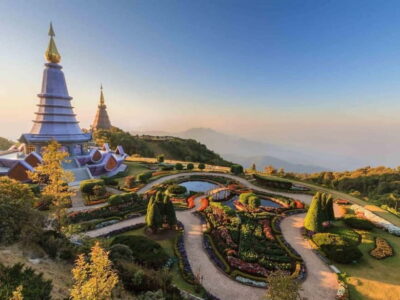
- King and Queen Pagodas with pleasant gardens and strong viewpoint potential
- Pha Dok Siew Nature Trail with a local hilltribe guide for context beyond plants-and-trees
- Rak Jung Waterfall, with a swim option depending on conditions
- Ban Mae Klang Luang rice fields, which change dramatically by season
- White Karen coffee, Hmong Market, and Wachiratharn Waterfall on the return route
Chiang Mai to Doi Inthanon: the early start that pays off

The day starts with pickup from your hotel in Chiang Mai, if you’re within 4 kilometers of the old city downtown area. Pickup timing is typically between 7:00 and 7:30 am, and you should wait in the hotel lobby. If you’re farther out, you’ll use a meeting point where you can spot the tour team by the Chiang Mai Siam Travel sign, and the guide will call your name.
The drive to Doi Inthanon is about 1 hour and 45 minutes, and that transit matters. You’re going from warm valley weather toward the park’s higher elevation. The change in air temperature is part of the experience. Even if you’ve been sweating in town, you’ll likely feel that cooler, misty mountain air by the time you reach the main viewpoints.
The tour runs about 11 hours total, dropping you back around 18:00. That long day format is common for big national-park itineraries. What makes this one feel practical is the variety, not just one long trek. You get viewpoints, temples, a guided nature walk, a waterfall stop, and village-market time.
You can also read our reviews of more hiking tours in Chiang Mai
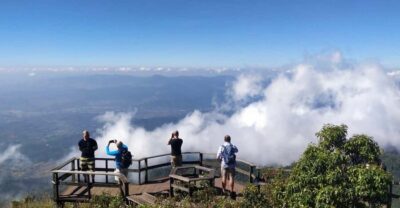
Doi Inthanon National Park: highest point in Thailand at 2,565m

Once you arrive, the core idea is simple. You’re visiting Doi Inthanon National Park, including the highest point in Thailand. The elevation around the summit area is listed as 2,565 meters above sea level, and the day notes call out high humidity and cold weather all year round. In practice, that means you should pack like it’s shoulder season, even if Chiang Mai feels mild.
This is also where you should set expectations. Some people want one big, dramatic hike to earn the views. Others are happy with a more mixed day. Either way, getting up to Thailand’s top elevation is not nothing. It’s a checkmark you can’t recreate with a short temple visit back in town.
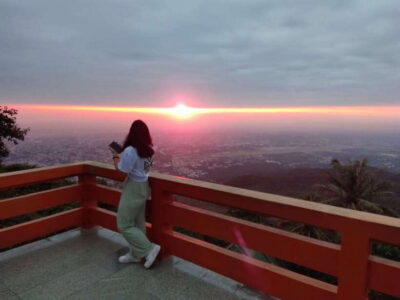
What I like about this stop is how the tour connects the altitude with the vibe. Cold air at a high point changes how long you want to stand around taking photos. Bring layers, and you’ll be comfortable enough to linger at viewpoints instead of rushing because you’re freezing.
King and Queen Pagodas: gardens, viewpoints, and a cultural pause

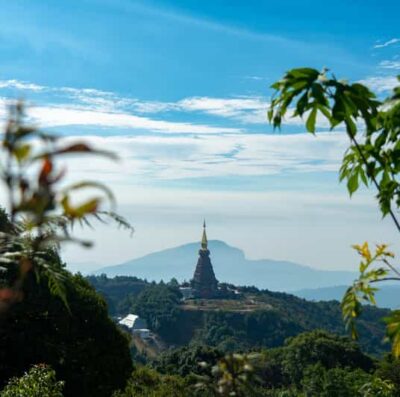
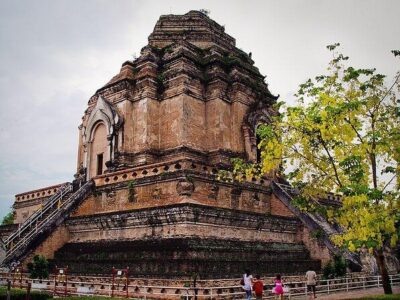
After the summit area, you’ll shift to the King and Queen Pagodas, including Phra Mahathat Naphamethanidon (the King Pagoda). The pagodas are not just a quick photo op on this itinerary. You’ll have time to enjoy the gardens and viewpoints.
This is a smart pacing move in a day like this. National-park mornings can become repetitive if every stop is just trees and more trees. The pagodas give you a more structured cultural setting, with manicured grounds and open angles for photos.
If you’re traveling in low visibility conditions, like misty mornings, don’t assume it ruins everything. Pagoda viewpoints can still feel special, and the gardens often look best when the air is cooler and damp. Just remember the day can feel chilly, so bring something warm for when you stop moving.
The only potential downside is also tied to expectations. One review I saw was not impressed with the pagadas and the summit. That’s usually a sign the traveler wanted more time in nature or a longer trek. So if you’re temple-burned and want pure hiking, keep your hike time preferences in mind before you book.
Lunch and warm-up time before the Pha Dok Siew trek
Lunch is included, and you’ll eat before heading into the guided nature walk. That matters more than it sounds. The itinerary includes a trek that lasts about 2 hours, and you don’t want to start it running on snack mode.
The tour provides drinking water, and since the park is both humid and cold, hydration still matters even when you don’t feel sweaty. Use the lunch break to check your gear: shoes tied tight, insect repellent ready, and a layer accessible in your bag.
This is also your chance to mentally switch from car travel to walking time. The day has multiple “walks,” but the trek is the main one. If you’re sensitive to hills or uneven ground, this is where you’ll want to slow down and move carefully.
Pha Dok Siew Nature Trail: a local hilltribe guide turns the forest into a lesson
The highlight for many people is the Pha Dok Siew Nature Trail, a hike/walk with a local hilltribe guide. Expect around 2 hours on the trail. This is the part of the day that feels most meaningful because it’s guided. The tour notes mention learning about different plants and trees, plus time walking through forest and hillside farms.
Two practical tips here. First, wear shoes you trust on uneven ground. The park terrain can be slick and muddy after rain. Second, don’t treat this as a long-distance trek. It’s a nature trail hike, moderate in effort, and that’s exactly what makes it doable for more people.
One drawback to be aware of: the negative feedback I saw centered on trekking being shorter than expected. If you’re the type who wants big mileage, you might wish the walking time were longer. But if you want a guided forest experience without exhausting yourself, this format hits the sweet spot.
Also, village and farm areas on the trail mean you might see small human-scaled agriculture tucked into the hills. That helps you understand the park isn’t just “wild.” It’s lived-in space with community knowledge about plants and growing.
Rak Jung Waterfall swim: when conditions decide the plan

After the trek area, the itinerary includes Rak Jung Waterfall, with an optional swim. The key detail is that swimming depends on weather conditions and water levels.
So here’s how to handle this without frustration. Treat it like a bonus. Bring your swimwear, but keep your expectations flexible. If the water is too high or conditions are not right, you can still enjoy the waterfall setting as a cool-down stop and photo moment.
Even when you cannot swim, waterfall stops do something useful in a day like this. They break up the trek rhythm, give you a reason to slow down, and help reset your legs before the return route.
Ban Mae Klang Luang rice fields: seasonal views instead of a fixed picture
Next up is Ban Mae Klang Luang, with a focus on rice fields layered across the hillside. Here, timing matters. The tour notes explicitly say the rice fields depend on the season.
That’s actually good news for you if you like authentic travel over a guaranteed photo. Rice terraces look totally different across the calendar, so the view you get becomes part of the story. Some seasons are greener and lush. Others are drier. Either way, seeing hillside farming near the park gives context for how local people work with the terrain.
If you hate uncertainty, this section may annoy you. But if you enjoy that travel is not always the same wallpaper view, you’ll likely appreciate the season-based reality.
White Karen hill tribe village coffee: a small moment with big impact

The trek ends at a white Karen hill tribe village, where you’ll be offered a cup of freshly ground, locally grown coffee.
I like this stop because it’s not just a “look at the village” moment. It’s a pause that uses a simple everyday product, coffee, to connect you to people’s work and daily life. It also gives the day a gentle human rhythm after earlier nature and waterfall intensity.
Respect is important here, and the tour notes remind you to follow local customs and traditions during village visits. The village experience will feel better when you treat it like meeting people, not collecting experiences.
Hmong Market and Wachiratharn Waterfall: a practical close to the day

On the way back, you’ll stop at the Hmong Market and Wachiratharn Waterfall. These are the kinds of stops that feel low-key compared with Doi Inthanon summit and the pagodas, but they help the day feel complete.
A market stop adds variety. You can browse goods, snacks, or small items without needing to plan a separate shopping mission in Chiang Mai. The waterfall stop gives you one last natural highlight before the long ride back to town.
This “market plus final waterfall” sequence is also a good energy management trick. It breaks the day’s momentum before you climb back into the vehicle for the return to your hotel.
Price and value: what $64 buys you for an 11-hour day
At around $64 per person for an 11-hour tour, the value comes down to what’s included. You get air-conditioned transportation, entrance fees, lunch, drinking water, an English-speaking guide, and accident insurance.
That combo is key. Doi Inthanon is not an easy DIY day if you want a guided nature component, multiple stops, and a car that handles the route. When a tour includes entrance fees and lunch, you’re paying less “hidden math” than with ticket-by-ticket independent planning.
Also, the tour is small group, limited to 12 participants. Smaller groups usually mean less waiting at each stop and more guide attention.
The only value mismatch comes if you personally want a longer hike or more time in one place. This itinerary is balanced, but it does not stretch one activity into the whole day. If you feel happiest when you can hike for hours uninterrupted, you might want a more hiking-focused tour.
Group size, guide support, and how to get along with the day
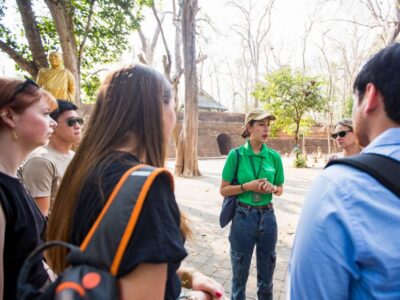
The tour notes call out a live English guide, and group size is limited to 12. A small group is especially helpful on a day with multiple walking segments, because someone has to keep an eye on pacing and timing.
One positive thing I learned from the experience feedback around the tour: the organization tends to stay smooth even when there are language barriers in the group. That suggests the guide communicates clearly and the overall workflow is well-run.
You should still do your part. If you can, send a WhatsApp number or Thai telephone number for contact, since the operator asks for this. That small step helps on pickup and day coordination.
Timing is also described as flexible. That’s normal for Thailand national parks. Weather, road conditions, and crowds can change the plan slightly. Bring patience and a good attitude.
What to bring, what to wear, and what to skip
The tour has a straightforward packing list, and it’s worth following.
Bring:
- Comfortable shoes for trekking
- Warm clothing, because the park can feel cold at elevation
- Swimwear for the Rak Jung Waterfall option
- Camera
- Insect repellent
Planning tips that make the day easier:
- Layer up instead of bringing one bulky coat. You’ll move between car, pagoda areas, and the forest trail.
- Keep repellent accessible. In humid forest zones, you’ll want it quickly.
- Bring something quick-dry or at least not too heavy, especially if you end up near waterfall mist.
- If you hate wet shoes, wear socks you trust on muddy ground.
And a clear warning: the tour is not suitable for pregnant women and people with back problems. The walking and uneven terrain can be demanding, even if the hike is not long.
Should you book this Doi Inthanon, Pha Dok Siew, and waterfall day?
I’d book this tour if you want a full, well-rounded day that hits the big national-park highlights with less planning stress. You’ll like it if you enjoy mixing highest-point views, pagoda gardens, a guided nature trail, and at least a couple of local culture or market stops. The included lunch and entrance fees also make the price feel fair.
I’d think twice if you’re a hardcore hiker who expects an all-day trek. The walk on Pha Dok Siew is described as about 2 hours, and that can feel short for people who want more distance or longer uninterrupted nature time. Also, the summit and pagodas may feel like “too much stopping” if your dream day is just walking.
If you’re deciding between this and a more hiking-heavy alternative, choose based on your energy. This itinerary is for travelers who want variety, a guide, and a comfortable structure, even in cooler, humid mountain weather.
More Hiking & Trekking Tours in Chiang Mai
More Tour Reviews in Chiang Mai
Not for you? Here's more nearby things to do in Chiang Mai we have reviewed
Doi Inthanon Tours from Chiang Mai, compared.
★ 4.6Doi Inthanon National Park Eco-Friendly TourFrom $466,667 reviews
★ 5.0Doi Inthanon Waterfall and Royal Project Chiang MaiFrom $501,735 reviews
★ 5.03-in-1: Doi Inthanon Tour, Elephant Sanctuary, and Trekking TrailFrom $481,087 reviews
★ 4.6Doi Inthanon Trip with Pha Dok Siew Guided TrekFrom $50910 reviews
★ 4.7Doi Inthanon Park with Kew Mae Pan Hike Day TripFrom $62841 reviews
★ 4.6Doi Inthanon Park and Pha Dok Siew Trail TrekFrom $61752 reviews
★ 5.0Doi Inthanon Private Tour with Trek & Lunch from Chiang MaiFrom $135622 reviews
★ 4.5Doi Inthanon National Park and Pha Dok Siew TrekFrom $39527 reviews
Browse the lists this tour appears in