
REVIEW · CHIANG MAI COOKING CLASSES
Morning Cooking Class in Traditional Pavilion with Beautiful Garden – Chiang Mai
Morning noodles in Chiang Mai, with farm dirt included. This half-day experience strings together a Thai market ingredient lesson and a hands-on organic farm stop, then ends with you cooking major classics in traditional Thai pavilions. I especially like how the instructors teach you what to look for in herbs, vegetables, and key ingredients before you ever touch a stove. One possible drawback: because pickup is offered, I’d confirm details ahead of time and keep Tha Phae Gate as your backup start point.
You’ll start at 9:00 am and spend about 4 hours going from market to farm, then into cooking mode. Expect a small group (max 8) and an itinerary that feels like a real morning, not a rushed show. The goal is simple: you leave with dishes you can actually reproduce at home.
If you love food and you enjoy learning by doing, this is a great fit. Each person gets their own cooking station, and the class is paced with clear step-by-step instruction before you take over your pan.
Key highlights you’ll feel right away
- Market shopping that teaches ingredient judgment, not just names
- Organic farm time with real tasks, like harvesting mushrooms and collecting eggs
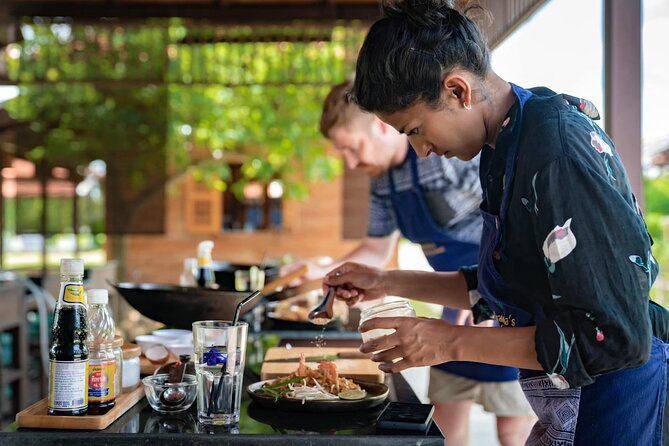
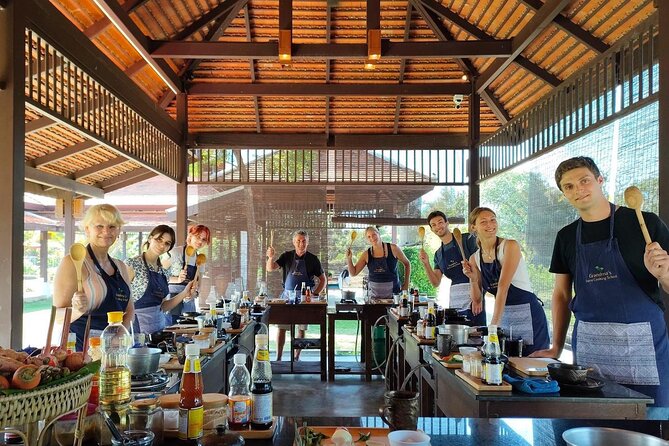
- Small-group cooking with your own station, so you’re not watching from the sidelines
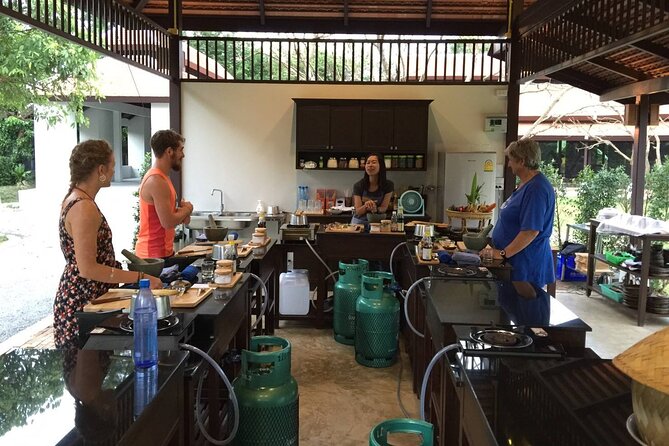
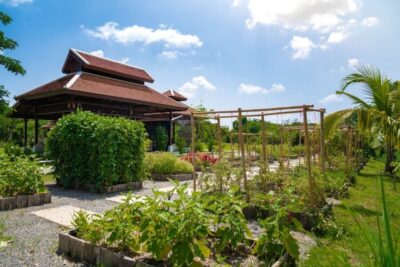
- Traditional pavilion setup with a garden setting, clean and calm
- A menu built around Thai staples like Tom Yam, Tom Kha, Pad Thai, and green or red curry
From Tha Phae Gate to a Thai market you’ll understand
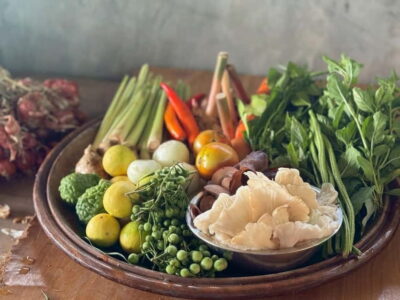
The day begins back at Tha Phae Gate, with the start time set for 9:00 am. That matters because you get to hit the market when it’s lively and useful for learning. If you’ve ever stood in a market and felt lost, this part solves that. The instructors walk you through basic Thai cooking ingredients and show you how to choose them, so you’re not guessing later.
The market section is also where your taste education starts. You’ll learn what ingredients are doing in Thai food, and why some choices work better than others. Even if your Thai vocabulary is still in progress, the lesson sticks because it’s tied to how the food will taste in the dishes you’ll cook.
Practical note: the tour uses a mobile ticket, and it’s designed to be near public transportation. If you’re relying on pickup, give yourself a cushion and arrive early at the meeting point area.
You can also read our reviews of more cooking classes in Chiang Mai
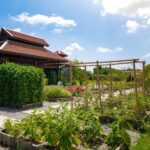
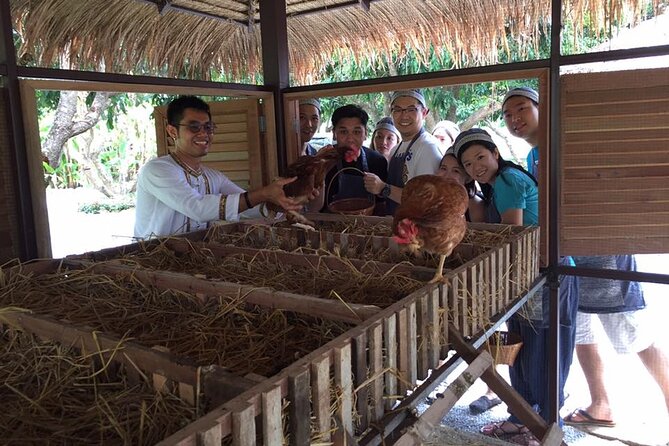
Organic farm time: mushrooms, eggs, and clean workspaces
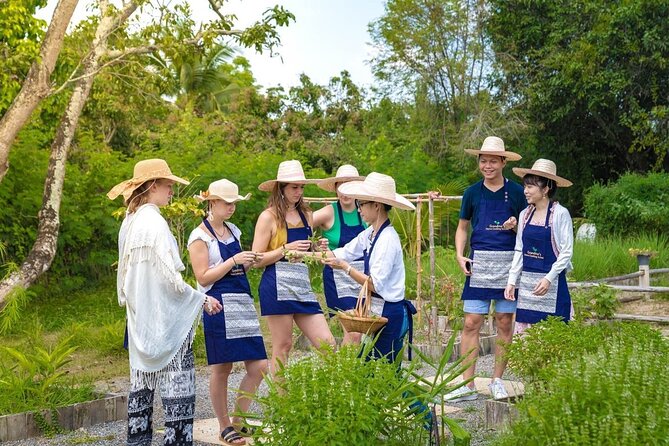
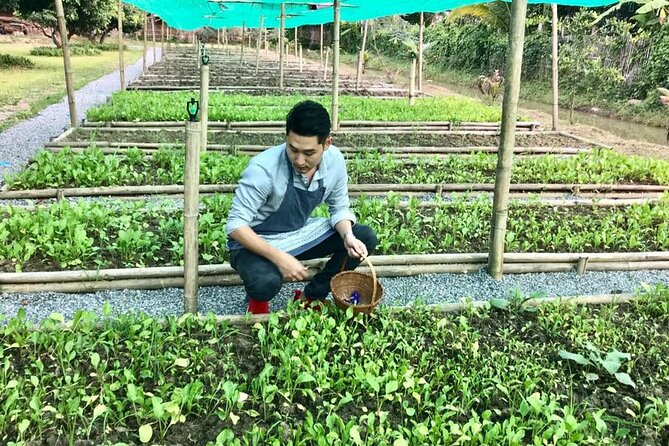
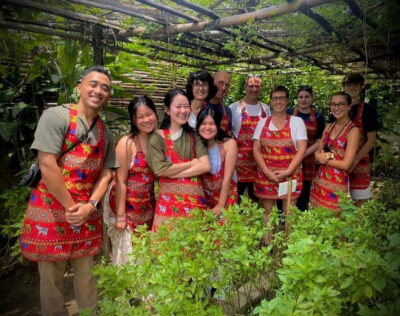
After the market, you head to an organic farm in a garden-like setting. This is the part that turns the class from cooking lesson into lived experience. You’ll learn more about Thai herbs and vegetables as they grow, and you get to do actual tasks on the farm.
The hands-on list includes:
- harvesting mushrooms
- collecting chicken eggs
- learning about farm-life rhythm and ingredients you’ll cook with
What I like here is that it builds context. Thai cuisine often feels built on layers: aromatic herbs, fresh vegetables, and balance. Seeing where those ingredients come from makes the recipes feel less mysterious when you’re back in your kitchen.
A small but important detail: the farm and pavilion area are described as clean and nicely set up. That gives you confidence that you’re learning in a place where the instructors care about order, not chaos.
Traditional Thai pavilions and your own cooking station
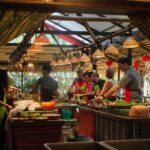
Next comes the cooking part in traditional Thai-style pavilions. The vibe is calmer than you might expect for a cooking class, because the setting is focused on comfort and flow, not crowd management.
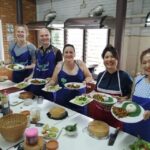
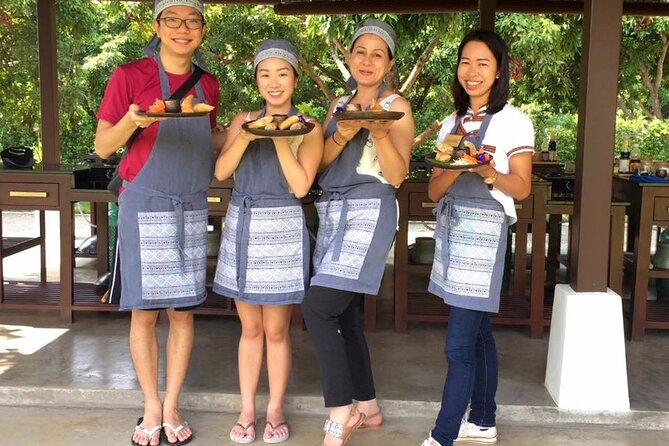
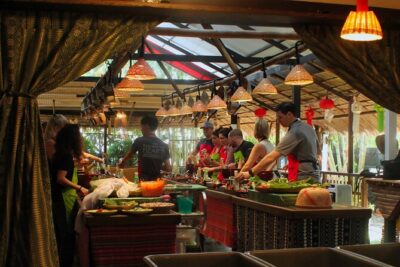
Here’s why that matters for you: when you only have one station and multiple people sharing tools, you end up waiting. This class keeps things moving by limiting group size to max 8 travelers, and giving each person an individual cooking station. That setup makes it easier to follow step-by-step instruction while your pan is still hot and your ingredients are still fresh.
You’ll see the instructor demonstrate first, and then you cook your selected dishes. This is the right rhythm for most people. Watch once, cook once, and get immediate correction before you lock in a mistake.
What you actually cook: 3 dishes plus a dessert you’ll want to remember
The core cooking promise is clear: you cook 3 dishes plus dessert is served. The class centers on a mix of soup, stir-fry, and curry, with popular options from the Thai classics.
The dishes listed as options include:
- Tom Yam (Hot and Sour Soup)
- Tom Kha (Coconut Soup)
- Pad Thai (Thai Stir-Fried Rice Noodles)
- Green Curry
- Red Curry
- Dessert served: Mango Sticky Rice
One useful thing to know is that you get menu choice from categories. You’ll select from categories like appetizer, stir fry, soup, curry, and dessert, and then the course cooks what fits the plan for the day. The menu can change based on season and what ingredients are available, so don’t assume your exact dream combo will always be offered every date.
Still, the structure is consistent enough to plan around:
- You’ll learn soup-making technique (like Tom Yam or Tom Kha)
- You’ll learn stir-fry technique (like Pad Thai style noodles)
- You’ll learn curry technique (green or red curry)
- You’ll end with a Thai dessert served for you, with mango sticky rice as the named option
The real lesson: picking Thai flavor with herbs, not shortcuts
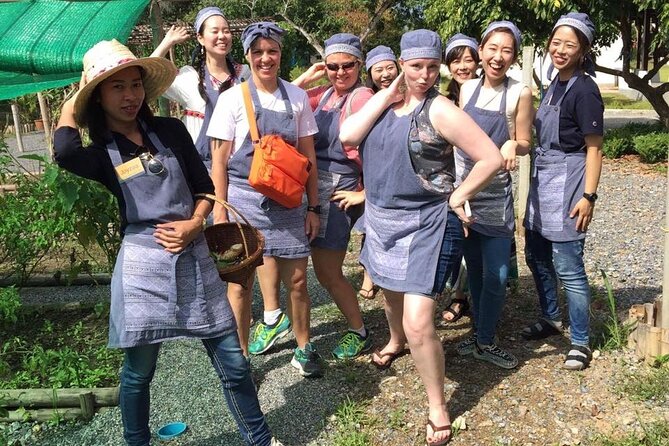
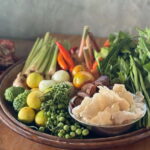
A big reason this class is worth your time is the ingredient education that runs underneath the recipes. It’s not only hands-on cooking. You also learn what Thai herbs and vegetables are, and how to use them in context.
In Thai cooking, freshness and aroma are not decorations. They shape the whole dish. By the time you reach the stove, you’ve already been taught what to look for, and you’ve already seen the ingredients in the farm or market setting. That helps you understand why the instructors emphasize selection and preparation.
If you’re trying to cook Thai at home later, this is the practical advantage. You won’t just have a list of ingredients. You’ll have a mental checklist for choosing and prepping them.
More Chiang Mai temple visits, food walks, elephant experiences, mountain trips, and northern Thailand day tours to compare
Price and value: what $50.50 buys you in Chiang Mai
At $50.50 per person for about 4 hours, this class is priced like a true half-day activity, not a quick cooking demo. What makes the value feel fair is that you’re getting three layers for your money:
- market guidance so your ingredients make sense
- organic farm experience tied to real food prep
- hands-on cooking with step-by-step teaching and an individual station
For a lot of Chiang Mai food experiences, you end up paying for one layer, either the tasting or the cooking. Here, the market-to-farm-to-pavilion flow helps the whole morning connect. You’re paying for instruction plus a working environment where you can practice.
One thing to consider: the dishes you cook and refreshment selection can vary with season, and the menu can change depending on what’s available. That’s normal for organic farms. The upside is you’re learning recipes with the ingredients that match the day’s reality.
Small-group pacing: why it feels relaxed instead of chaotic
A maximum of 8 travelers is a real quality marker. In a class that includes market walking and hands-on cooking, a smaller group keeps the pace humane. It also makes it easier for instructors to correct you. If you’ve ever cooked at a workshop where you only get attention when you ask, you’ll appreciate how this format is designed to keep everyone moving.
Also, the timing is friendly for a morning plan. Starting at 9:00 am means you’re not eating dinner late, and the rest of your day is still open for temples, a café break, or checking out Chiang Mai’s streets.
Logistics that keep your morning smooth
A few practical points can save you time and stress:
- Meeting point is Tha Phae Gate, and the activity ends back at the meeting point.
- Pickup is offered, and confirmation is received at booking, but you should still be ready to start from the meeting point if pickup timing feels unclear.
- The activity uses a mobile ticket.
- It requires good weather, so expect rescheduling or a refund offer if conditions are poor.
- The class runs with a minimum number of travelers, and if that minimum is not met, you’ll be offered a different date or a full refund.
Think of it like this: the farm and pavilion are the heart of the experience, and weather affects both. If you’re flexible with your schedule, that’s a plus.
Who should book this cooking class
This works best if you want more than a recipe handout. You’ll enjoy it if you like:
- learning where ingredients come from
- cooking with guidance rather than guessing measurements
- a smaller group setting
- a morning activity that mixes walking, farming tasks, and cooking
It’s also a strong choice if you’re the type of traveler who likes authentic food experiences but doesn’t want to commit to a full day out of town. This stays centered on Chiang Mai, starting at Tha Phae Gate and returning there.
Should you book this morning cooking class in Chiang Mai?
If your goal is to cook real Thai dishes with real ingredient understanding, I’d book it. The combination of market instruction, organic farm tasks, and hands-on cooking is what gives the day its value. It’s also the kind of experience you can talk about later because you did the work, not just watched it.
The only reason to pause is if your schedule depends tightly on pickup timing. If you plan to arrive early and keep Tha Phae Gate as your anchor, that concern becomes easy to manage.
FAQ
Where does this cooking class start and end?
It starts at Tha Phae Gate (Tha Phae Road, Tambon Chang Khlan, Amphoe Mueang Chiang Mai) and ends back at the same meeting point.
What time does the class start?
The start time is 9:00 am.
How long is the experience?
It’s listed as about 4 hours.
How much does it cost?
The price is $50.50 per person.
Is pickup available?
Pickup is offered, and the tour includes a meeting point at Tha Phae Gate.
How many people are in the group?
The experience has a maximum of 8 travelers.
What dishes will I cook?
You will cook 3 dishes. The listed options include Tom Yam, Tom Kha, Pad Thai, Green Curry, and Red Curry. The exact menu can change with season and ingredient availability.
Is dessert included?
Yes. Dessert is served, and mango sticky rice is the dessert listed.
Do I get step-by-step instruction while cooking?
Yes. The instructors demonstrate techniques step by step first, then you cook your selected dishes.
What happens if the weather is bad?
The activity requires good weather. If it’s canceled due to poor weather, you’ll be offered a different date or a full refund.
What is the cancellation policy?
Free cancellation is available up to 24 hours in advance for a full refund. Changes made less than 24 hours before the start time aren’t accepted, and cancellations within 24 hours are not refunded.
More Workshops & Classes in Chiang Mai
More Cooking Classes in Chiang Mai
More Tour Reviews in Chiang Mai


Not for you? Here's more nearby things to do in Chiang Mai we have reviewed



Chiang Mai Cooking Classes, compared.
 ★ 5.0Half-Day Thai Cooking Class at Organic Farm in Chiang MaiFrom $2919,087 reviews
 ★ 4.9Cooking Class, Market & Thai Herbs Garden TourFrom $314,824 reviews
 ★ 4.9Authentic Cooking Class with Market & Farm VisitFrom $344,546 reviews
 ★ 5.0Thai and Akha Cooking Class in Chiang MaiFrom $424,358 reviews
 ★ 4.9Cooking Class with Market and PickupFrom $251,365 reviews
 ★ 4.9Cooking Class with Organic Farm at Mama NoiFrom $321,151 reviews
 ★ 5.0Full Day Thai Cooking at Farm (Chiang Mai)From $391,127 reviews
 ★ 4.9HALF-DAY COOKING COURSE at a Thai Cooking FarmFrom $28705 reviews
Browse the lists this tour appears in