
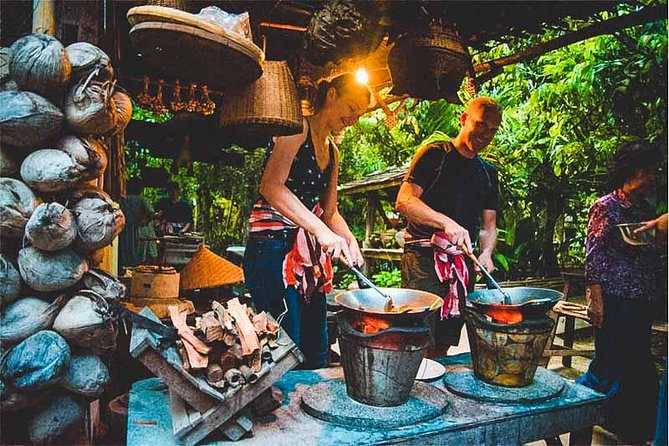
REVIEW · CHIANG MAI COOKING CLASSES
Traditional Northern Home Cooking Experience with Raunkaew Yanon Family
A family kitchen, not a tourist set. I love that you start by picking ingredients right from the backyard garden, and I also love learning about local herbs and Lanna culture inside the Raunkaew-Yanon home. The only drawback to consider is that this is a hands-on, home-style class, so if you want a purely show-and-eat experience, you may find it a bit more involved than expected.
With hotel pickup and drop-off, you head south from Chiang Mai to Hangdong district and get a warm welcome with flowers and drinks. You can choose lunch or dinner, and you’ll spend about 4 hours moving from orchard and herbs to cooking and tasting.
Key highlights before you go
- Backyard garden ingredient picking so you cook with what the family actually grows
- A teak-wood Lanna home and a rice barn with family stories you can hear firsthand
- Orchard time with the family-owned fruit garden before you start cooking
- Northern Thai herb focus beyond standard classroom cooking
- Private tour feel with only your group, plus a professional guide
A Lanna homestead cook class, not a factory cooking show
This experience is all about a real family home and the food that comes from it. You are not just learning recipes. You are seeing how a Lanna family lives, walks the property, talks herbs, and then cooks what they would cook for their own table.
I like that the lesson is built around context. Northern Thai food makes more sense when you understand the ingredients, the garden logic, and the local plant knowledge behind the flavors. The cooking part stays practical, not performative.
One more value point: you are getting a guided visit to a home and property, not only a meal at the end. That usually means better context, and a more memorable day than a cooking class that starts and ends inside a rented room.
You can also read our reviews of more cooking classes in Chiang Mai
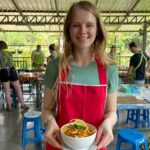
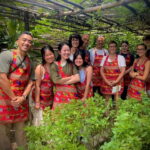
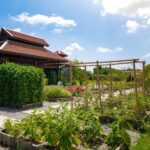
The Raunkaew-Yanon home: teak wood, rice barn, and family stories
The day begins with pickup from your hotel, then a drive out of central Chiang Mai toward Bandoo in the Hangdong district. Once you arrive, you get the kind of welcome that sets the tone right away, flowers and drinks, then introductions.
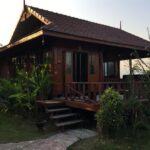
The host walks you around the home and explains local culture and daily rhythms. You get to see a traditional wooden house built from teak wood, and you hear about the rice barn and what it represents in their family life.
A detail I really appreciate is the family background shared in the tour framing. The Raunkaew-Yanon family is described as arriving to the area possibly by elephant-back almost 150 years ago, and the focus is on preserving Lanna traditions passed down through generations. You might not catch every historical reference, but the story helps explain why the house and the land matter, and why the cooking feels rooted rather than staged.
Practical takeaway for you: treat this like a visit first, cooking second. The best moments are when you ask questions during the walk-through, not only when you are holding a spoon at the stove.
Orchard walk and garden shopping: where your ingredients actually start
After settling in, you’ll take a walk through the family-owned orchard with many types of fruit. This is not just a pretty stroll. It sets up the idea that food here comes from property, seasons, and familiar plants.
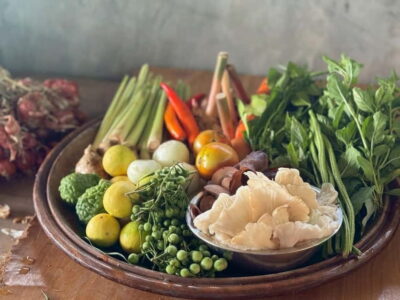
Then comes the ingredient pickup from the backyard garden. This is one of the most compelling parts of the experience for anyone who wants real Northern flavors. When you pick what you plan to cook, you start noticing texture and smell in a different way. That can make the final dish taste more vivid because you understand what each ingredient is doing.
What I’d watch for if you have a sensitive nose or hands: garden work can be hands-on, and plants can be fragrant or sticky. Keep your hands washed when needed, and follow the guide’s lead on what to touch and what to avoid.
Value-wise, this is where the class earns its price. You are not paying only for instruction. You are paying for access to the property and the chance to cook with ingredients gathered from the same place that your hosts tend.
Northern herbs and culture lessons you can use again
One of the big promises of this session is learning local herbs and understanding local culture and the way of living. That matters because Northern Thai flavor is not only about heat or sweetness. A lot of the identity comes from herbs, aroma, and how ingredients balance in real dishes.
Even if you only remember a few herb names or how they smell in fresh form, you’ll carry that knowledge forward. Later, when you see similar ingredients at Chiang Mai markets or restaurants, you’ll be able to connect the ingredient to the dish instead of treating it like a mystery garnish.
This is also where the family format shines. A cooking class run like a theater often teaches techniques. A family-run home visit teaches habits: how they use herbs, when they pick, and what ingredients are everyday staples.
You should expect the guide to help translate and explain key points during the property walk and early prep. If you care about learning, this is the time to ask, not just the kitchen part.
Cooking and tasting: building Northern Thai flavors in a real kitchen
Once ingredient gathering is done, you move into cooking and tasting the authentic local recipe. The goal is clear: real flavors from Northern Thailand that are hard to find in commercial cooking classes.
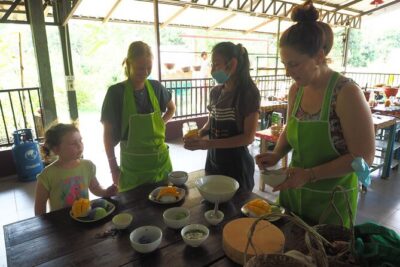
Because the session is designed around a family home, the pace is likely more relaxed than a fast, timed cooking studio. That can be a good thing. You’ll have time to understand steps and ask questions, and you’ll taste along the way rather than waiting for the final plate.
You also get to choose between lunch and dinner. That choice affects your vibe more than you might think. Lunch tends to feel like a midday reset, and dinner feels like a longer, evening meal experience with warmer comfort food energy.
Food you can realistically expect: Northern Thai style cooking built from garden ingredients and local herb knowledge. Exact dishes are not listed here, so plan for a Northern Thai menu chosen by the family and guide based on what they are teaching that day.


Price and what you really pay for at about $100.16
At about $100.16 per person for roughly 4 hours, this isn’t a budget bargain. But it also isn’t priced like a generic cooking demo either.
Here’s where the value comes from:
- Hotel pickup and drop-off saves time and hassle
- A professional guide handles the explanations and helps you get the most out of the visit
- Meal included so you are not paying extra for lunch or dinner
- Access to a family property with the teak wood house, rice barn stories, and orchard walk
- Local insurance is included, which adds peace of mind for an experience outside a big venue
Where it might not be the best deal:
- If you only want a short recipe session and do not care about herbs, culture, or garden sourcing, you might feel like you are paying for more than cooking technique.
- If your group is just one person, note the minimum booking requirement of 2 people per booking.
Overall, I think the price makes sense if you want the full home visit, not only the meal. You are paying for the setting and the context, and those are the parts most people remember later.
Logistics that matter: private group, short drive, and a 4-hour time box
This is described as a private tour/activity, meaning only your group participates. That matters because you can ask more questions, move at a comfortable pace, and avoid the awkwardness of joining a large mixed group.
You also get practical tools like pickup, a mobile ticket, and group discounts. The duration is about 4 hours, so it fits neatly into a Chiang Mai itinerary without eating a whole day.
Since the home is in Hangdong district, you are driving out of central Chiang Mai. Plan your day around that. If you stack multiple activities too tightly, the round-trip time can start to feel like a burden.
If you prefer calmer travel days, this works well. It’s social, but it isn’t crowded, and it has clear, friendly structure from welcome to cooking to tasting.
Who this tour fits best
This is a strong match if:
- You like cooking, but you also care about how food connects to daily life and ingredients
- You want a Northern Thai experience that feels local, in a neighborhood setting
- You’d enjoy walking an orchard and learning about herbs, even if you are not a plant person
- You want a family-led experience with a guide who explains culture and cooking steps
It may be less ideal if:
- You want a hands-off class where you mostly watch
- You dislike property visits or walking on uneven garden paths
- You are traveling solo and don’t have another person to meet the minimum requirement
Tips to get the most from your cooking class
Bring a curious mindset. This kind of cooking works best when you treat it like a conversation.
A few practical pointers:
- Wear comfortable clothes you can move in, because you will be walking and handling ingredients.
- Come with at least one question about herbs or flavors you like. Ask early, so you can connect the answer to what you’ll taste.
- If you have dietary requirements, make sure you advise at booking time. The tour asks you to share this, so use that chance.
And keep an eye on your timing. At about 4 hours, every segment has a job, welcome and orientation, garden and orchard, cooking and tasting.
Should you book the Raunkaew-Yanon cooking experience?
If you want a Chiang Mai cooking class that actually feels like you visited a family home, this is worth strong consideration. The pairing of backyard ingredient sourcing with herb and culture explanation is the main reason it earns standout recommendations.
I’d book it if you care about Northern Thai flavors in a real context, and if you are happy doing a hands-on session where you taste what you help prepare. It’s also a good choice for groups who want a private, guided experience with pickup and meal included.
Skip it if your idea of a cooking class is mostly watching recipes get demonstrated with minimal participation, or if you are only looking for a quick meal and nothing more.
FAQ
How long is the Chiang Mai home cooking experience?
It lasts about 4 hours.
Where does the tour start and end?
You get hotel pickup and drop-off in Chiang Mai.
What area will you visit during the tour?
You head south out of Chiang Mai city to Bandoo in the Hangdong district.
Do you choose lunch or dinner?
Yes, you can choose between lunch and dinner.
Is the meal included in the price?
Yes. The meal for the session is included, and lunch and dinner are listed as included items.
What’s the minimum group size to book?
The booking requires a minimum of 2 people per booking.
Is this a private tour?
Yes. Only your group participates.
What if I have dietary requirements?
You should advise any specific dietary requirements at the time of booking.
What is the cancellation policy for a full refund?
You can cancel up to 24 hours in advance for a full refund. If you cancel less than 24 hours before the start time, the amount paid is not refunded.
More Cooking Classes in Chiang Mai
More Tour Reviews in Chiang Mai

Not for you? Here's more nearby things to do in Chiang Mai we have reviewed


Chiang Mai Cooking Classes, compared.
 ★ 5.0Half-Day Thai Cooking Class at Organic Farm in Chiang MaiFrom $2919,087 reviews
 ★ 4.9Cooking Class, Market & Thai Herbs Garden TourFrom $314,824 reviews
 ★ 4.9Authentic Cooking Class with Market & Farm VisitFrom $344,546 reviews
 ★ 5.0Thai and Akha Cooking Class in Chiang MaiFrom $424,358 reviews
 ★ 4.9Cooking Class with Market and PickupFrom $251,365 reviews
 ★ 4.9Cooking Class with Organic Farm at Mama NoiFrom $321,151 reviews
 ★ 5.0Full Day Thai Cooking at Farm (Chiang Mai)From $391,127 reviews
 ★ 4.9HALF-DAY COOKING COURSE at a Thai Cooking FarmFrom $28705 reviews
Browse the lists this tour appears in