
REVIEW · CHIANG MAI DAY TOURS
Private Tour: Chiang Rai Golden Triangle Day Trip from Chiang Mai
Golden Triangle in one long, guided day.
This private outing is a practical way to reach far northern border country from Chiang Mai, with an English-speaking driver-guide handling the long road while you focus on the sights. I like that the day mixes big landmarks (like Wat Rong Khun and the Blue Temple) with real border-area stops, plus a Mekong cruise that adds a change of pace.
Two highlights I genuinely like are the Mekong River cruise (you get views back toward Laos and Myanmar) and the chance to visit Akha and Yao hill tribe villages. One thing to consider: this is a 13-hour day built around travel time, and some stops can feel more structured than you might hope if you’re craving total quiet and independence.
Key points before you go
- Private car means less stress, more control over timing, and hotel pickup and drop-off in Chiang Mai city
- Mekong cruise to Don Sao includes the Laos embarkation fee, but you must bring your original passport
- Mae Khachan hot springs let you do a local favorite, boiling chicken eggs in the warm mineral water
- White Temple and Blue Temple give you two very different temple styles in one day
- Hall of Opium adds context for why the Golden Triangle is remembered the way it is
- Hill tribe village visits can be meaningful, but the experience may feel staged depending on what you’re expecting
Private Chiang Rai Golden Triangle: why it works from Chiang Mai
From Chiang Mai to the Golden Triangle, the distance matters. This trip is designed for one goal: get you there and keep you moving without the headache of transfers. You start at 7:00 am and spend roughly 13 hours on the road and sightseeing, which is long, but typical for a day hitting the Thailand-Laos-Myanmar border area from Chiang Mai.
The big value is that you’re not piecing together buses, boats, and border logistics. You’re in a private car with an English-speaking guide, and the itinerary is timed so you’re not stuck guessing where to go next. That matters most for this region, where some places are simply hard to reach on your own.
I also like that the plan is not only “temples and photos.” You get a mix: hot springs, a history museum tied to the opium trade, a Mekong boat ride, border viewpoints, markets, and hill tribe village visits. It’s not built as a slow cultural immersion. It’s built as a day that gives you a lot of context in a single stretch.
You can also read our reviews of more private tours in Chiang Mai

The 7:00 am start, hotel pickup, and the reality of a long day
Plan for a serious day. You’ll be picked up from a Chiang Mai city area hotel and dropped back off at your hotel around 8:00 pm. You can expect a lot of seat time, especially because you’re going all the way out toward the Golden Triangle area.
A practical note: the operator states they can’t pick up from Airbnb because they don’t receive the house name and number. If you’re staying in an apartment, confirm the pickup point clearly with the company. If pickup is awkward, your day starts with avoidable friction, and this trip is already long.
Also, this is a mobile ticket tour with confirmation at booking. That’s helpful for timing, but what really matters is your morning readiness. If you want to maximize temple time and not rush meals, you’ll want an early breakfast and water before pickup.
Mae Khachan hot spring: warm water, boiled eggs, and a side of local life
Mae Khachan is one of those stops that’s simple, sensory, and very “you’re here.” You’ll spend about 1 hour at the hot springs. The idea is straightforward: dip your feet into warm, soothing mineral water and then watch what’s going on around you.
Here’s the detail I’d make sure you don’t miss. At Mae Khachan, you’ll often see locals selling chicken eggs to boil in the hot spring. It’s a small thing, but it’s a genuine routine, not a staged performance. It turns the hot springs into something you participate in, even briefly.
You’ll also find a garden walk and a nearby temple area, plus a market where you can buy small souvenirs. This is the kind of stop that gives you a break from temples and museums, while still feeling rooted in everyday local behavior.
If you’re sensitive to crowds or you’re hoping for a “quiet soak,” give yourself flexibility. This isn’t described as a private, secluded spa. It’s a public hot springs area, so go with the mindset of experiencing a local stop, not escaping the world.
Hall of Opium: making sense of the Golden Triangle story
Next is the Hall of Opium Museum, about 45 minutes. If your only frame for the Golden Triangle is “mysterious borders,” this museum helps you understand why the region has such a lasting reputation.
What I appreciate about this stop is the way it connects the opium trade to real consequences. The museum uses exhibits and historical artifacts to explain how opium shaped the region’s social, economic, and political landscape, and how it affected communities. It’s heavy topic material, but it makes the rest of the day make more sense, especially once you’re standing in border-country settings.
This is also one of the clearest “value per minute” portions of the itinerary. You don’t have to be a history buff. You just need enough attention to connect the dots between the region’s past and what you see now, including the border markets and the way the economy operates today.
Mekong River cruise to Don Sao: views, boats, and the passport checklist
The day shifts into water time with a Mekong portion. The itinerary includes a segment where you ride the river and later board a boat that goes toward the Laos island of Don Sao.
Why it’s worth caring about:
- You’re on calm river water, so it feels like a reset from the long drive.
- You get views of villages along the riverbanks.
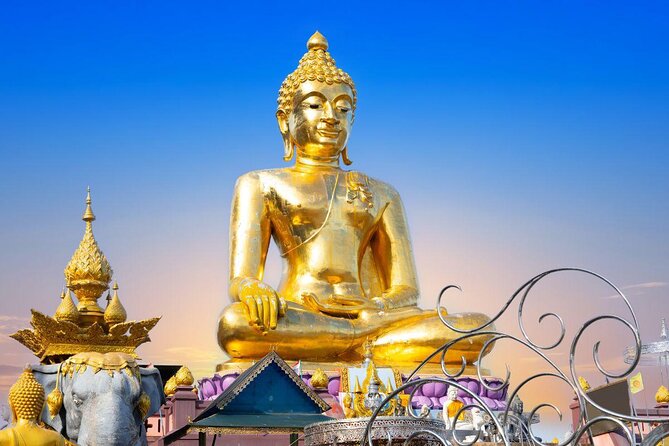
- You can glimpse Laos and Myanmar across the water, which helps the border geography click in your head.
Timing matters here. The Mekong sections are listed at about 1 hour for the scenic river ride and then later after lunch for the Don Sao boat segment. The tour explicitly warns you that for the Don Sao side, you’ll need to show your original passport.
That’s not a nice-to-have. If you forget your passport, you may lose access to that part of the experience. Bring it with you even if you think you won’t need it. This is the kind of “small rule that changes the day” situation.
Good news: the boat charge on the Mekong and the Laos embarkation fee are listed as included. So you’re not juggling surprise add-ons once you’re on the water.
More Chiang Mai temple visits, food walks, elephant experiences, mountain trips, and northern Thailand day tours to compare
Golden Triangle and Mae Sai: seeing three borders and how the market feels
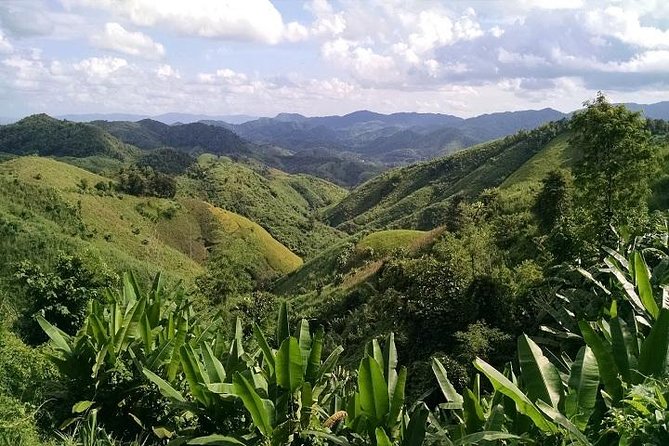
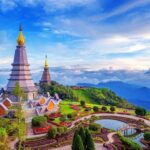
Once you reach the Golden Triangle area, you’ll be able to see the meeting points of Thailand, Burma (Myanmar), and Laos. The itinerary also sets expectations that after lunch you’ll move toward Mae Sai, a Thai border town with Myanmar where you can spend about 2 hours.
This is a “sense it with your eyes” kind of stop. The day isn’t only about border stamps. It’s about observing how close countries are to each other here, and how everyday life sits right beside international borders. You’re also told you’ll get a glimpse of Myanmar because it’s positioned very close across the river, only about ten meters away.
The border market time is where the experience can feel intense. The itinerary describes it as lively, and you can expect lots of goods and movement. If you like shopping, this is one of your better windows. If you don’t, this time still works as a real snapshot of what border life looks like.
Also, there’s a theme that matters for your mindset. One positive way to look at the Golden Triangle today is as a place shaped by outside influence and changing trade patterns. You’ll likely leave with a clearer sense of how the border economy operates, not just what it once was.
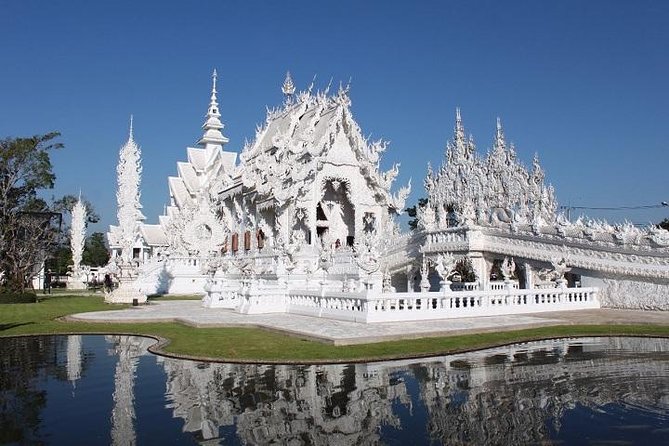
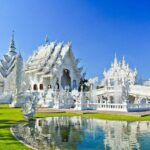
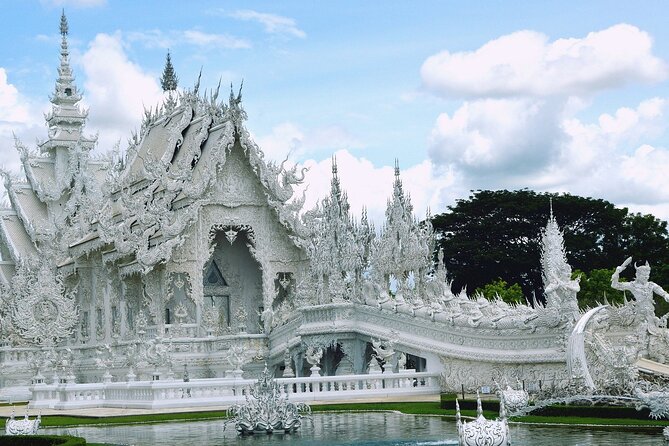
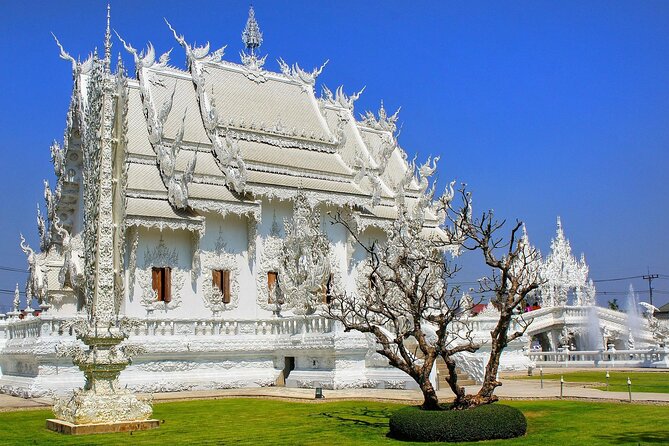
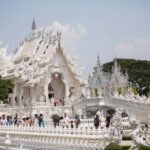
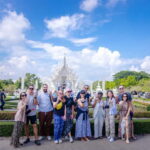
Wat Rong Khun, White Temple: surreal, bright, and impossible to ignore
If you only remember one thing from this day, it might be the White Temple. Wat Rong Khun gets about 1 hour and it’s famous for a reason.
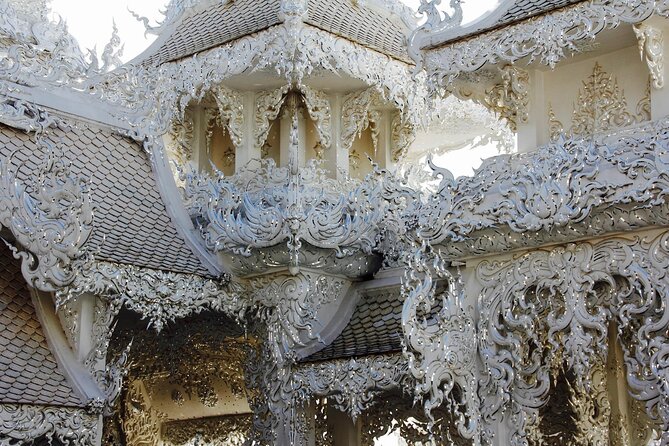
The building is described as a striking all-white exterior that symbolizes purity and spirituality. Then you step inside and find intricate sculptures and murals that interpret Buddhist themes through contemporary artistic styles. In practice, it can feel like a temple and an art installation in the same place, so it’s a good stop for both culture travelers and people who just love unusual design.
Because the White Temple is so photogenic, this can be a stop where time can vanish fast. Use your hour deliberately. If you want the best mental payoff, don’t just take photos. Pause long enough to walk the interior details.
Wat Rong Suea Ten, Blue Temple: a strong contrast in color and mood
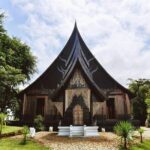
After the White Temple, the itinerary brings you to the Blue Temple (Wat Rong Suea Ten) for about 30 minutes. This is a contrast you’ll feel immediately. Instead of all-white surfaces, you get a vivid blue and gold design outside, and inside you’re told there’s a massive white Buddha statue with detailed murals blending contemporary and traditional symbolism.
This stop pairs well with Wat Rong Khun because it keeps the day from turning into one long “same-same” temple circuit. The Blue Temple is calmer in feel, with an emphasis on the artwork and the central Buddha space.
If you’re short on energy later in the day, prioritize what you care about. In only half an hour, pick a route through the main highlights rather than trying to see every corner.
Golden Triangle Market: what to buy and what to watch
You’ll have about 30 minutes at the Golden Triangle Market. The main purpose here is simple: you can browse local goods from the border region, including handicrafts, textiles, jewelry, and spices.
I like this stop because it connects the border landscape to everyday products. It’s not only about looking at countries on maps. It’s about seeing what people make and trade. If you want souvenirs that feel tied to this specific region, this is one of your best chances.
In a market setting, you’ll likely spend more time scanning than buying. That’s fine. The value is in walking through and noticing materials, designs, and the general feel of trade across the border zone.
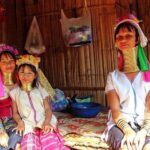
Akha and Yao hill tribe villages: cultural learning with a reality check
The day ends with hill tribe village visits for about 1 hour total, focusing on Akha and Yao communities. This can be a meaningful part of the trip because you’re not only looking at temples. You’re seeing how people live and interact with outsiders in this region.
Here’s the reality check I’d give you. Even when a visit is respectful, hill tribe stops can sometimes feel set up for visitors, with limited time and a performance-like feel. If you’re the type who wants total authenticity and minimal tourism influence, this is the part that can disappoint you.
If you still go, you can make it better with your attitude:
- Treat it like a conversation, not a photo shoot.
- Ask basic questions if your guide encourages it, and listen more than you talk.
- If buying crafts, pick thoughtful items rather than rushing into impulse buys.
Done well, the village visit becomes a human connection moment. Done poorly, it becomes a checkbox. This itinerary gives it space, but it can’t guarantee the setting will match your ideal.
Price and value: is $208.98 per person worth it?
At $208.98 per person, this isn’t a cheap day trip. So you should ask what you’re really paying for.
You’re paying for:
- Private transport via a private driver-guide over a very long route
- Hotel pickup and drop-off in Chiang Mai city area
- An English-speaking tour guide
- Traditional Thai lunch
- Multiple included entry fees listed in the itinerary, including Mae Khachan Hot Spring, Hall of Opium, Wat Rong Khun, Wat Rong Suea Ten, Golden Triangle Market, and the hill tribe village visits
- The Mekong boat trip charge and the Laos embarkation fee
That mix matters. A big chunk of the cost is about convenience and time. The Golden Triangle area is far from Chiang Mai, and a private car plus guide saves you from planning the route, coordinating stops, and losing hours to logistics.
If you love a packed day with major sights and border-country context, the value can feel strong. If you prefer slow travel, private time at fewer places, or minimal crowds, the price may feel harder to justify because you’re spending money to cover a lot of stops in one day.
Who should book this Chiang Rai Golden Triangle private day trip?
You’ll likely enjoy this tour if:
- You want a first-time orientation to the Golden Triangle and border geography
- You like a mix of temples, history, and scenic experiences in one go
- You appreciate having a guide who keeps the day flowing in a remote area
- You’re okay with a long drive day and you can stay patient in transit
You might want to skip or adjust expectations if:
- You hate touristy, structured experiences and you want total independence
- You’re hoping the hill tribe visit will feel like deep, long community time with minimal visitor influence
- You get cranky when a day is mostly sitting in a car
This tour is best viewed as a well-organized sampler of northern border culture and landmarks, not a slow, rural retreat.
Should you book?
If your goal is to see the Golden Triangle highlights from Chiang Mai without doing the planning grind, this private trip is a solid option. The Mekong cruise, the White and Blue Temples, and the Hall of Opium museum give you a mix that’s more than just photo stops.
I’d book it if you can handle a long day and you treat each stop as part of a bigger story, not as a stand-alone “perfect” experience. I’d pause before booking if you especially care about authenticity at hill tribe villages, because that’s the most likely part to feel overly structured for your taste.
If you do book, pack light but bring your passport. That single document affects whether you can access the Laos-side boat portion.
FAQ
What time does the Chiang Rai Golden Triangle day trip start from Chiang Mai?
Pickup starts at 7:00 am from your Chiang Mai city area hotel, with the tour running for about 13 hours.
How long is the tour in total?
The duration is listed as 13 hours (approx.), and the tour ends with drop-off around 8:00 pm.
Is hotel pickup and drop-off included?
Yes. Pickup and drop-off are included for hotels in the Chiang Mai city area.
Can they pick up from Airbnb?
The operator notes they cannot pick up from Airbnb because they do not have the house name or number needed to find the pickup location.
Is lunch included?
Yes. The tour includes a traditional Thai lunch.
Do I need a passport for this tour?
If you want to take the boat ride on the Mekong to the Laos side (to Don Sao), you must show your original passport.
Does the tour visit Wat Rong Khun and the Blue Temple?
Yes. It includes Wat Rong Khun (White Temple) and Wat Rong Suea Ten (Blue Temple).
Are the hill tribe villages part of the itinerary?
Yes. You will visit Akha and Yao hill tribe villages on the return leg.
Is free cancellation available?
Yes. You can cancel for a full refund up to 24 hours before the experience’s start time. If you cancel less than 24 hours before, the amount paid is not refunded.
More Private Tours in Chiang Mai
More Tours in Chiang Mai

More Tour Reviews in Chiang Mai

Not for you? Here's more nearby things to do in Chiang Mai we have reviewed


Chiang Mai Day Tours, compared.
 ★ 5.0Half-Day Thai Cooking Class at Organic Farm in Chiang MaiFrom $2919,087 reviews
 ★ 4.8Elephant Sanctuary Feeding Program Half-Day TourFrom $274,527 reviews
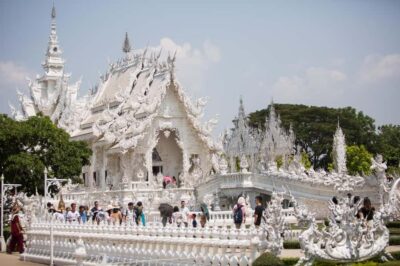 ★ 4.6Chiang Rai White Temple and Blue Temple Day TourFrom $273,366 reviews
 ★ 4.8Sticky Waterfall & Angel Waterfall Park Day TourFrom $411,371 reviews
 ★ 5.0Full Day Thai Cooking at Farm (Chiang Mai)From $391,127 reviews
 ★ 4.5Chiang Rai’s Temples Exploration Day TripFrom $51871 reviews
 ★ 4.7Doi Inthanon Park with Kew Mae Pan Hike Day TripFrom $62841 reviews
 ★ 4.9HALF-DAY COOKING COURSE at a Thai Cooking FarmFrom $28705 reviews
Browse the lists this tour appears in